
For years, one number has quietly frustrated computational chemists more than any other: roughly 12 percent. That’s the rough share of top-scoring compounds from a typical virtual screen that actually show real activity in a biochemical assay. Put another way, out of every hundred molecules a docking program ranks as promising, only about a dozen turn out to be worth the effort.
This isn’t a minor inconvenience. Every false positive that reaches the lab burns real money, real time, and real reagents. Every research group that runs virtual screens knows the sting of chasing compounds that never had a real shot. For years, the assumed fix seemed obvious: apply machine learning to the scoring problem. Yet machine learning models, on their own, didn’t solve it. A team of researchers eventually figured out why — and their answer reshaped how classification models get built for this exact task.
Molecular Docking Meaning: The Starting Point Before Classification
To understand where machine learning classification fits in, start with what molecular docking itself actually does.
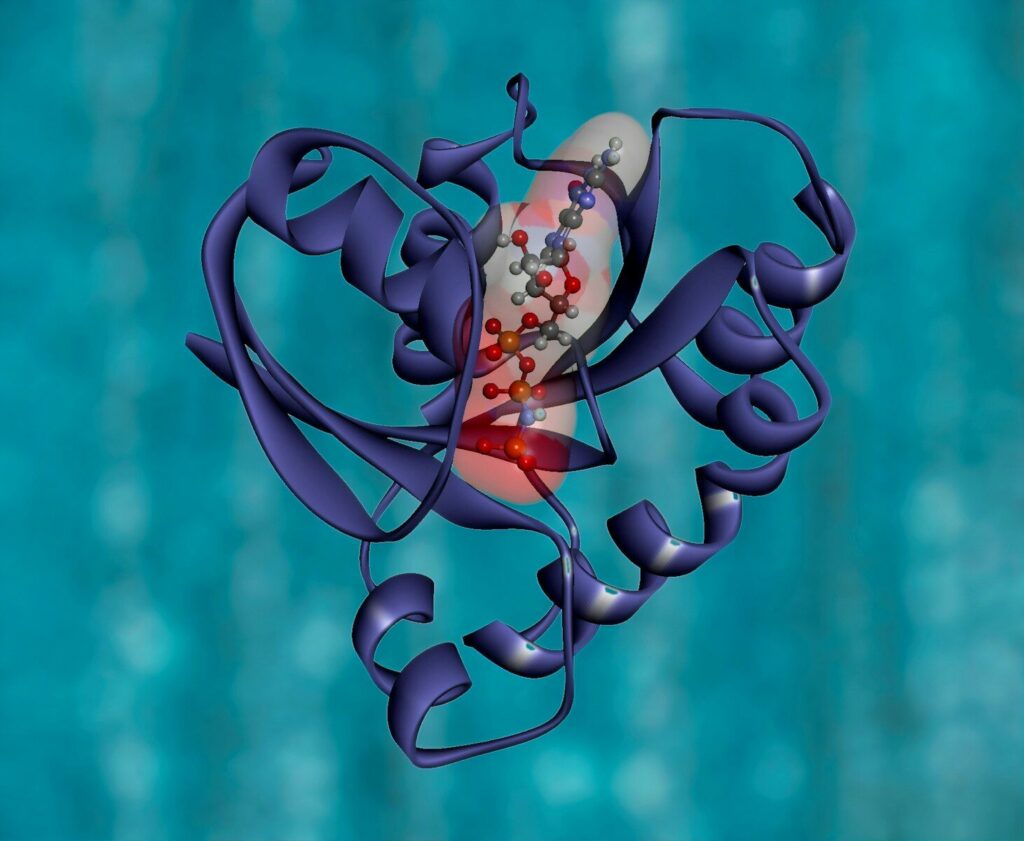
Molecular docking is a computational method. It predicts how a small molecule, called a ligand, fits into the binding pocket of a larger target, typically a protein. The software estimates the ligand’s likely orientation inside that pocket. It also assigns a numerical score meant to approximate how favorable the interaction is. Researchers then rank an entire library of candidate molecules by that score and move the top performers forward for further testing.
That ranking step is exactly where things go wrong. Traditional scoring functions rely on simplified physics and limited training data. They simply aren’t precise enough to reliably separate true binders from molecules that merely look good on paper. Machine learning classification was meant to close that gap. For a long time, it mostly didn’t.
Molecular Docking in Drug Discovery: Why the False Positive Problem Matters So Much
With that basic picture in place, it’s worth stepping back to see why this gap carries so much weight in real drug discovery work. Virtual screening exists because testing every candidate molecule in a lab is neither fast nor affordable. Modern compound libraries can hold millions of molecules, and no research budget stretches far enough to test all of them physically. Docking and virtual screening solve that bottleneck by narrowing the list computationally before anything touches a lab bench.
Here’s the catch: the entire value of virtual screening depends on the quality of that narrowing step. If the top-ranked compounds are mostly false positives, the computational shortcut hasn’t actually saved anyone time. It has simply moved the wasted effort from screening to synthesis and assay work, where it costs far more.
A team at Fox Chase Cancer Center and the University of Kansas set out to solve exactly this problem, and they published their findings in the Proceedings of the National Academy of Sciences. Their question was direct: physics-based scoring functions produce a roughly 12 percent hit rate, and machine learning hadn’t meaningfully improved on that number despite years of attempts. So what was actually going wrong with the machine learning approach itself?
The Research: Why Earlier Machine Learning Scoring Fell Short
That question is where the story gets interesting. It’s where the researchers found something nobody had quite pinned down before. The problem wasn’t the machine learning algorithms themselves. Teams already had sophisticated classifiers, gradient boosting, and neural networks in hand by that point. The real issue sat somewhere else entirely: what those models were learning from.
Most machine learning scoring functions train on decoy molecules — inactive compounds paired with true binders so the model can learn to tell them apart. Those decoys were often too easy to spot. Many came from simple property-matching rules, so a model could learn to separate actives from decoys using superficial chemical features rather than genuinely learning what makes a molecule bind well. In practice, the model trained against an easy test and then failed the much harder real-world exam.
Building Harder Training Data on Purpose
The researchers rebuilt the training strategy from the ground up. They treated decoy generation itself as the central problem to solve, not a minor preprocessing step. They deliberately constructed decoys that would trip up existing models — essentially building adversarial training examples on purpose. They made this new resource, called D-COID, publicly available. The name stands for dataset of congruent inhibitors and decoys.
Using this harder, more realistic training data, the team built a classification model called vScreenML. It works as a second-pass filter rather than a replacement for docking: candidates first go through conventional docking, and the classification model then evaluates the resulting poses. The researchers trained it specifically to catch the kind of near-miss false positives that fool traditional scoring functions. In a prospective test against a real target, human acetylcholinesterase, the model successfully prioritized true active compounds among its top picks. That result offers concrete evidence the approach generalizes, rather than simply performing well on data it had already seen.
This lesson extends well beyond one paper. It reframes the false-positive problem as a data quality issue as much as an algorithm issue, and that reframing now shapes how newer scoring and classification tools get developed and evaluated across the field.
Why “Congruent” Decoys Made the Difference
The word “congruent” in D-COID is worth pausing on, because it captures the core insight of the whole project. A congruent decoy isn’t just any inactive molecule. It shares enough structural and physicochemical similarity with a true binder that telling them apart requires genuinely understanding the interaction, not just spotting an obvious mismatch in size, charge, or shape.
Earlier training sets tended to pair active molecules with decoys pulled from unrelated chemical space, which made the classification task artificially easy. A model could hit impressive accuracy numbers on paper while learning almost nothing transferable to a real screening campaign. The false positives that matter most are precisely the ones that look plausible at first glance. By deliberately engineering harder, more congruent decoys, the researchers forced their model to learn the subtler structural cues that separate genuine binding from a convincing near-miss.
This design choice also explains why the model performed well prospectively, on a target it had never seen during training, rather than only on held-out examples from its own dataset. That distinction — between memorizing familiar data and generalizing to new targets — is often where machine learning approaches in drug discovery quietly fail, even when their published benchmark numbers look strong.
What This Means for Anyone Evaluating a Scoring Function
This research offers a useful lesson for evaluating any scoring or classification tool, not just vScreenML. Before trusting a new method’s published accuracy numbers, ask what its training and test decoys actually looked like. A method validated only against easily distinguishable decoys may report excellent numbers on paper. It can still offer little real advantage once applied to an actual screening library, where the hard cases are exactly the ones a weak decoy set would never include.
The Prospective Test: Why It Mattered More Than Benchmark Numbers
There’s one more detail worth sitting with here, because it’s easy to skim past and it’s arguably the most important part. Many computational methods in drug discovery report strong results on retrospective benchmarks — datasets assembled after the fact from molecules whose activity researchers already knew. These benchmarks are useful, but they carry a real risk. A model can get tuned, consciously or not, to fit the specific quirks of that dataset without that performance carrying over to a genuinely new target.
That’s why the vScreenML researchers didn’t stop at benchmark validation. They tested the model prospectively against human acetylcholinesterase, a target the classifier had never trained on, and checked whether its top-ranked picks actually held up. This kind of forward-looking test sets a meaningfully higher bar than benchmark accuracy. There’s no way to retroactively tune a model once its predictions are locked in against real experimental outcomes.
The result gave concrete evidence that the classification approach generalizes, rather than simply fitting its training data well. For anyone evaluating computational tools for their own screening pipeline, this distinction between retrospective benchmark performance and genuine prospective validation matters more than almost anything else. It’s also one of the easiest things to overlook when a tool’s marketing material leads with an impressive accuracy percentage.
Molecular Docking Procedure: Where Classification Fits Into the Workflow
All of this research is easier to apply once you can see exactly where it slots into a real workflow. Here’s the standard docking procedure, step by step.
Step one: prepare the target structure. Researchers usually source a protein structure from the Protein Data Bank or generate one through structure prediction. This step includes removing non-essential crystallographic waters, adding hydrogens, and correcting protonation states.
Step two: prepare the ligand library. Each candidate molecule needs a defined three-dimensional structure, correct bond orders, and realistic protonation states, repeated across the entire screening library.
Step three: define the binding site. Researchers set the search space, usually guided by a known co-crystallized ligand or established binding site data.
Step four: run the docking search. The software generates and evaluates candidate poses within the defined site, using an algorithm suited to the library’s size and the available computing budget.
Step five: apply conventional scoring. Each pose receives an initial score meant to approximate binding favorability, and the software ranks compounds accordingly.
Step six: apply machine learning classification as a second filter. This is the step the vScreenML research effectively formalized. Instead of trusting the initial docking score alone, a classifier — trained specifically to catch near-miss decoys — evaluates the top-ranked poses.
Step seven: select candidates for experimental validation. Only compounds that pass both the docking score and the classification filter move forward to biochemical testing. This is where the drop in false positives translates into real savings of time and resources.
That sixth step, the classification filter, is really just one option among several for tightening up a screening pipeline. It’s worth seeing how it compares to the alternatives.
Molecular Docking Techniques: How Classification-Based Filtering Compares to Other Approaches
Classification is powerful, but it isn’t the only tool researchers reach for. Here’s how it stacks up against the other established techniques for managing docking’s false-positive problem.
Consensus scoring runs multiple docking algorithms and looks for agreement across their top-ranked poses. Research on virtual screening practices backs the underlying theory: a pose several independent methods agree on tends to be more trustworthy than one favored by a single scoring function.
Rescoring with alternative scoring functions takes the poses one docking program generates and re-evaluates them with a different, often more computationally expensive, scoring method. This step catches cases where the original scoring function’s blind spots led it astray.
Machine learning classification, as vScreenML demonstrates, differs from both of these approaches. Researchers train it specifically to recognize the structural fingerprints of false positives, rather than simply aggregating or recalculating existing scores.
Molecular dynamics-based rescoring goes further still. It simulates how a docked pose behaves over time to check whether it stays stable, though its computational cost makes it impractical for screening large libraries directly.
In practice, researchers often combine these techniques rather than use just one. A typical modern pipeline might use fast docking to narrow a large library, apply machine learning classification to filter out likely false positives, and reserve molecular dynamics for a final, smaller shortlist before anything moves to the lab.
Molecular Docking Software and Tools Built for This Kind of Filtering
Knowing the techniques is one thing. Knowing which software actually implements them is what makes the approach usable. Several tools now build in the kind of classification-based thinking the vScreenML research popularized.
vScreenML is publicly available, and the researchers specifically designed it to layer on top of Rosetta-minimized docking output. That makes it a direct implementation of the research above. You can find its code on GitHub under the Karanicolas lab. A follow-up version, vScreenML v2.0, later extended and refined the original approach.

GNINA takes a related but distinct route. It builds a convolutional neural network scoring function directly into the docking process itself, rather than applying classification as a separate downstream step. A 2025 comparative study in Frontiers in Bioinformatics found that GNINA’s neural network score improved the ranking of known true positives compared to standard scoring functions.
AutoDock Vina and other conventional docking tools remain the starting point in most pipelines. They generate the initial poses and scores that classification tools like vScreenML then evaluate.
Glide, a widely used commercial docking platform, and GOLD, known for its genetic algorithm-based search, both remain common choices for the initial docking stage in pipelines that add a machine learning classification layer afterward.
The broader molecular docking tools landscape is increasingly settling into this two-stage structure: fast, established docking software for initial pose generation, paired with a purpose-built classification model to filter out the false positives that traditional scoring alone tends to miss.
Molecular Docking Software Free Options for Applying This Approach
Not every lab can afford commercial licenses for every tool in that lineup. Thankfully, none are required to put this approach into practice. Cost matters most for students, early-career researchers, and labs without large computational budgets, and much of this workflow is available at no cost.
vScreenML is open source and free. Researchers have published both its code and the D-COID training dataset for public use, so you can apply the classification approach yourself, or even retrain it.
AutoDock Vina remains the standard free docking engine most researchers pair with these downstream classification tools, thanks to its strong documentation and active user community.
GNINA is also free and open source, which makes its integrated neural network scoring accessible without a commercial license.
Together, these free tools mean you can assemble the entire pipeline, from initial docking through machine learning classification, without paying for any software. It does require more manual setup and computational expertise than a polished commercial suite would demand.
A Practical Checklist for Applying This Approach
With the research, the workflow, and the tools all laid out, the last piece is turning this into something you can actually apply. Use the following checklist to reduce false positives in your own virtual screening work.
- Don’t trust a raw docking score as a final answer. Treat conventional scoring as a first-pass filter, not a verdict, given its documented tendency toward false positives.
- Add a classification-based rescoring step where possible. Tools built specifically to catch near-miss decoys, like vScreenML, address a failure mode that generic scoring functions were never designed to catch.
- Pay attention to how any classifier was trained. A model trained on easily distinguishable decoys will struggle with real-world false positives. The research above shows why decoy quality matters as much as model architecture.
- Validate against a known target when possible. Testing a pipeline against a target with well-characterized actives, the way the original researchers did with acetylcholinesterase, is the clearest way to confirm a classification step actually works.
- Combine techniques rather than relying on one. Consensus scoring, classification-based filtering, and molecular dynamics rescoring each catch different kinds of errors. Combining them tends to outperform any single method alone.
- Reserve wet-lab resources for compounds that clear every filter. This layered approach exists to make sure the molecules that reach the bench have already survived multiple independent checks.
Molecular Docking PDF Resources for Going Deeper
If the checklist above raised more questions than it answered, that’s a good sign you’re ready for the primary sources. The original PNAS paper by Adeshina, Deeds, and Karanicolas is publicly accessible and lays out the D-COID dataset construction and model validation in full. You can also find a free preprint version on bioRxiv. The researchers also published the vScreenML code and training data on GitHub under the Karanicolas lab, which gives you a hands-on way to explore the method directly instead of only reading about it. Beyond that specific paper, university course materials and review articles on machine learning scoring functions — often available as free downloadable PDF guides — make a reasonable next step if you want to understand the statistical foundations of decoy generation and classifier training in more depth.
Never forget that the vScreenML research is a useful reminder that the biggest gains in computational drug discovery don’t always come from more sophisticated algorithms. Sometimes they come from honestly confronting where an existing method fails, then building training data hard enough to actually fix it. The next logical step for anyone applying this approach is understanding how these classification-filtered hits hold up under molecular dynamics simulation, which tests stability over time rather than judging a molecule from a single static pose. That comparison, between a filtered shortlist and its long-term behavior, is where this series goes next.

