Sanders faces governing tests as Republicans debate their future
The Arkansas governor’s reelection gives her a platform in the Republican debate. A changed legislature and unresolved policy questions complicate the national picture.
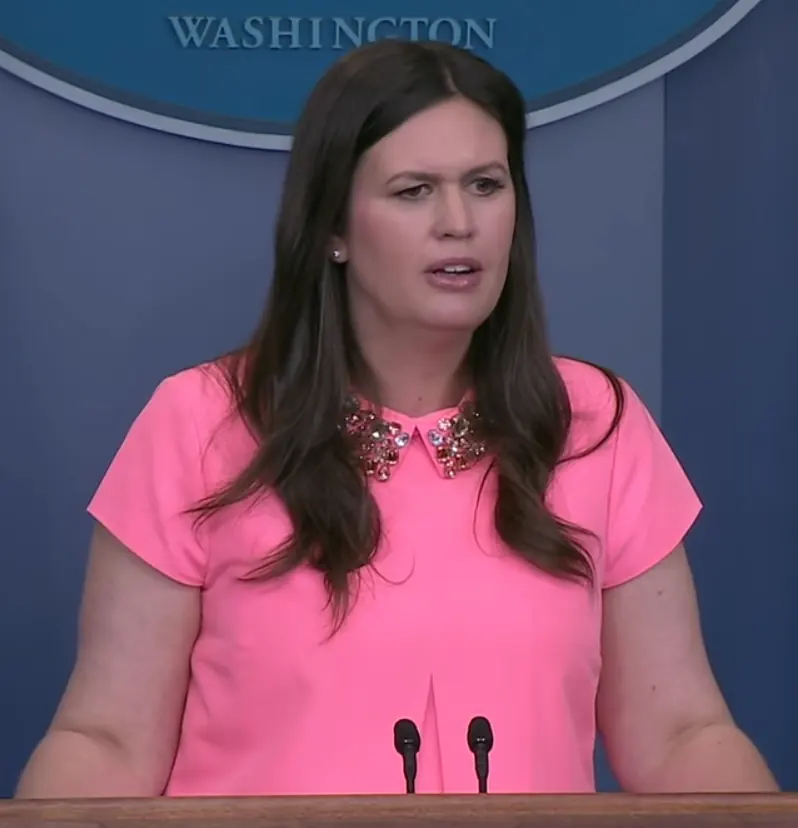
Sarah Huckabee Sanders is standing by President Donald Trump after Republican midterm losses, but her second term in Arkansas will begin with a more complicated task at home: governing without her party’s previous House supermajority.
The governor’s reelection gives her a platform in the debate over the Republican Party’s future. Yet Democrats’ gains in the state legislature also mean that her victory cannot be read as an endorsement of every part of the Republican agenda.
In a USA Today interview, Sanders rejected the idea that the national results should be treated as a straightforward verdict on Trump. She argued that individual races needed to be assessed separately and described him as the most influential voice in Republican politics.
Her position places her firmly on one side of a debate that is already exposing differences within the party. It also leaves a practical question for her next term: how to translate continued support for the president into an agenda that can pass in Little Rock.
A victory with limits
Republicans retained control of the Arkansas House, but Democrats gained at least 10 seats and broke their supermajority, according to Arkansas Advocate’s election coverage. Republicans also retained their Senate supermajority.
The result left Sanders with a renewed mandate but changed the conditions under which she will govern. Her party still holds power. It no longer has the same margin in the House.
Former Republican governor Asa Hutchinson welcomed her victory as a significant affirmation while drawing a different lesson from the wider election. Speaking to the Advocate, he urged Republicans to show greater independence from Trump and concentrate on issues that matter to voters.
He also pointed to an immediate consequence in Arkansas: appropriations would require Democratic support. That makes negotiations over spending an early test of how the governor responds to the changed legislature.
Sanders and Hutchinson are offering different political assessments, not competing forecasts that can already be declared right or wrong. Their arguments will be tested by the choices Republicans make and the results those choices produce.
Affordability and the policy argument
Sanders acknowledged in the USA Today interview that economic pressure was the biggest driver of the midterm outcome. She argued that voters feeling squeezed tend to turn against the party in power.
That diagnosis presents a challenge beyond messaging. Republicans seeking to recover ground will need to explain how their proposals would address household costs, then defend the consequences of implementing them.
Sanders’ own case rests partly on her Arkansas record. Her forthcoming book, Unapologetic: Clarity and Conviction in a World Gone Crazy, discusses faith, family, tax cuts and changes to education. USA Today reports that it is due to be published on November 10.
The book provides an opportunity for her to explain those policies to a wider audience. Claims about their success still need to be assessed against evidence, including implementation costs and measurable outcomes, rather than accepted simply because they appear in a political memoir.
That scrutiny is particularly important in education, where changes in student results can have several causes. The same applies to public spending: a governor’s priorities become clearer when lawmakers have to decide how to fund them.
A national profile is not a campaign
The attention surrounding Sanders has inevitably prompted questions about 2028. Asked by USA Today about her ambitions, she emphasized her responsibilities in Arkansas and said her focus was on doing the job to which she had just been elected.
She also described Vice President JD Vance as the frontrunner for the Republican presidential nomination. The interview did not announce a Sanders presidential campaign.
Reelection and a book can increase a politician’s visibility, but neither establishes a decision to seek another office. Treating them as a campaign launch would turn speculation into a fact the reporting does not support.
There are also limits to what one state result says about a national electorate. Candidates compete against different opponents, with different records and resources. Sanders’ Arkansas coalition would face a different test in a presidential contest.
Governing comes first
The clearest measure of Sanders’ next term will be the agenda she brings to the legislature and the agreements she can secure. Budget proposals, education decisions and negotiations with lawmakers will reveal more than speculation about her longer term ambitions.
For businesses and households, those decisions have practical consequences. Changes to taxes, services and public spending matter regardless of the language used to promote them.
Her national standing may grow if she can turn reelection into a convincing record of government. For now, she returns to office with her party still in control, Democrats better placed to influence spending and Republicans divided over what their electoral setbacks should teach them.