
Carney Meets Xi in Shenzhen, Says China-Canada Ties Now Have 'Greater Predictability and Stability'
Canadian Prime Minister Mark Carney met Chinese President Xi Jinping in Shenzhen on Tuesday ahead of the APEC summit, saying relations had gained 'greater predictability and stability' and that Canada is well ahead of schedule on its goal of raising exports to China by 50% by 2030.
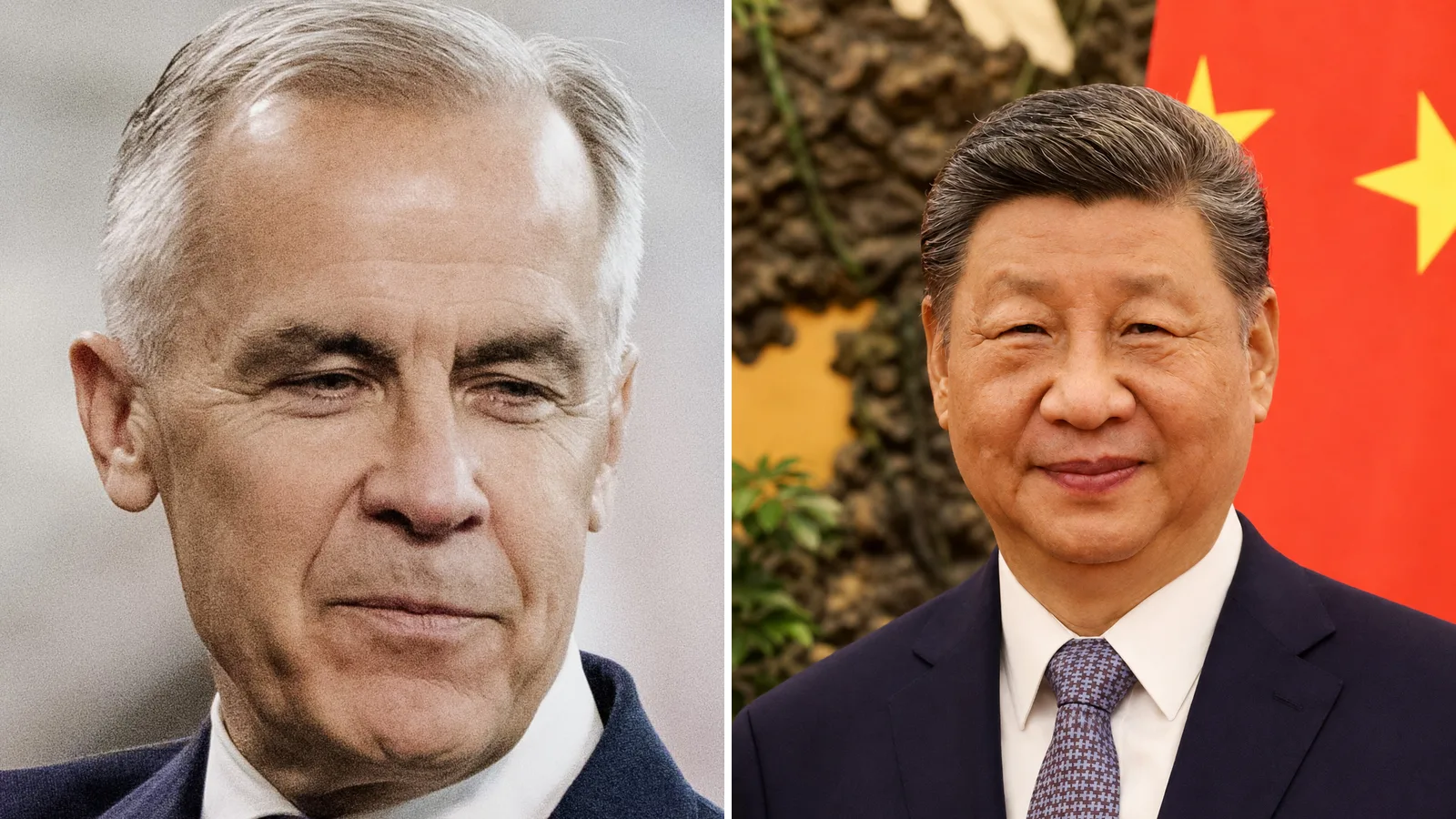
Canadian Prime Minister Mark Carney met Chinese President Xi Jinping in Shenzhen on Tuesday, saying relations between the two countries now have “greater predictability and stability” after years of tension.
The talks, held in the southern Chinese tech hub ahead of this week’s Asia-Pacific Economic Cooperation (APEC) summit, were the third meeting between the two leaders since Carney became prime minister. They also met on the sidelines of last year’s APEC summit in South Korea, and in Beijing in January.
Carney: exports to China ‘well ahead of schedule’
Carney told Xi that exchanges between Canada and China had “increased significantly” this year. He said Canada was well ahead of schedule on its goal of boosting exports to China “by 50% by the end of this decade.”
He added that he looked forward to continuing that momentum in their talks and over the next two days at APEC.
Both sides are expected to deepen ties in food, energy and financial services.
Xi: cooperation has ‘fully resumed’
Xi said that since the two leaders agreed in January to advance a new China-Canada strategic partnership, exchanges and cooperation across various fields had “fully resumed.”
“Stronger communication and cooperation between China and Canada will benefit not only our two countries but also Asia-Pacific and the world,” Xi told Carney.
The trade thaw so far
Carney’s January trip to Beijing made him the first Canadian prime minister to visit China in nearly a decade. That visit produced the deals now driving trade:
- Electric vehicles: Canada cut its tariff on Chinese EVs from 100% to 6.1% for up to 49,000 cars a year, a quota set to rise to 70,000 over five years. BYD, Geely and Chery have since moved to enter the Canadian market.
- Farm and seafood: China lowered tariffs on Canadian canola seed and recently extended tariff relief on canola meal, lobsters, crabs and peas for two more years.
- Oil: Shipments of Canadian crude to China have risen about 37% in 2026, according to a Reuters calculation based on LSEG data.
A hedge against Washington
The meeting comes as Carney tries to reduce Canada’s heavy economic reliance on the United States amid trade tensions with President Donald Trump. Before the talks, Carney said Canada could look to Chinese, European or Japanese automakers if U.S. trade actions keep undermining cross-border car manufacturing, but that any Chinese investment would need real factories, supply chains and Canadian workers.
Trump is also heading to the region. He starts his Asia trip in Manila before travelling to China for talks with Xi and the APEC summit in Shenzhen. Read our earlier coverage of the planned Trump, Putin and Xi meeting.
Last week Carney said he would meet Xi with “clear guardrails” as Ottawa pressed Beijing over alleged foreign interference, while China declined a formal summit with Japanese Prime Minister Sanae Takaichi. Read more on the APEC diplomacy.
Critics urge caution
Security analysts and human rights groups warn that closer ties with Beijing could compromise Canadian security and values. They point to the imprisonment of Hong Kong pro-democracy media owner Jimmy Lai, China’s execution of four Canadians last year and Canadian intelligence findings that Beijing interfered in at least two federal elections.
China says it has no interest in interfering in Canada’s internal affairs.
Sources: Reuters via Devdiscourse; Newsquawk; The Economic Times; earlier SMARTAI News reporting.