China snubs Japanese Prime Minister Sanae Takaichi on formal Xi Jinping talks at Shenzhen APEC summit as Ottawa presses Beijing
Beijing has rejected Tokyo's requests for a formal bilateral summit between President Xi Jinping and Japanese Prime Minister Sanae Takaichi at next week's APEC gathering in Shenzhen over her Taiwan remarks, even as Canadian Prime Minister Mark Carney prepares to confront Xi over alleged foreign interference.
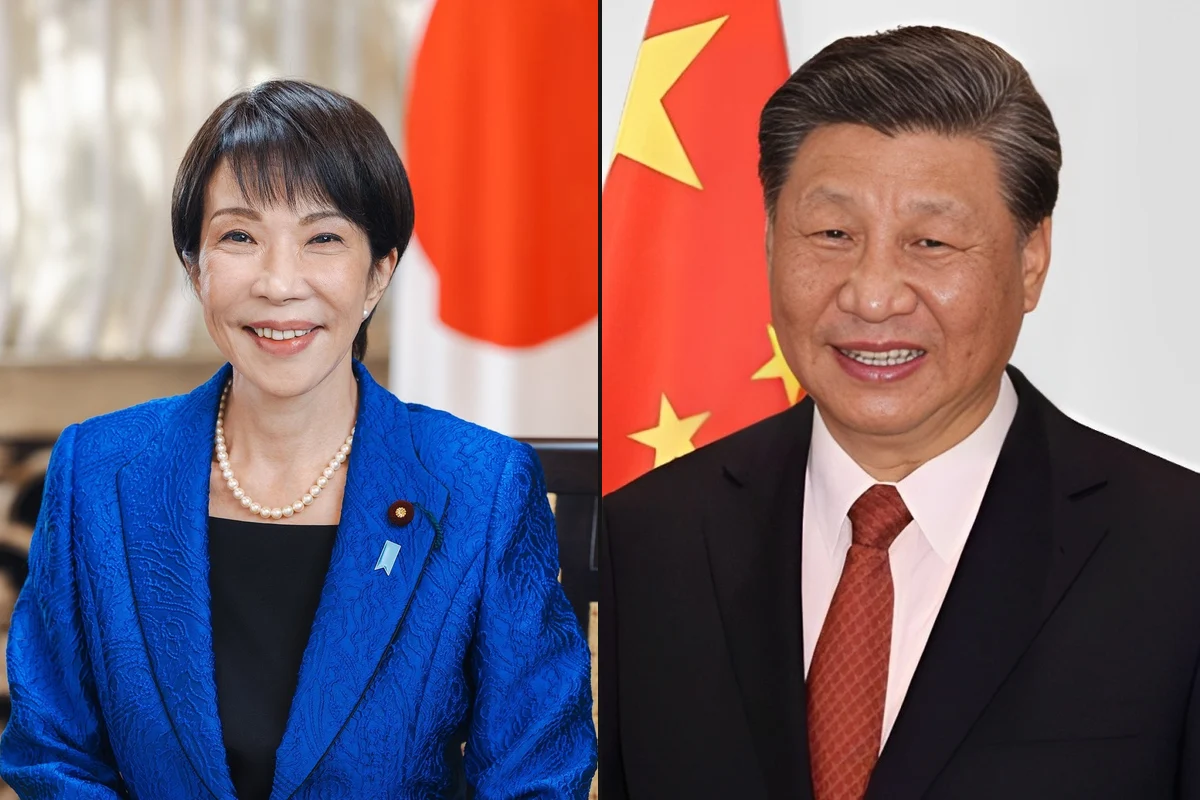
Chinese officials have rebuffed multiple Japanese diplomatic requests to schedule a formal bilateral summit between President Xi Jinping and Japanese Prime Minister Sanae Takaichi during next week’s Asia-Pacific Economic Cooperation leaders’ gathering in Shenzhen, leaving Tokyo facing the prospect of being the sole major participating economy denied a sit-down with the Chinese host.
Diplomatic sources familiar with Sino-Japanese preparations told Kyodo News on Wednesday that Beijing refused formal talks in protest over Takaichi’s earlier statements indicating Tokyo could intervene militarily in the event of a contingency across the Taiwan Strait. While Japanese diplomats intend to continue pressing for a meeting right up to the November 18–19 summit in southern China, officials in Tokyo increasingly assess that an informal corridor handshake or brief standing exchange may be the most realistic outcome.
The diplomatic freeze with Tokyo stands in sharp contrast to Beijing’s active bilateral schedule with other Group of Seven and Pacific Rim leaders heading to Shenzhen — including Canadian Prime Minister Mark Carney, who confirmed in Montreal that he will hold formal talks with Xi next week even while pledging to raise allegations of Chinese interference directly at the negotiating table.
Beijing demands retraction on Taiwan while maintaining economic pressure
Asked at a regular Foreign Ministry briefing in Beijing on Wednesday whether Xi would meet Takaichi during the two-day Shenzhen summit, spokesperson Guo Jiakun declined to confirm any bilateral session with the Japanese leader.
“As the host of APEC 2026, China will actively fulfill its obligations as host and stands ready to work with all countries to ensure the complete success of the APEC China Year,” Guo told reporters, adding that Beijing had already made its position on China-Japan relations clear on multiple occasions. Diplomatic analysts in Tokyo and Seoul noted that the remark reiterated Beijing’s standing demand that Takaichi walk back her comments linking a crisis over Taiwan to Japan’s survival-threatening security framework.
Beyond diplomatic protocol, Beijing has reinforced its displeasure through targeted trade levers over recent months, reinstating restrictions on Japanese seafood imports and tightening administrative scrutiny over strategic industrial materials, even as China extended its broader pause on expanded export controls until January 10 in separate trade diplomacy. According to earlier reporting, Japanese officials quietly urged Chinese counterparts not to single out Takaichi on protocol matters in Shenzhen and to accord her standard host courtesies alongside fellow heads of government.
Tokyo relays unease to Washington over potential trilateral optics
For the Takaichi cabinet, the absence of a formal bilateral meeting carries wider strategic sensitivity because Shenzhen could simultaneously showcase high-profile diplomacy among Washington, Beijing, and Moscow. Following recent signals from US President Donald Trump and confirmation from Kremlin officials that preparations were underway for high-level discussions, Japanese policymakers have grown concerned that warm summit optics among the United States, China, and Russia could leave Tokyo appearing diplomatically sidelined in its own region.
According to Japan’s Mainichi Shimbun, senior Japanese officials formally conveyed those concerns to counterparts in Washington ahead of the summit, warning that a celebratory three-way gathering among the US, Chinese, and Russian leaders — at the exact moment Beijing gives America’s closest treaty ally in Asia a cool reception — could send an unintended signal regarding regional deterrence in the East China Sea and Western Pacific.
US officials told Tokyo that Washington fully understood Japan’s security concerns, diplomatic sources said. The delicate balancing act comes in the same week that G7 foreign ministers convened in Paris while US-mediated trilateral talks with Russia and Ukraine opened in Abu Dhabi, underscoring how rapidly great-power summitry is shifting across both European and Indo-Pacific theaters.
Canada’s Carney confirms Xi bilateral with ‘clear guardrails’
Even as Beijing keeps Tokyo at arm’s length, Chinese officials moved on Wednesday to defend the diplomatic runway ahead of Xi’s scheduled bilateral meeting with Canadian Prime Minister Mark Carney on the sidelines of the Shenzhen forum.
Responding to Carney’s pledge to confront Beijing over domestic interference concerns, Foreign Ministry spokesperson Guo rejected accusations of espionage or unauthorized overseas police operations in Canada. “China always upholds the principle of non-interference in other countries’ internal affairs and has never been interested in interfering in Canada’s internal affairs,” Guo said in Beijing.
Speaking earlier at a news conference in Montreal, Carney confirmed the bilateral session and framed Ottawa’s approach around compartmentalized engagement — expanding commercial ties where national security risks remain low while maintaining firm boundaries around sensitive technology and democratic institutions.
“Yes, I will be meeting with President Xi Jinping next week at APEC. We will discuss many things,” Carney said, noting that bilateral merchandise trade between Canada and China — Ottawa’s second-largest single-country trading partner — reached C$125.7 billion, or roughly $90 billion, in 2025 according to Canadian government data.
Carney identified manufacturing and automotive trade, where Chinese-built vehicles currently represent less than 3 percent of the Canadian market, as areas under active review, while emphasizing that security principles remained non-negotiable. “I will be raising the importance with which we attach to the non-interference in our affairs by China and other countries,” Carney told reporters, adding that Ottawa had also selected a new nominee after Canada’s ambassadorial post in Beijing remained vacant for seven months.
High-stakes test for Indo-Pacific summit diplomacy
Taken together, Beijing’s contrasting posture toward Tokyo and Ottawa illustrates how China is using its APEC host presidency in Shenzhen to reward pragmatic economic engagement while drawing a hard diplomatic line around Taiwan. With leaders from 21 Pacific Rim economies due to arrive in Guangdong province next week, whether Japanese negotiators secure even a brief pull-aside between Takaichi and Xi will serve as an immediate barometer of whether Northeast Asia’s two largest economies can stabilize ties heading into 2027.