Eisenkot opposition bloc seizes key Knesset committees as Netanyahu says Israel will gradually phase out US military aid
Parties opposed to caretaker Prime Minister Benjamin Netanyahu teamed up in Israel's newly sworn in Knesset on Wednesday to win control of transitional defense and finance panels and draft bills repealing his judicial overhaul, even as Netanyahu's office pushed back on an immediate cutoff of US military assistance.
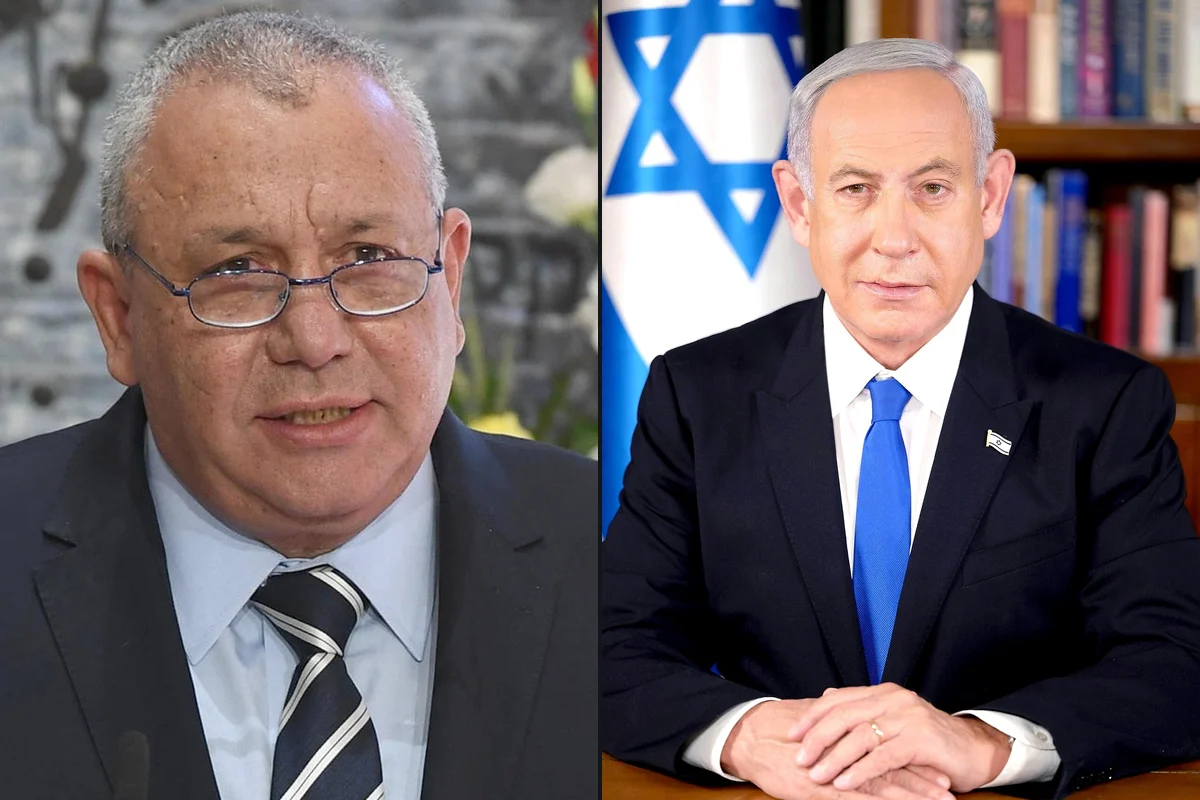
Israel’s post-election parliamentary balance tilted sharply against caretaker Prime Minister Benjamin Netanyahu on Wednesday evening as an opposition bloc led by former military chief Gadi Eisenkot outmaneuvered Netanyahu’s right-wing allies to capture control of the Knesset’s pivotal temporary defense and finance committees — just minutes before Netanyahu’s office issued a pointed statement insisting US military aid will wind down “gradually” rather than end abruptly this year.
Following a stormy debate inside the newly convened Knesset Arrangements Committee — where Eisenkot’s bloc holds nine seats, Netanyahu’s bloc holds nine, and Arab-led parties hold four — lawmakers voted 13 to 9 to establish 17-member transitional Foreign Affairs and Defense and Finance panels led by Netanyahu critics while coalition talks continue.
Under Wednesday’s vote, Yisrael Beytenu leader Avigdor Liberman will chair the temporary Foreign Affairs and Defense Committee, while B’Yachad lawmaker Liran Avisar Ben Horin will chair the temporary Finance Committee. In a historic parliamentary milestone, Jewish lawmaker Yoav Segalovitz is set to become the first parliamentarian representing an Arab-led party list to sit on Israel’s top defense oversight panel.
Special panels target judicial-overhaul repeal
Seizing parliamentary initiative even before a permanent governing coalition is formed after deadlocked national elections earlier this month, Eisenkot’s Yashar party and allied factions also reached agreement Wednesday to form special legislative committees tasked with repealing five contentious judicial-overhaul statutes enacted by Netanyahu’s outgoing coalition.
According to Israeli parliamentary reporting, lawmakers from Yair Golan’s Democrats party are slated to chair several of those special panels, giving anti-Netanyahu parties immediate control over the Knesset floor agenda and wartime defense-budget scrutiny unless Netanyahu can fracture the opposition alliance.
Netanyahu’s office seeks ‘gradual’ exit from US military assistance
Minutes after losing the committee votes, the Prime Minister’s Office waded into an escalating diplomatic debate with Washington over the future of the $3.8 billion annual US military-financing package — an issue rattling Israeli defense planners in the wake of shifting US regional war posture and Gulf diplomacy.
Responding to recent remarks by US President Donald Trump suggesting American military aid to Israel would conclude this year, Netanyahu’s office framed the shift as a joint strategic evolution initiated by Jerusalem — while pointedly emphasizing a multi-year phase-out rather than an overnight cutoff.
“In 1996, Prime Minister Benjamin Netanyahu said that Israel would gradually phase out American economic assistance, which stood at $1.2 billion. He followed through on that commitment,” the Prime Minister’s Office said. “Thirty years later, Prime Minister Netanyahu said that Israel’s economy is strong enough to gradually phase out American military assistance as well.”
Citing US Secretary of State Marco Rubio’s comment this week that transitioning off direct grants was “a step that the Israelis themselves proposed to us,” Netanyahu’s office highlighted an S&P forecast upgrade projecting Israel’s economy to expand 5.5 percent in 2026 and 7 percent in 2027. Still, opposition lawmakers from Yesh Atid and defense economists warned Wednesday that losing US Foreign Military Financing abruptly — rather than tapering it across a 10-year horizon — would force immediate multi-billion-shekel adjustments to existing fighter-jet and munitions procurement contracts.