Millions join Spain first nationwide general strike in 14 years over housing crisis ahead of snap election
Workers across Madrid, Barcelona, and major Spanish industrial hubs staged a 24 hour general strike on Wednesday — the country's first nationwide labor walkout since 2012 — demanding rent controls, wage increases, and curbs on tourist apartments less than three weeks before Spain's November 29 general election.
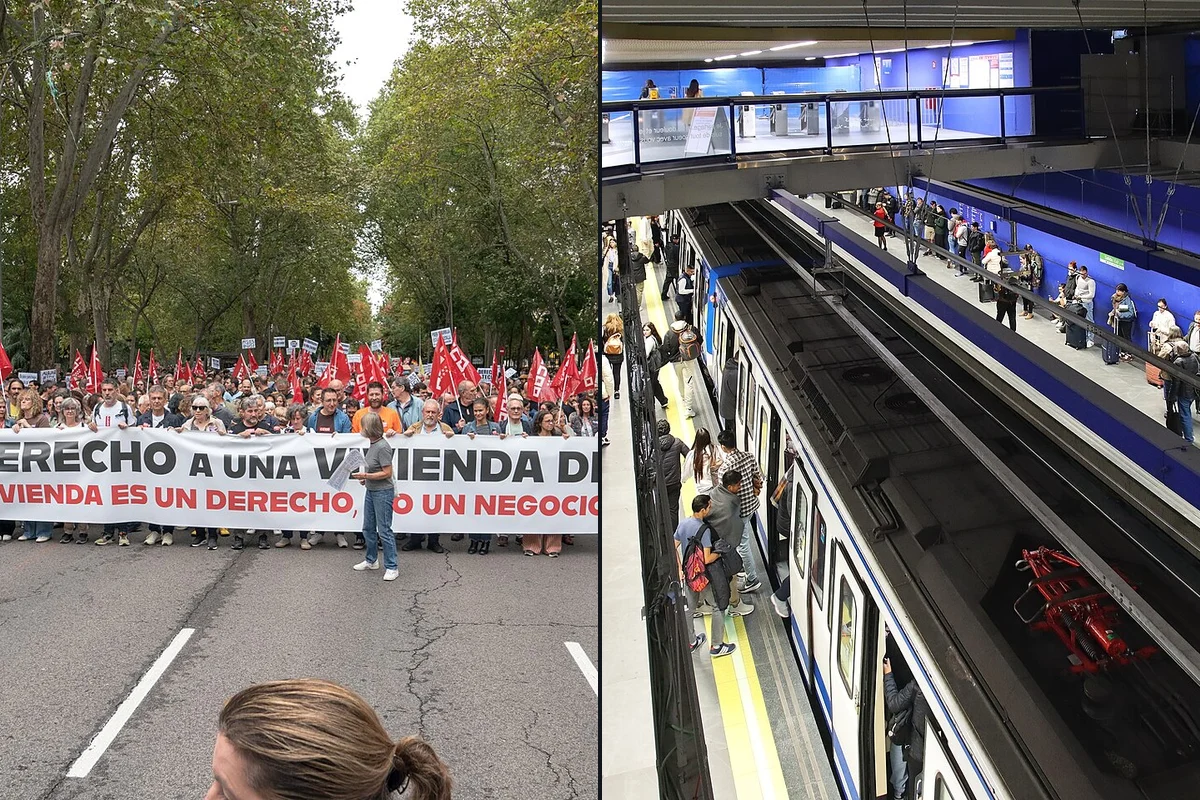
Millions of workers across Spain walked off the job on Wednesday in the country’s first nationwide 24-hour general strike in 14 years, disrupting commuter rail networks, wholesale food logistics, manufacturing plants, and municipal services in a high-stakes showdown over runaway housing costs less than three weeks before Spaniards head to the polls on November 29.
Called jointly by Spain’s two largest trade union confederations — the General Union of Workers (UGT) and the Workers’ Commissions (CCOO) — alongside grassroots tenant coalitions, the walkout placed residential rents, mortgage burdens, and short-term tourist rentals squarely at the center of Europe’s fiercest pre-election campaign.
From Madrid’s Atocha rail terminal to industrial corridors surrounding Barcelona, Bilbao, Valencia, and San Sebastián, commuter trains and city buses operated solely on state-mandated minimum-service schedules while union picket lines gathered outside logistics hubs before dawn.
‘Housing is the fault line’: Unions and tenant groups unite
Unlike Spain’s last nationwide general strike in November 2012 — which erupted at the height of the eurozone sovereign-debt crisis over austerity cuts and high unemployment — Wednesday’s walkout unfolded in an economy posting solid headline GDP and tourism growth, yet squeezed by residential rents that have outpaced paychecks across every major metropolitan area.
“Housing is the fault line,” CCOO leadership declared as marches stepped off across northern and central Spain, urging younger workers priced out of homeownership and urban leases to fill city avenues. UGT General Secretary Pepe Álvarez warned that urban housing expenses have climbed so rapidly over the past three years that collective-bargaining wage gains can no longer keep up without direct state intervention in the property market.
Sandra Mora, spokesperson for Spain’s Tenants’ Union, told national broadcaster RNE Wednesday morning that tying workplace strikes directly to tenant demands marked a turning point in European labor activism.
“It’s extremely important to remind people that we, the workers — who are also renters or who also pay mortgages — are the ones with the power to halt production and bring the economy to a standstill,” Mora said.
While morning demonstrations remained largely peaceful, Spanish police reported scattered early-hour confrontations, including burning tire barricades blocking arterial roads in parts of Barcelona and scuffles between picketers and riot officers outside Mercamadrid, the capital’s primary wholesale food distribution hub.
Eviction backlash and parliamentary deadlock ahead of November 29 vote
Public anger crystallized earlier this autumn following nationwide uproar over high-profile tenant evictions, prompting Spain’s left-leaning coalition government to draft emergency decrees curbing no-fault evictions and capping lease renewals. Conservative and right-wing opposition lawmakers in Parliament refused to ratify those emergency measures, arguing that price caps and stricter eviction moratoria deter new construction and drive landlords to pull apartments off the long-term rental market.
Organizers behind Wednesday’s strike are demanding a sweeping legislative package regardless of who wins on November 29: phasing out commercial tourist-apartment licenses in stressed urban neighborhoods, imposing anti-speculation taxes on institutional bulk-housing funds, mandating automatic multi-year lease renewals for compliant tenants, and negotiating a fresh national minimum-wage accord with Spain’s main business confederation — echoing broader cost-of-living debates seen across western Europe, including recent statutory wage adjustments in neighboring France.
High political stakes with electorate sharply divided
Opinion polling ahead of Wednesday’s strike underscored how polarized Spanish voters remain entering the final stretch before the November 29 snap general election, which surveys suggest could deliver substantial gains to conservative and far-right parties. Pre-strike polling cited by Spanish media indicated that roughly a quarter of salaried employees planned to join the 24-hour stoppage actively, another 22.4 percent backed the strike’s goals without walking off the job, and 36.3 percent opposed the walkout.
For left-wing parties hoping to rally disillusioned young and working-class voters, massive evening turnouts in Madrid and Barcelona offer a vital chance to shift the campaign narrative back onto affordability and social protections. Business associations, meanwhile, condemned the timing of the strike during a fragile pre-holiday retail period, warning that transport bottlenecks and lost industrial output will weigh on fourth-quarter growth without building a single new apartment.