Oil tanker catches fire after striking mine near Strait of Hormuz as Iran threatens US bases in Europe
Iranian naval authorities and British maritime monitors reported an oil tanker ablaze after striking a sea mine east of the Strait of Hormuz on Wednesday, as Supreme National Security Council Secretary Mohsen Rezaei warned Tehran will strike US bases in Europe if used for attacks and vowed zero enriched uranium will leave Iran.
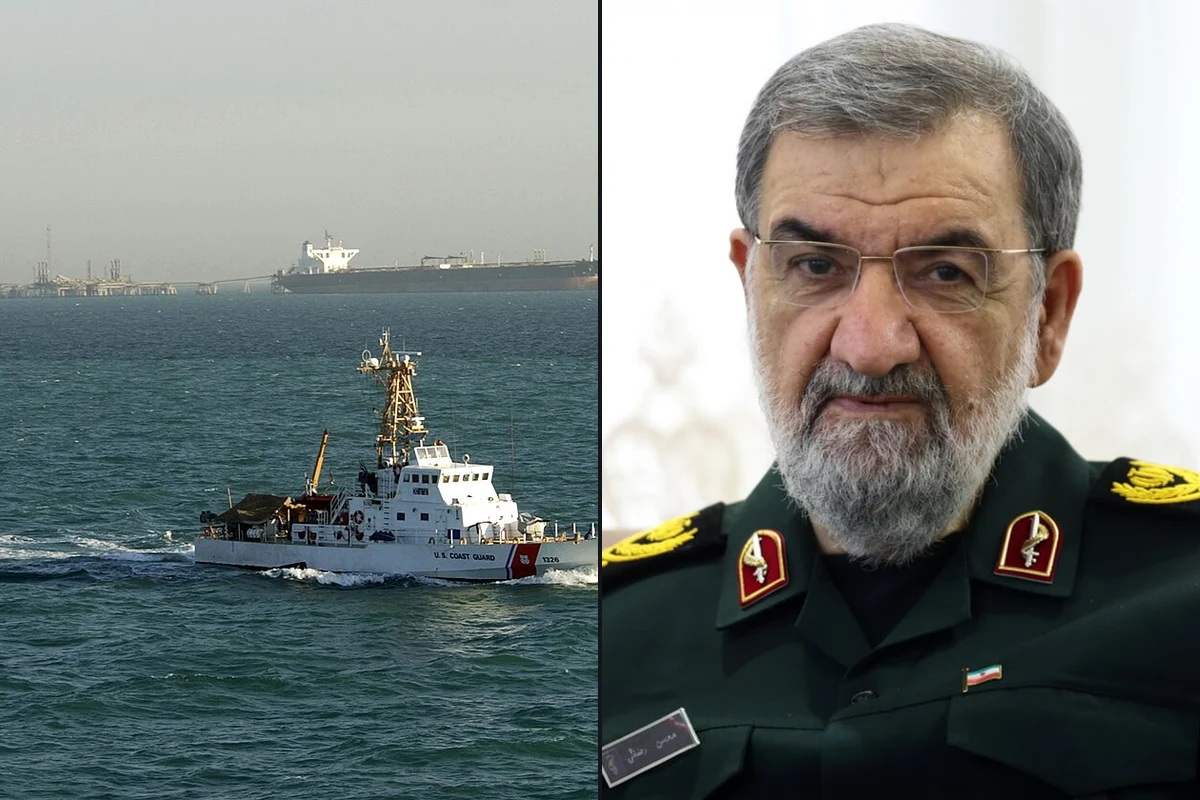
Maritime risk across the world’s most sensitive energy chokepoint flared anew on Wednesday after an oil tanker caught fire upon striking a sea mine east of the Strait of Hormuz, hours before Iran’s top national-security official threatened to target American military bases across Europe if US aircraft use them to launch future strikes against Iran.
In a broadcast statement carried by Iranian state television, the naval forces of Iran’s regular army announced that what it called a “violating oil tanker” ignited early Wednesday after entering a restricted, mined maritime zone east of the Strait of Hormuz without coordinating transit permission with Iranian naval controllers. Separate statements from the Islamic Revolutionary Guard Corps Navy indicated two commercial tankers suffered mine damage along unauthorized lanes, prompting crew evacuations.
The United Kingdom Maritime Trade Operations monitoring center confirmed receiving reports of a security incident involving a tanker inside the Strait of Hormuz and urged commercial shipping masters transiting the Gulf of Oman and Arabian Gulf to exercise extreme caution while damage assessments continue. Earlier Wednesday, Indian shipping officials also confirmed four crew members, including an Indian seafarer, were injured aboard a Liberia-flagged tanker struck in regional waters.
Rezaei warns European airbases are targets if US combat sorties resume
Escalating rhetoric well beyond Persian Gulf waters on Wednesday evening, Mohsen Rezaei, secretary-general of Iran’s Supreme National Security Council, told Beirut-based broadcaster Al-Mayadeen that Tehran would expand its retaliation radius to distant NATO and European territory if hostilities with Washington restart.
“If American aircraft take off from an American military base, even one located in a European country or some other distant region, to bomb Iran, we will strike those bases as well,” Rezaei said, asserting that any airfield hosting US strike or refueling sorties would be treated as a legitimate military target.
Rezaei’s warning carries heightened operational resonance across European defense ministries this week: US prosecutors just unsealed federal charges alleging an Iranian-backed cell plotted reconnaissance and arson attacks near RAF Fairford in England, while US Air Force KC-135 aerial refueling tankers recently redeployed from RAF Mildenhall amid tightened force-protection measures.
‘Not a single particle’ of enriched uranium will leave Iran
Despite Qatari officials describing recent indirect diplomatic contacts with Washington as constructive on Tuesday, Rezaei flatly denied that direct US-Iran talks are underway and drew a hard nuclear red line — declaring that Tehran has informed Moscow and regional interlocutors it will never ship its enriched uranium stockpile abroad as part of a diplomatic deal.
“Not a single particle of enriched nuclear material will leave Iran,” Rezaei said, adding that Tehran considers its enriched inventory a sovereign strategic asset intended for domestic peaceful programs, including future naval nuclear propulsion for ships and submarines.
Iranian President Masoud Pezeshkian separately criticized Washington on Wednesday for pairing diplomatic overtures with military threats, following media reports examining potential US heavy-ordnance options if combat resumes, while western intelligence estimates cited this week indicate Iran’s defense complex continues manufacturing roughly 50 ballistic missiles per month despite earlier strikes on surface production sites.