US charges three operatives backed by Iran over alleged fuel van plot targeting UK RAF Fairford bomber base
Federal prosecutors in Manhattan unsealed an eight count terrorism indictment charging three operatives backed by Iran with plotting to detonate disguised fuel vans outside Royal Air Force Fairford in England, allegedly coordinated from a New York jail cell.
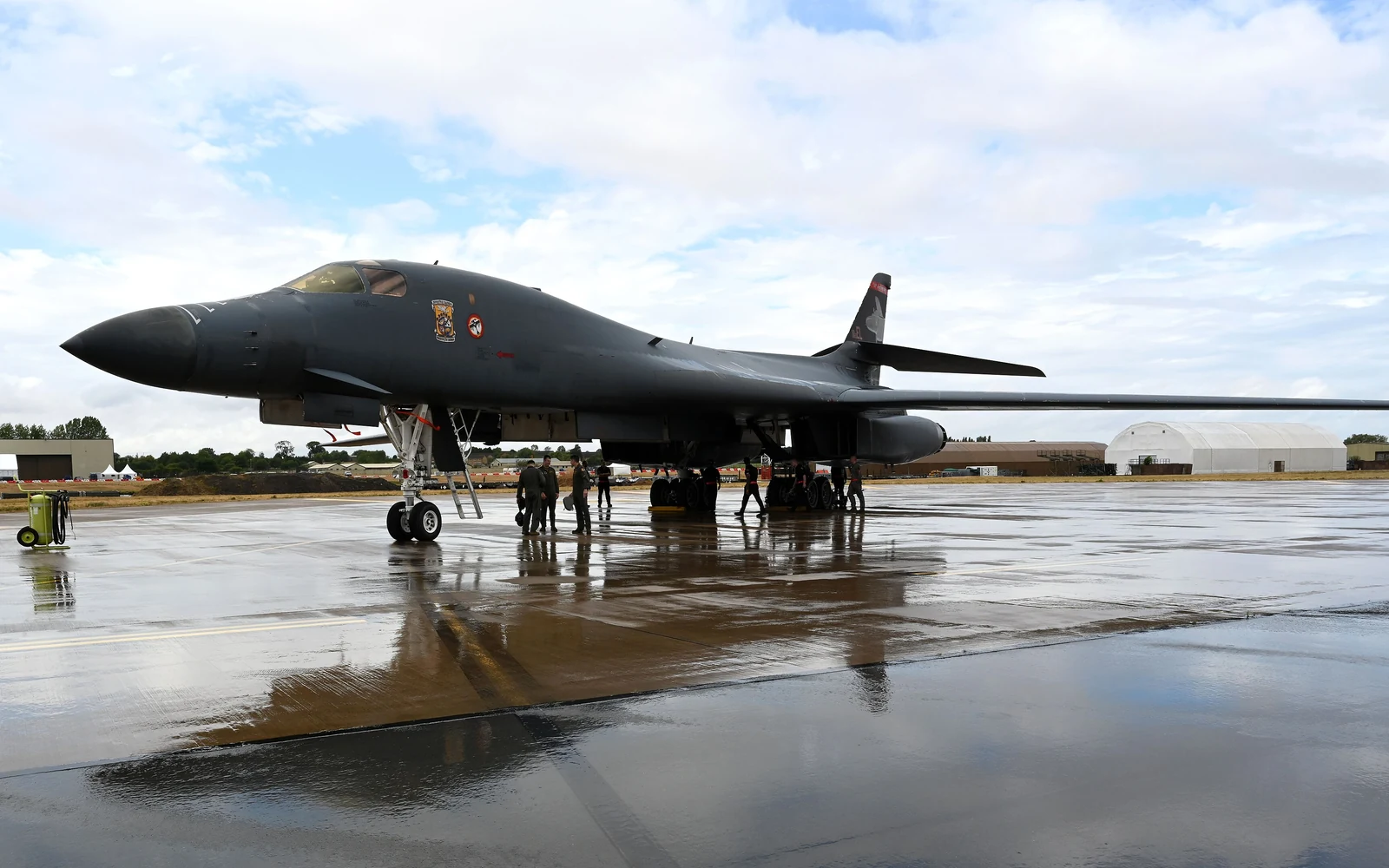
NEW YORK: The United States Department of Justice unsealed an eight count superseding terrorism indictment in Manhattan federal court on Tuesday charging three operatives backed by Iran with orchestrating international attack plots, including an alleged scheme to detonate disguised fuel vans outside Royal Air Force Fairford in western England while American heavy bombers were stationed at the facility.
Federal prosecutors identified the three defendants as Mohammad Baqer Saad Dawood al Saadi, a 32 year old dual Iranian and Iraqi national; Mohsen Mohajeri, a 48 year old Iranian citizen; and Mohammad Ali al Hassani, a 35 year old Iraqi national, according to Al Jazeera. The indictment accuses the trio of providing material support to foreign terrorist organizations, conspiring to commit acts of terrorism transcending national boundaries, and coordinating operations on behalf of Iran’s Islamic Revolutionary Guard Corps and Kataib Hezbollah, the powerful Iraqi paramilitary faction designated as a terrorist organization by Washington.
Remarkably, court filings allege that al Saadi helped direct the British air base operation from inside a federal detention facility in New York City, where he has been held without bail since May on earlier terrorism charges, using coded telephone conversations with relatives abroad to pass operational instructions.
Disguised fuel vans and shrapnel outside Gloucestershire’s bomber hub
According to the superseding indictment unsealed in the Southern District of New York, the late September plot targeted RAF Fairford in Gloucestershire, Britain’s primary forward operating airfield for United States Air Force strategic heavy bombers in Europe.
Prosecutors allege that al Hassani recruited and paid operatives inside the United Kingdom to purchase metal objects designed to act as lethal shrapnel and load barrels of fuel into white commercial vans painted and outfitted to resemble routine aviation or commercial fuel delivery vehicles, RTE News reported. Investigators say the cell conducted physical reconnaissance around the Gloucestershire perimeter before a local farmer near the airfield spotted suspicious white vans parked near the base boundary in late September and alerted British police.
Counterterrorism detectives from London’s Metropolitan Police intervened alongside British intelligence services before any explosive device could be triggered. British authorities previously charged two 24 year old London residents, Mohmed Abdulkarim and Nouman Essghir, under the United Kingdom’s National Security Act in connection with suspected hostile reconnaissance around the Gloucestershire installation.
Within days of the late September security alert, the Pentagon quietly withdrew all deployed B 1B Lancer supersonic heavy bombers from RAF Fairford. That force protection posture tightened further across Britain on Tuesday, when United States Air Force KC 135 Stratotanker aerial refueling aircraft departed RAF Mildenhall in Suffolk amid heightened threat assessments tied to Iranian retaliation risks. In Washington on the same day, officials confirmed that Treasury Secretary Scott Bessent relocated his personal residence onto a secure military base after federal intelligence agencies warned of credible Iranian linked threats against senior cabinet officials.
Jailhouse coded calls and a 20 plot transnational network
Federal prosecutors detailed an unusually brazen command chain inside the Manhattan court papers. Al Saadi, whom American authorities describe as a senior external operations commander within Kataib Hezbollah, was brought into custody in New York in May and pleaded not guilty at a June arraignment, where he declared in open court that he considered himself a prisoner of war.
Despite stringent pretrial detention monitoring, investigators allege al Saadi exploited permitted family telephone calls from his New York jail unit between summer and September, speaking in prearranged coded phrases with his mother and sister in Iraq to relay financing approvals, target priorities, and tactical updates to Mohajeri and al Hassani overseas, Deutsche Welle reported. Both Mohajeri and al Hassani remain at large outside United States custody.
Beyond the Gloucestershire bomber base operation, the indictment links the three defendants’ broader external operations network to nearly 20 alleged attacks, arsons, and surveillance plots across Europe, Canada, and the United States over the past two years. Prosecutors say the network relied heavily on criminal proxies and locally recruited operatives paid in cryptocurrency or cash transfers to mask state sponsorship.
Among the violent incidents cited by American investigators are:
- London stabbing attack: An April assault in London in which two Jewish men were stabbed in what prosecutors allege was a directed intimidation operation targeting diaspora communities.
- European arson attacks: Coordinated firebombings and arson attempts aimed at synagogues and Jewish community schools in Amsterdam and Munich, according to The Hindu.
- North American surveillance schemes: Alleged target scouting of dissident figures, Israeli diplomatic sites, and defense infrastructure across Canada and the eastern United States.
Attorney General Todd Blanche said in a Justice Department statement announcing the charges that federal prosecutors will pursue every link in transnational terror networks that target American service members, allied military installations, or religious communities abroad. FBI Director Kash Patel credited joint intelligence sharing between FBI counterterrorism squads, British policing agencies, and European security services with disrupting the RAF Fairford cell before casualties occurred, while Manhattan United States Attorney Jamie McDonald vowed that federal detention facilities would never serve as safe command posts for foreign militant leaders.
Escalating shadow friction despite diplomatic overtures
Iranian diplomatic missions have repeatedly denied involvement in covert violent plots on European or North American soil, dismissing Western indictments as politically motivated fabrications designed to justify economic sanctions and military pressure against Tehran.
Yet Tuesday’s unsealing highlights a stark divergence between public diplomatic signaling and ongoing intelligence confrontations across Europe and the Middle East. Even after President Donald Trump declared the Iran war militarily over ahead of regional talks in Qatar, Western security services have remained on elevated counterintelligence footing across British and continental NATO bases. British military police and counterterrorism officers are simultaneously managing fallout from a separate inquiry after a United States Army soldier stationed in Britain was arrested on suspicion of espionage for Russian intelligence earlier this week.
For defense planners in London and Washington, the Gloucestershire allegations underscore how unmanned drones, commercial vehicles, and locally hired proxies have compressed perimeter security margins around strategic airfields far from active combat zones. RAF Fairford, whose long runway and munitions storage bunkers have hosted American B 52, B 1B, and B 2 bomber task forces for decades, sits surrounded by rural country roads where civilian agricultural and delivery traffic passes within hundreds of meters of perimeter fencing.
Al Saadi is scheduled to be arraigned on the superseding charges in Manhattan federal court later this month, where he faces a potential mandatory life sentence in federal prison if convicted on the top terrorism counts. Meanwhile, the Justice Department and State Department have issued international law enforcement alerts seeking the arrest and extradition of Mohajeri and al Hassani should either operative travel outside Iranian or Iraqi jurisdiction.