Donald Trump calls Iran war militarily effectively over after Qatari mediation talks as Brent oil slips below 90 dollars
Following Oval Office talks with Qatari Prime Minister Sheikh Mohammed bin Abdulrahman Al Thani and steep Republican midterm losses blamed partly on energy shocks, President Donald Trump said renewed US strikes on Iran are highly unlikely while maintaining a naval port blockade as Brent crude dipped below 90 dollars.
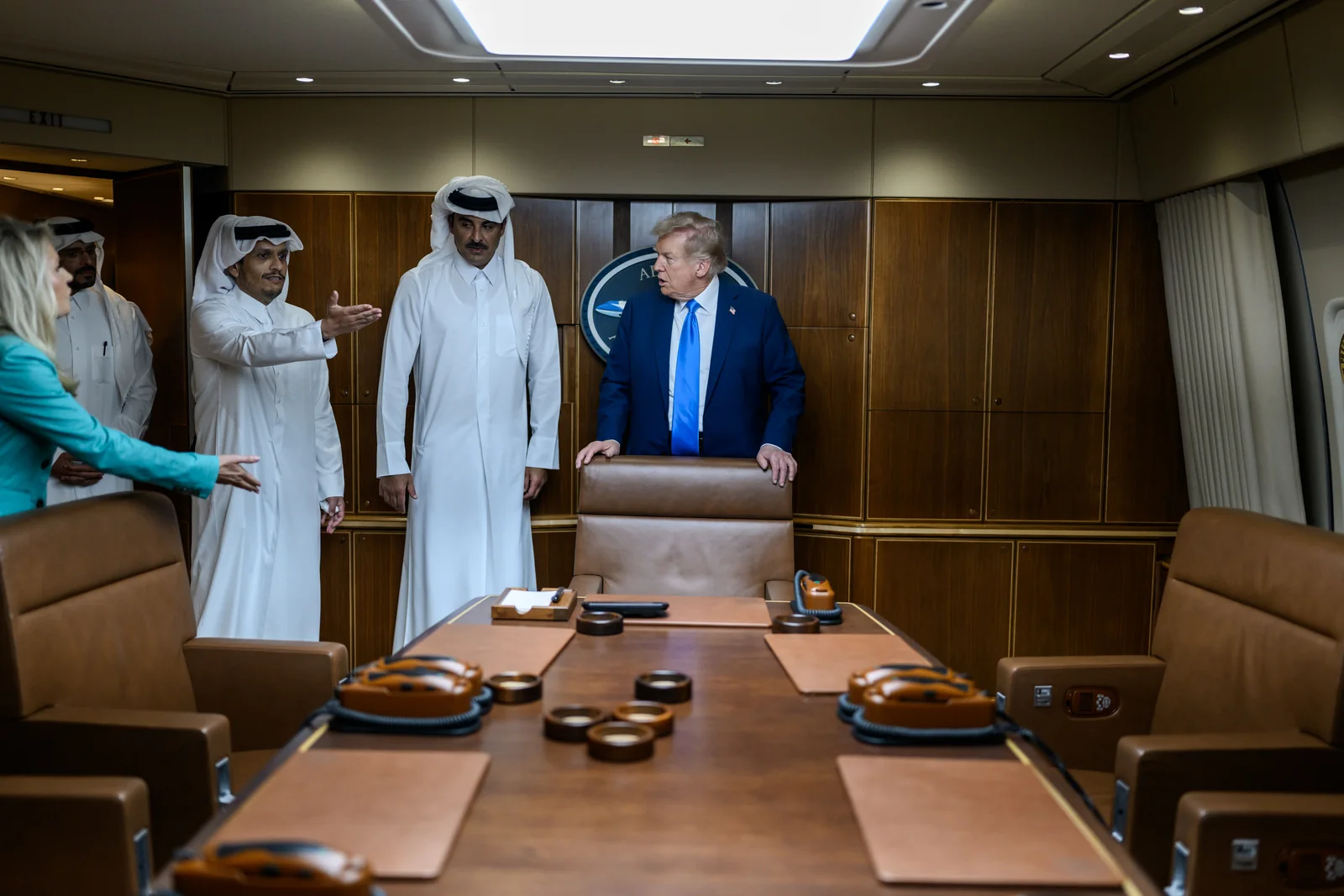
President Donald Trump signaled his sharpest pivot yet toward winding down active combat operations in the nine month war with Iran, declaring that the conflict is militarily effectively over and telling White House reporters that fresh American air or missile strikes on Iranian territory are highly unlikely as Qatari mediated peace talks gather momentum. According to BBC News, Trump delivered the assessment after hosting Qatari Prime Minister Sheikh Mohammed bin Abdulrahman Al Thani for Oval Office discussions alongside Vice President JD Vance, sending global crude benchmarks tumbling on Tuesday morning as Brent slipped below 90 dollars per barrel for the first time since August.
While warning Tehran that American forces remain locked and loaded should Gulf partners come under renewed attack and confirming that the United States Navy will keep its maritime blockade of Iranian ports in place for now, Trump emphasized that Washington is preserving a quiet military status quo largely at the urging of Iran’s Arab neighbors. On social media following the Oval Office meeting, Qatar’s prime minister described holding positive discussions with Trump and Vance aimed at securing a durable settlement and restoring stability across the Persian Gulf.
Trump’s diplomatic turn arrives alongside US mediated Russia and Ukraine security talks opening Tuesday in Abu Dhabi, reflecting an unmistakable White House push to pivot from costly wartime escalation toward legacy defining dealmaking after American voters delivered a stinging rebuke to Republicans in last week’s midterm elections.
Midterm political reckoning and nine months of Strait of Hormuz turmoil
Since joint United States and Israeli strikes ignited full scale hostilities with Tehran in February, the conflict has repeatedly disrupted commercial shipping through the Strait of Hormuz, the narrow maritime chokepoint carrying roughly one fifth of global petroleum and liquefied natural gas supplies. Retaliatory Iranian missile and drone salvos struck targets or disrupted civil aviation corridors across Saudi Arabia, Qatar, and the United Arab Emirates, while fuel rationing fears and record pump prices rippled from North America and Europe all the way to Australia.
Domestically, those energy shocks proved politically lethal for Trump’s party on Election Day. Senior administration figures including Vice President Vance acknowledged after Democrats swept both the House and the Senate last week that voter exhaustion with the Iran conflict and elevated grocery and gasoline bills weighed heavily on Republican candidates, a backlash now fueling an extraordinary bipartisan impeachment clash over Pentagon war powers in Washington.
Even though Trump has previously claimed at intervals that Iranian military capacity was neutralized, only to authorize what he termed minor strikes against an Iranian island in the Strait of Hormuz shortly before the midterms, political incentives inside the West Wing have shifted decisively now that incoming Democratic majorities prepare to control congressional war funding in January. Framing Iran’s nuclear stockpile as eliminated allows Trump to claim strategic victory while leaning on Doha and Muscat intermediaries to broker an enduring maritime and nuclear arrangement.
Why Washington keeps its naval blockade active while oil retreats
Asked directly at the White House why he would not issue a formal presidential proclamation ending hostilities immediately if the campaign is militarily finished, Trump pointed to lingering security guarantees owed to Gulf Cooperation Council allies that absorbed Iranian fire earlier in the year. Maintaining the US Navy’s port blockade gives Washington economic leverage at the negotiating table while deterring Islamic Revolutionary Guard Corps naval units from harassing tankers transiting Hormuz.
Iranian officials have repeatedly voiced skepticism toward Trump’s public optimism in recent months, previously denying direct bilateral talks with Washington while confirming indirect diplomatic channels through regional mediators Oman and Qatar. Analysts caution that Trump’s pattern of alternating conciliatory deal talk with sudden military threats means miscalculation in the Gulf cannot be ruled out if indirect negotiations stall over sanctions relief or port inspections.
Global commodity traders nevertheless treated Tuesday’s Oval Office readout as the clearest de escalation signal since late winter. After easing across Asian trading to 91.50 dollars with West Texas Intermediate near 85.82 dollars, Brent crude extended its slide during Tuesday’s European and New York morning hours to dip beneath 90 dollars per barrel according to CNBC market data. For inflation battered central bankers and energy importing economies worldwide, sustained calm across the Strait of Hormuz would mark the single biggest economic relief valve of late 2026.
How Doha became the indispensable bridge between Washington and Tehran
Qatar’s central role in Monday’s Oval Office breakthrough builds on years of delicate shuttle diplomacy from Doha, which uniquely hosts both the largest American military air headquarters in the Middle East at Al Udeid Air Base and working diplomatic channels with Iranian officials across the Persian Gulf. Because Washington and Tehran have lacked formal bilateral diplomatic relations for more than four decades and Iranian leaders repeatedly rebuffed public calls for direct face to face talks earlier this year, Qatari Prime Minister Sheikh Mohammed bin Abdulrahman Al Thani and Omani intermediaries have carried framework proposals back and forth since late summer.
Earlier rounds nearly collapsed in August when Tehran publicly denied holding negotiations with the United States after Trump announced he had called off massive new airstrikes to give diplomacy a chance, prompting angry presidential social media posts accusing Iranian leaders of duplicity. Two powerful realities have changed the calculus since then: months of US naval interdictions have severely strained Iran’s maritime export revenues, while last week’s American midterm elections stripped Republicans of both houses of Congress and left the White House eager to extinguish an unpopular foreign war before January.
Should indirect talks guided by Doha convert Tuesday’s informal military pause into verifiable guarantees for commercial shipping through the Strait of Hormuz alongside constraints on Iran’s nuclear program, the diplomatic dividend would reverberate across global markets. Even cautious steps away from the brink have already pulled Brent crude back beneath ninety dollars a barrel, offering households from North America to Europe and Asia their first tangible relief from wartime energy inflation in months.
European and Asian maritime insurers are watching every diplomatic signal out of Washington and Doha just as closely as oil futures desks. Restoring predictable commercial transit rates through the Persian Gulf and the Gulf of Oman would ease container freight surcharges and petrochemical input costs that have rippled through global manufacturing supply chains since spring, turning Qatar’s quiet mediation channel into the pivotal diplomatic track of the autumn.