Senate Republicans reelect John Thune as leader without opposition after turning back delay push
Senate Republicans unanimously reelected South Dakota Sen. John Thune as minority leader by acclamation alongside John Barrasso, Tom Cotton, and Shelley Moore Capito on Tuesday afternoon, opting for continuity minutes after House Republicans ousted Steve Scalise for Jim Jordan.
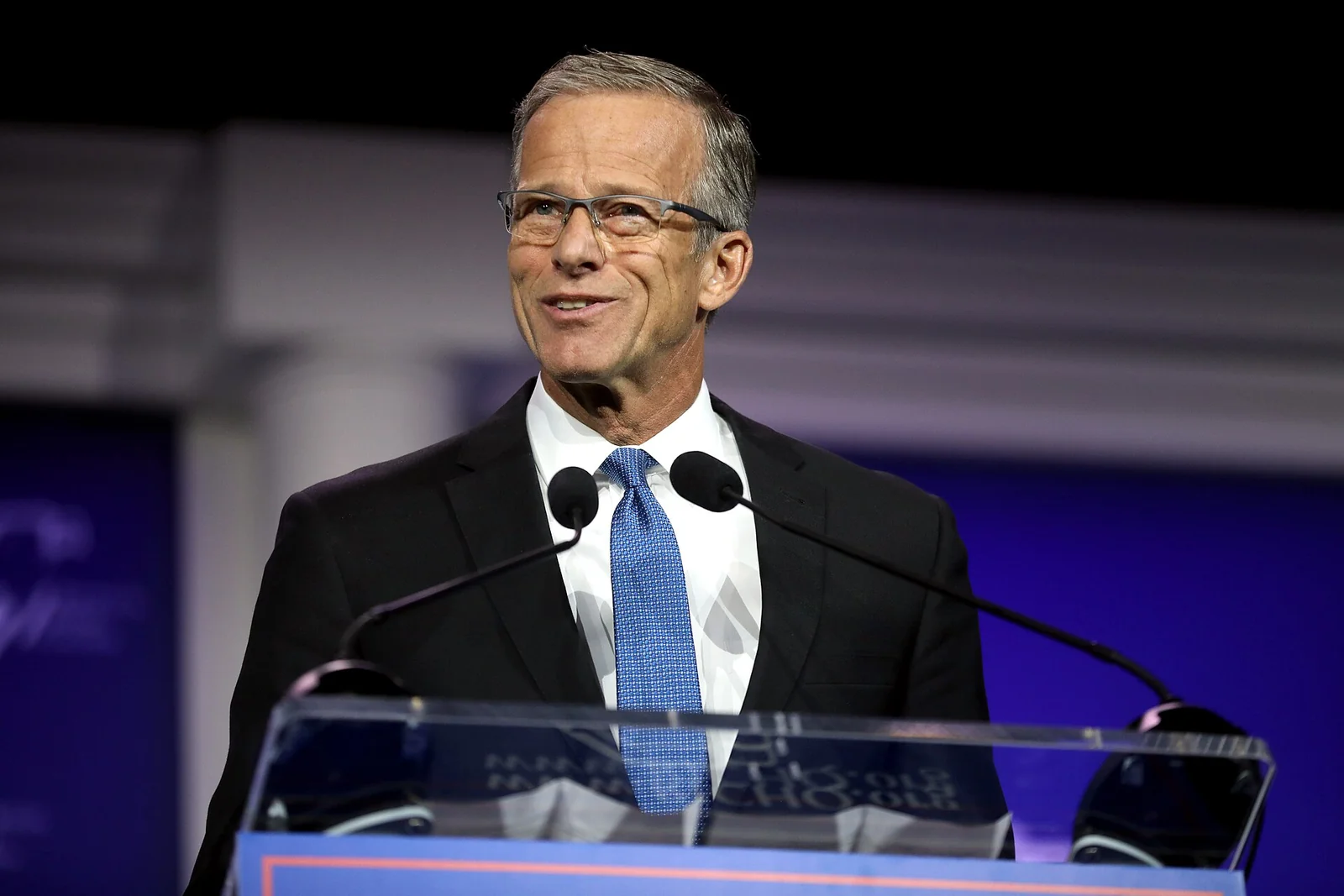
Senate Republicans unanimously reelected South Dakota Sen. John Thune as their leader on Tuesday afternoon, choosing institutional stability over upheaval after hours of tense closed door debate following a midterm election wave that cost the party at least seven Senate seats and control of the upper chamber. Meeting inside the historic Old Senate Chamber after reconvening from an inconclusive morning session, returning senators and newly elected Republican freshmen backed Thune by acclamation without a single dissenter according to CBS News.
Rather than shaking up their ranks, Senate Republicans kept their entire top leadership table intact for the 120th Congress that convenes in January. Thune spokesperson Ryan Wrasse confirmed to NBC News that Wyoming Sen. John Barrasso was reelected by acclamation as minority whip alongside Arkansas Sen. Tom Cotton as conference chair and West Virginia Sen. Shelley Moore Capito as policy committee chair, obviating the need for contested secret ballots once conservative efforts to postpone the elections fell short.
The smooth afternoon coronation stood in stark contrast to the political earthquake unfolding simultaneously on the opposite side of the Capitol rotunda, where House Republicans ousted sitting Majority Leader Steve Scalise in a 106 to 73 secret ballot vote to elevate Judiciary Chairman Jim Jordan. Together, Tuesday’s twin outcomes establish a split screen Republican opposition for President Donald Trump’s final two years in office, pairing a populist House Freedom Caucus cofounder in the lower chamber with a measured institutional tactician in the Senate.
How Thune defused a conservative push to postpone the vote
Although no Republican senator stepped forward to challenge the 65 year old South Dakota lawmaker directly, Thune’s path to Tuesday afternoon’s unanimous endorsement required patient diplomacy across two marathon conference sessions. Ahead of Tuesday’s gathering, Wisconsin Sen. Ron Johnson circulated a petition signed by conservative colleagues including John Kennedy of Louisiana, Ted Budd of North Carolina, Rick Scott of Florida, and Mike Lee of Utah demanding a formal conference reckoning and urging colleagues to delay leadership elections until the party confronted why voters rejected its midterm pitch.
Other senators echoed that frustration as lawmakers returned to Washington for the first time since Election Night. Pennsylvania Sen. David McCormick argued in a written statement that suffering the party’s worst midterm defeat in decades demanded an unhurried debate over economic messaging before locking in leadership, while Missouri Sen. Josh Hawley complained before the morning session that he wanted clearer commitments on lowering household costs for working families.
Rather than muscling an immediate ballot through Tuesday morning’s gathering, Thune spent a two hour morning meeting largely listening as colleagues vented grievances over inflation, healthcare expenses, two prolonged government shutdowns, and voter backlash over the war in Iran. Telling reporters at midday that he wanted to hear every member out before summarizing a path forward, Thune recessed the conference for lunch and brought senators back in the afternoon for a threshold vote on whether to proceed.
When the conference reconvened, a clear majority of Republican senators voted to move ahead immediately with leadership elections according to CBS News live Capitol Hill coverage. Emerging from the room, Ron Johnson emphasized to reporters that his procedural push had never been directed personally against Thune, adding that he believed the South Dakota leader had been unfairly attacked by online critics within the party’s base even though no alternative candidate existed.
Kentucky Sen. Rand Paul similarly pushed back against efforts to blame Senate leadership for sweeping national headwinds that dragged down Republican nominees across deep red states. Speaking with reporters on Tuesday as quoted by Deseret News, Paul noted wryly that voters in states such as Texas who backed statewide Democratic candidates last week were clearly not casting protest ballots over internal Senate floor management in Washington.
Navigating a brutal midterm map and filibuster crossfire
Thune’s survival reflects deep personal goodwill accumulated over two decades in the upper chamber since first unseating Democratic Leader Tom Daschle in 2004 and serving for years as Mitch McConnell’s chief deputy before winning the top Republican post after the 2024 elections. Over the past two years as majority leader, Thune steered Trump’s flagship tax, border security, and defense package into law while confirming scores of executive branch nominees and federal judges at a brisk clip.
At the same time, Thune repeatedly absorbed heat from populist commentators and at times frustrated the White House by refusing to gut the Senate’s 60 vote legislative filibuster to force through partisan priorities such as the SAVE America Act voter citizenship bill, which lacked sufficient support to clear procedural hurdles. Ironically, Thune’s steadfast refusal to abolish the filibuster while holding the gavel now hands his shrunken Republican minority its single most potent institutional shield when Democrats assume control of the Senate floor in January.
The scale of last week’s electoral wipeout underscored why Republican senators were eager to preserve procedural leverage. Entering the 2026 cycle with what strategists initially viewed as a favorable Senate map offering minimal Democratic pickup targets, Republicans saw the battlefield collapse under sustained voter anger over grocery and gasoline prices alongside the administration’s military campaign in Iran.
Democrats flipped at least seven Republican held Senate seats nationwide, sweeping competitive battlegrounds in Ohio and North Carolina while stunning political observers with victories across longtime Republican strongholds in South Carolina, Kansas, and Texas. Two additional contests in Alaska and Mississippi remained uncalled on Tuesday afternoon, with Democratic challenger Scott Colom holding a lead of more than 2,500 votes over Republican incumbent Cindy Hyde Smith in Mississippi as election officials continued tallying remaining ballots.
Addressing those losses on the Senate floor earlier this week, Thune acknowledged candidly that Election Night delivered a humbling verdict from voters struggling with household budgets, pledging that Senate Republicans would reflect honestly on where the party fell short while doubling down on affordability proposals and opposing expansive Democratic spending bills.
Leadership tremors spread to Senate Democrats as Hegseth vote nears
Even as Senate Republicans closed ranks behind Thune, Barrasso, Cotton, and Capito, fresh leadership turbulence erupted on the Democratic side of the aisle on Tuesday afternoon before Democrats hold their own internal elections next month. At a Capitol press conference alongside Michigan Democratic Sen. Elissa Slotkin, Vermont Independent Sen. Bernie Sanders announced publicly that he will not support New York Sen. Chuck Schumer for reelection as Democratic leader despite praising Schumer’s three decades of work ethic.
Calling for generational and strategic change atop the incoming Senate majority, Sanders pointed to Maryland Sen. Chris Van Hollen as a potential contender after Van Hollen declined earlier this week to rule out a bid, while Slotkin told reporters she wanted new leadership energy even though she is not personally seeking the post. The surprise progressive challenge suggests that even a party celebrating historic midterm gains faces internal friction over how aggressively to confront the Trump White House in 2027.
On the House side, Republicans paired Jordan’s afternoon victory over Scalise by reelecting Minnesota Rep. Tom Emmer as minority whip over Texas Rep. August Pfluger, establishing the top two leaders who will work opposite Thune and Barrasso next year. Before lawmakers adjourn Tuesday evening, the House is scheduled to hold a closely watched 5:30 p.m. Eastern procedural vote on whether to table or refer Kentucky Republican Rep. Thomas Massie’s eight articles of impeachment against Defense Secretary Pete Hegseth, with House Democratic Caucus Chair Pete Aguilar confirming that Democratic leaders are allowing rank and file members to vote their conscience without a formal party whip operation.
For Thune, emerging from Tuesday’s high stakes Capitol Hill leadership gauntlet with unanimous conference backing provides immediate authority to negotiate year end government funding and defense bills during the lame duck session before transitioning to minority leader in January. How effectively Thune coordinates strategy with a far more combative House Republican conference under Jordan will shape every legislative and oversight battle of the next two years.