Senior US Army soldier arrested in Britain on suspicion of spying for Russian intelligence
British counterterrorism officers working alongside the FBI and US Army Counterintelligence Command arrested a 41 year old senior American soldier near Gloucester under the UK National Security Act over suspected espionage for Russia.
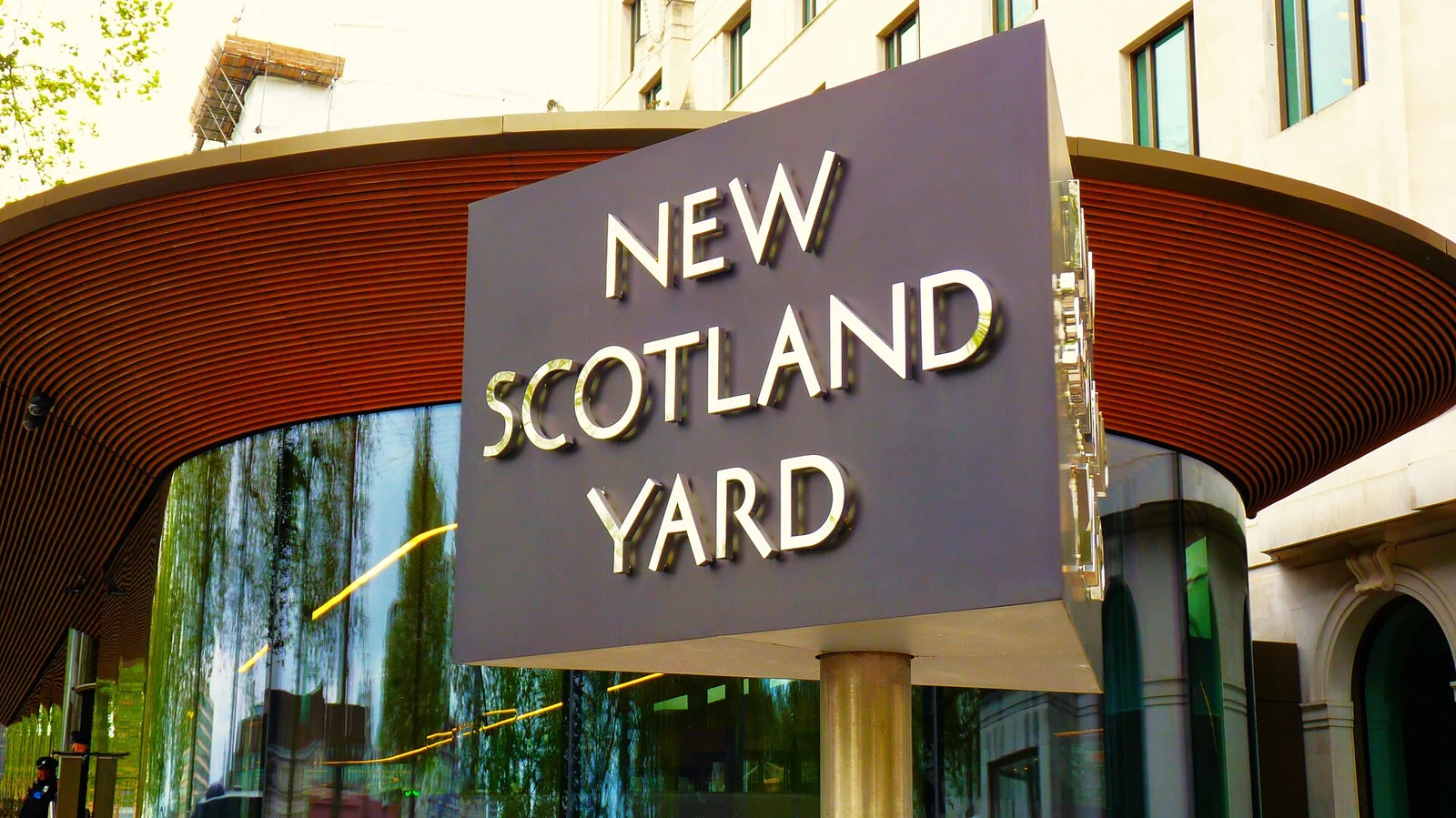
British counterterrorism officers arrested a 41 year old senior United States Army soldier in western England on Tuesday on suspicion of passing protected information to Russian intelligence, uncovering a major transatlantic insider threat probe coordinated jointly by London’s Metropolitan Police, the Federal Bureau of Investigation, and US military investigators. Authorities detained the unnamed American service member near the historic cathedral city of Gloucester roughly 90 miles west of London and transferred him to a central London police station where he remained in custody on Tuesday evening according to NBC News.
In an official statement released Tuesday afternoon, the Metropolitan Police confirmed that specialist Counter Terrorism Policing detectives arrested the soldier on suspicion of offenses under Sections 1 and 3 of the United Kingdom’s National Security Act 2023, sweeping statutory provisions that criminalize obtaining or disclosing protected defense material and materially assisting a foreign intelligence service. Police explicitly identified Russia as the foreign power at the center of the suspected espionage activity while forensic teams executed coordinated search warrants across two separate properties in Gloucestershire.
Senior American law enforcement and military counterintelligence chiefs took the rare step of issuing formal public warnings alongside British police within hours of the detention, underscoring the sensitivity of the material the suspect could access. Brig. Gen. Sean Stinchon, commanding general of US Army Counterintelligence Command, confirmed that the detained suspect is a senior soldier who had been entrusted with sensitive military information, calling the case a sobering reminder that insider threats across allied defense networks remain real and persistent.
Joint transatlantic dragnet near Britain’s signals intelligence heartland
While British and American authorities declined to disclose the soldier’s unit assignment, exact rank, or the specific defense installations involved while searches remained underway, the geography of Tuesday’s operation immediately drew attention across the Five Eyes intelligence community. Gloucestershire sits at the center of sensitive Anglo American defense and intelligence infrastructure in western England, housing both the doughnut shaped Cheltenham headquarters of Britain’s Government Communications Headquarters signals intelligence agency and Royal Air Force Fairford, the primary forward European airfield for heavy US Air Force strategic bombers as noted by The National.
Deputy Assistant Commissioner Vicki Evans, who serves as Britain’s Senior National Coordinator for Counter Terrorism Policing at the Metropolitan Police, described the detention as a significant operational milestone resulting from close collaboration between British detectives and American federal investigators. Emphasizing that the espionage allegations are very serious and that forensic inquiries remain active across Gloucestershire and London, Evans cautioned the public against speculation while investigators examine digital devices and physical records seized during Tuesday’s raids.
Crucially, Metropolitan Police officials stressed that Tuesday’s arrest is not connected to any other ongoing counterterrorism investigations in the United Kingdom. As reported by ABC News, that clarification specifically separates the Russian espionage inquiry from a suspected Iranian linked security plot uncovered in September near RAF Fairford, an episode that prompted the Pentagon to reposition strategic bombers and heightened force protection posture just ahead of this week’s departure of ten US Air Force KC 135 refueling tankers from RAF Mildenhall.
FBI Director Kash Patel praised the joint operation on Tuesday afternoon and signaled zero leniency from Washington as prosecutors on both sides of the Atlantic evaluate jurisdictional next steps. Calling the detention an important arrest involving espionage allegations of the utmost concern to the United States and its NATO allies, Patel declared that the bureau has no tolerance for anyone who breaks a military oath to the United States and endangers allied national security.
How Britain’s National Security Act reshaped allied spy prosecutions
Detaining an active duty American service member on British soil under domestic UK counterespionage statutes rather than relying solely on closed US military justice channels under the Status of Forces Agreement highlights how aggressively London now deploys the National Security Act 2023. Enacted by Parliament to replace century old Official Secrets legislation following Russian nerve agent attacks and intensifying state backed sabotage across Europe, the statute grants British counterterrorism detectives broad powers to detain suspects, inspect encrypted electronics, and prosecute foreign intelligence collaboration occurring inside the United Kingdom.
Under Section 1 of the 2023 law, obtaining, copying, recording, or communicating protected information for a purpose prejudicial to the safety or interests of the United Kingdom carries maximum penalties of life imprisonment, while Section 3 targets any conduct preparatory to or materially assisting a foreign intelligence service even before classified files cross international borders. Because intelligence sharing between Washington and London is deeply intertwined across NATO command structures, signals collection, and nuclear deterrence planning, unauthorized disclosures by an American service member stationed or operating in England can simultaneously compromise British sovereign defense secrets.
Legal analysts note that Washington and London regularly coordinate closely under bilateral defense treaties to determine whether a detained military suspect eventually faces civilian trial in British courts at the Old Bailey, extradition to a US federal district court under the Espionage Act, or court martial proceedings under the Uniform Code of Military Justice. By executing Tuesday’s arrest through Counter Terrorism Policing while embedding FBI agents and Army Counterintelligence Command investigators from the outset, authorities preserved evidentiary chains admissible across both civilian and military jurisdictions.
Stinchon used Tuesday’s joint announcement to urge soldiers and defense civilians across US Army garrisons worldwide to report anomalous behavior, unexplained financial windfalls, or unauthorized handling of classified systems directly to local counterintelligence field offices. Highlighting the teamwork between British police, the FBI, and military investigators, Stinchon said the joint takedown demonstrated the resolve of allied counterintelligence services to uncover covert recruitment inside uniform ranks.
Persistent Russian recruitment efforts amid fragile diplomatic maneuvering
Tuesday’s arrest lands at a delicate geopolitical moment between Washington, European capitals, and Moscow. Even as American mediators test potential diplomatic channels with Kremlin envoys alongside high level G7 consultations with Ukrainian officials in Paris and parallel talks in Abu Dhabi, Western security chiefs have repeatedly warned that Russia’s military intelligence directorate and foreign intelligence service have escalated covert recruitment and sabotage campaigns across NATO territory.
Over the past three years, US military prosecutors and Justice Department national security divisions have confronted a troubling series of insider breaches involving active duty personnel solicited online or through encrypted messaging platforms, ranging from unauthorized leaks of air defense assessments to attempts by enlisted soldiers with security clearances to transmit battlefield technical manuals to handlers linked to Moscow and Beijing. Following previous Air National Guard intelligence leaks, the Pentagon overhauled continuous vetting protocols, tightened compartmented printer logs, and expanded insider threat monitoring across overseas commands in Germany, Poland, and the United Kingdom.
In Britain, MI5 Director General Ken McCallum and Counter Terrorism Policing leaders have similarly warned that state threats now consume a rapidly growing share of counterterrorism caseloads alongside traditional extremist plots. Since expelling dozens of declared Russian diplomatic intelligence officers from London after the full scale invasion of Ukraine, British security officials say Moscow has increasingly relied on cyber intrusion, criminal proxies, and targeted digital approaches aimed at Western military and defense contractor personnel holding active clearances.
For allied commanders overseeing joint US and British intelligence hubs across southern and western England, the allegation that a 41 year old senior soldier rather than an inexperienced junior recruit allegedly assisted Russian intelligence will trigger an immediate damage assessment to determine what compartmented networks, operational schedules, or allied communications the suspect accessed prior to Tuesday’s arrest. Detectives at New Scotland Yard continue questioning the suspect under National Security Act detention rules while forensic teams catalog evidence recovered from the two Gloucestershire sites.