FBI investigates Nvidia chief Jensen Huang over alleged Chinese spy affair as shareholder lawsuit and analyst cuts mount
President Donald Trump confirmed the FBI is examining Nvidia CEO Jensen Huang's disclosed affair with an alleged Chinese intelligence operative as board director Stephen Neal leads an internal review, shareholders file suit in San Jose, and Wall Street trims price targets ahead of November 17 earnings.
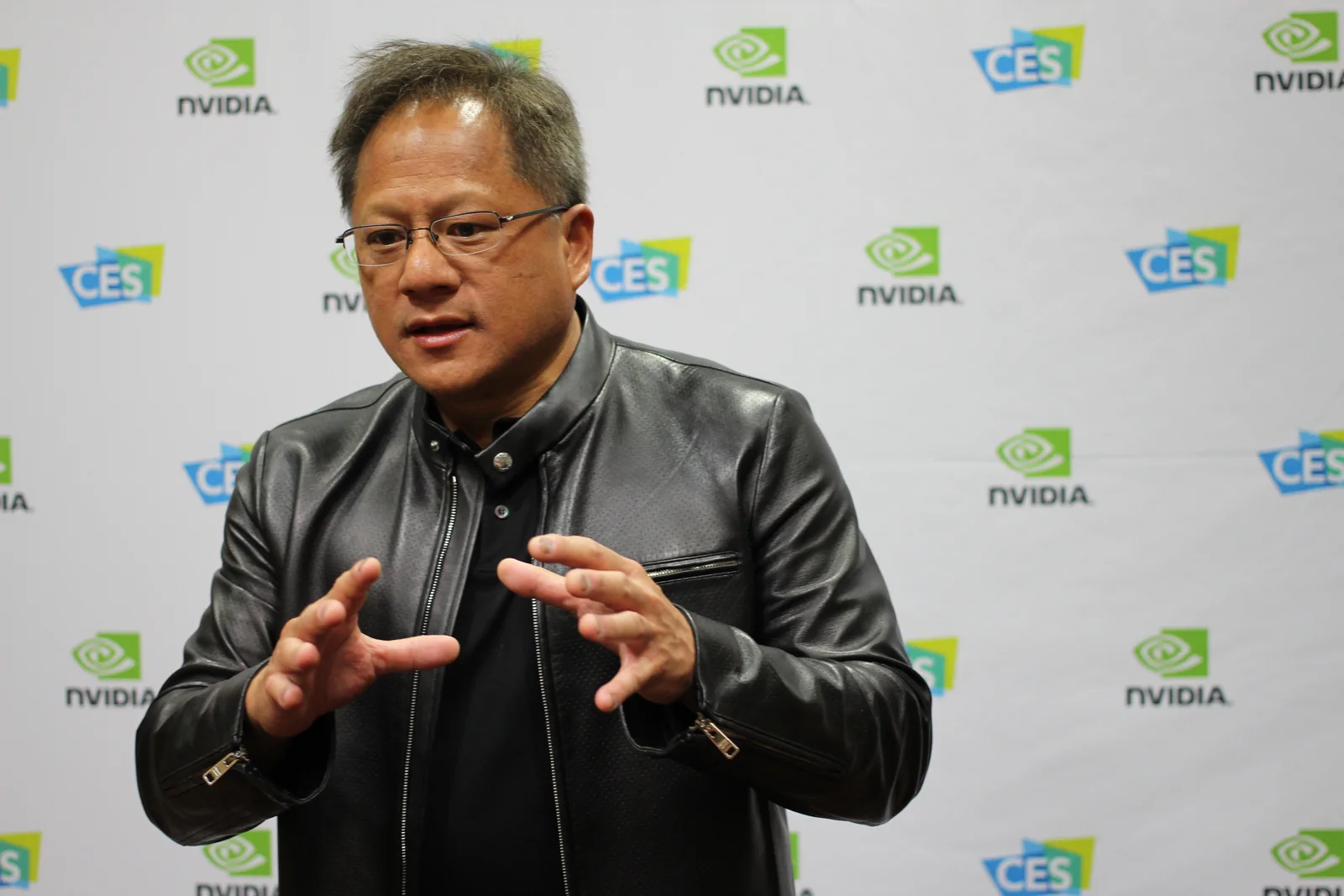
Federal counterintelligence investigators, corporate governance lawyers, and securities litigators are converging simultaneously on Nvidia chief executive Jensen Huang on Tuesday following revelations that the leader of the world’s premier artificial intelligence chipmaker engaged in an extramarital affair with a woman alleged to be an intelligence operative for Beijing. According to CNBC, President Donald Trump confirmed at the White House that the Federal Bureau of Investigation is actively looking into the matter after Trump spoke directly with Huang, who denied knowing the woman was a Chinese spy.
While Trump expressed personal sympathy for the 63 year old executive and suggested Huang had little reason to panic, the widening national security and governance fallout has shaken Silicon Valley, Capitol Hill, and Wall Street just seven days before Nvidia is scheduled to report fiscal third quarter earnings on November 17. On Monday alone, Nvidia shares tumbled 4.27 percent to 178.67 dollars on an astonishing 80 billion dollars of trading volume, erasing roughly 200 billion dollars in market value even as rival semiconductor stocks Broadcom and Advanced Micro Devices surged between nine and thirteen percent.
By Tuesday morning, fresh legal and financial shockwaves compounded the boardroom crisis: a Los Angeles law firm filed a federal shareholder class action lawsuit against Nvidia and Huang in US District Court in San Jose, while major Wall Street banks trimmed their Nvidia share price targets and institutional investors openly questioned Nvidia’s lack of a public succession plan.
Export control scrutiny, Stephen Neal’s board probe, and San Jose litigation
At the core of Washington’s counterintelligence alarm is whether a foreign intelligence operation leveraged personal access to Huang to circumvent strict American semiconductor export controls aimed at China. Reporting cited by Reuters via Yahoo Finance detailed allegations from technology publication The Information that Huang’s relationship with Chinese businesswoman Alice Huang facilitated the routing of at least 7.5 billion dollars worth of restricted Nvidia processors through Chinese corporate intermediaries.
Nvidia has flatly maintained since disclosing its independent board inquiry that neither proprietary chip architectures nor United States national security were compromised. To insulate the internal investigation from executive influence, Nvidia’s board elevated veteran corporate attorney Stephen Neal to serve as lead independent director overseeing outside counsel’s forensic audit of executive communications, compliance sign offs, and third party distributor shipments, while congressional committees demanded classified briefings on export enforcement gaps.
Shareholder plaintiffs wasted no time moving into federal court. The class action complaint lodged in San Jose accuses Nvidia and Huang of issuing materially false or misleading governance and risk disclosures that concealed executive vulnerability to foreign intelligence targeting, exposing investors to steep losses once the board probe became public.
Key man risk and Wall Street target cuts ahead of November 17 earnings
For institutional portfolio managers, the episode has exposed acute key man risk at a multi trillion dollar enterprise uniquely synonymous with its co founder. Unlike traditional corporate hierarchies featuring a designated president or chief operating officer groomed for succession, Nvidia operates with a famously flat management structure in which dozens of senior vice presidents report directly to Huang, who has led the Santa Clara chipmaker continuously since founding it in 1993.
That structural concentration prompted blunt warnings across financial media on Tuesday morning, including commentary on CNBC urging long term shareholders to prepare contingency playbooks for a leadership transition if federal investigators or Stephen Neal’s committee uncover compliance lapses. Credit tremors also rippled into Nvidia’s ecosystem ahead of Tuesday evening’s earnings report from Nvidia backed cloud provider CoreWeave, where yields on 2031 corporate bonds climbed above sixteen percent and five year credit default swap spreads surged past 1,240 basis points.
Major equity analysts stuck with positive long term ratings on Nvidia’s hardware dominance on Tuesday while trimming valuation multiples to reflect headline overhang according to CNBC’s analyst roundup. Citigroup lowered its Nvidia price target from 315 dollars to 285 dollars while reiterating a buy rating and forecasting 70 percent year over year revenue growth outlook for calendar 2027, and Wells Fargo cut its target from 315 dollars to 300 dollars while maintaining an overweight stance.
Even Nvidia’s commitment alongside six peers to invest in Anthropic’s newly priced initial public offering underscored that its commercial engine continues running at full speed. Yet until the FBI counterintelligence review and Neal’s independent board investigation establish definitively whether export barriers were breached, the most influential executive of the artificial intelligence boom faces the gravest test of his thirty three year tenure.
Why the rest of the semiconductor sector rallied without Nvidia
Perhaps the single most striking market dynamic surrounding Nvidia’s crisis this week has been Wall Street’s refusal to pull the plug on the broader artificial intelligence hardware trade even as its undisputed bellwether stumbled. On Monday, eighty six of the one hundred one companies inside the Nasdaq 100 advanced and the Philadelphia Semiconductor Index ripped seven percent higher even while Nvidia closed at its lowest level since April 7 and ranked dead last in the entire index.
Monolithic Power Systems surged seventeen percent, Applied Materials jumped eleven percent ahead of its Thursday earnings release, and custom silicon rivals Broadcom and AMD added more than 200 billion dollars in combined market capitalization in a single session, fully offsetting Nvidia’s valuation drop. Options strategists noted that institutional positioning across semiconductor hardware had grown so heavily washed out during last week’s pre CPI sell off that capital rotated rapidly out of headline hit Nvidia and straight into rival chipmakers poised to capture spillover accelerator orders from hyperscalers.
Still, every portfolio manager on Wall Street knows that durable AI enthusiasm ultimately runs through Santa Clara’s product roadmap and governance credibility. When Nvidia steps up to report quarterly results and calendar 2027 supply visibility on November 17, analysts will scrutinize not only Blackwell and next generation rack shipments, but also every word from Stephen Neal’s independent committee regarding export control safeguards, executive oversight, and long overdue leadership succession planning at the world’s most consequential chipmaker.
For Washington export enforcement officials at the Commerce Department and Justice Department, the inquiry also tests whether existing distributor verification rules can police indirect third country routing of advanced processors. Lawmakers from both parties have already signaled that regardless of Trump’s warm personal remarks toward Huang, bipartisan hearings into high end AI chip diversions will intensify once the new Congress convenes, keeping Nvidia’s boardroom under microscopic regulatory scrutiny well into 2027.