US Air Force moves at least 10 KC 135 refueling tankers out of RAF Mildenhall in second UK base withdrawal
Flight tracking analysis verified Tuesday showed at least 10 US Air Force KC 135 aerial refueling aircraft departed RAF Mildenhall in Suffolk for Prestwick Airport in Scotland and Spangdahlem Air Base in Germany amid reports of a suspected Iran linked threat weeks after US bombers left RAF Fairford.
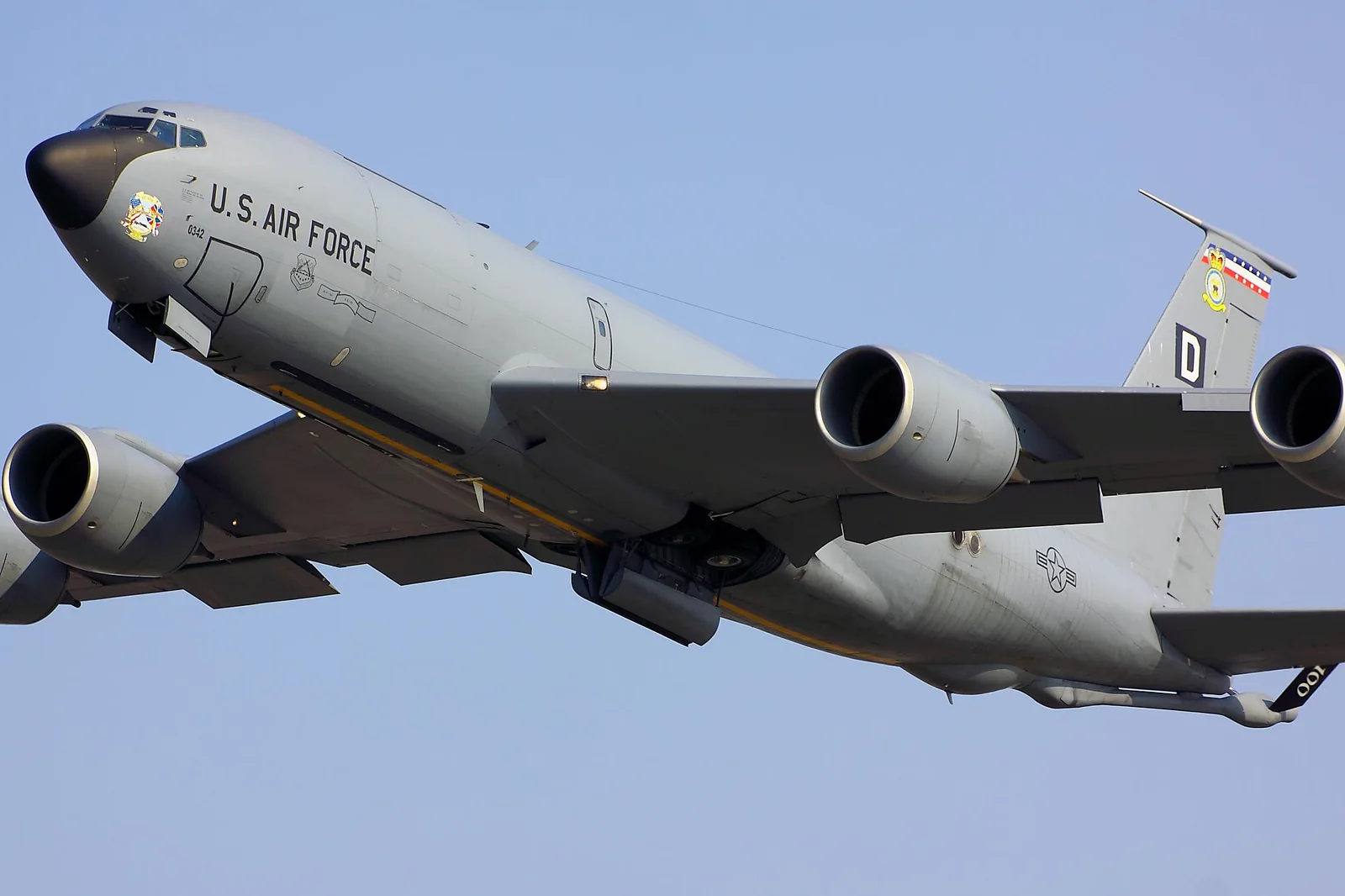
At least ten United States Air Force KC 135 Stratotanker aerial refueling aircraft have departed RAF Mildenhall in eastern England and dispersed to airfields in Scotland and continental Europe, marking the second major relocation of American strategic aviation assets out of a British base this autumn amid heightened concern over suspected Iranian backed security threats. According to flight tracking verification and on the ground reporting published Tuesday by BBC News and BBC Verify, several of the American military planes were photographed parked on the apron at Prestwick Airport near Glasgow on Tuesday morning while others repositioned east to Spangdahlem Air Base in western Germany.
While Pentagon and British Ministry of Defence officials declined to discuss specific intelligence assessments behind the movements, Wall Street Journal reporting linked the rapid dispersal out of Suffolk to a threat stream connected to Iran. Coming just weeks after the United States quietly pulled heavy strategic bombers out of RAF Fairford in Gloucestershire following a counterterrorism alert, the sudden emptying of Mildenhall’s flight line underscores persistent force protection anxieties across European staging hubs even as Washington signals potential military de escalation in the Middle East.
Downing Street moved quickly on Tuesday morning to reassure nearby communities and lawmakers that British military installations remain secure, with the prime minister’s official spokesperson emphasizing that protecting UK hosted bases is a top national priority coordinated closely between British police, intelligence agencies, and American commanders.
Flight tracking trails from Suffolk to Spangdahlem and Prestwick
Located roughly eighty miles northeast of London near Beck Row in Suffolk and home to approximately 3,000 American military personnel, RAF Mildenhall serves as the backbone of US Air Force aerial refueling, special operations aviation, and transatlantic staging between North America, Europe, and the Middle East. Throughout combat operations against Iran since February, KC 135 tankers assigned to or transiting through Mildenhall have played an indispensable role forward deploying fuel to strike packages and patrol aircraft.
Public transponder logs analyzed by BBC Verify via Flightradar24 captured a coordinated wave of departures unfolding across Monday. Two initial KC 135 tankers lifted off from Mildenhall heading toward American installations in Germany and Italy; the first tanker briefly returned to Suffolk before flying east again to land at Spangdahlem Air Base in Germany, while the second flew holding circuits above Aviano Air Base in northern Italy before diverting north to join its counterpart at Spangdahlem.
Eight additional US Air Force KC 135 aircraft subsequently departed Mildenhall before nightfall, including a Nebraska Air National Guard tanker photographed on the tarmac at Prestwick in Ayrshire on Tuesday morning. Reporters visiting the perimeter of RAF Mildenhall on Tuesday observed virtually zero remaining flight activity on the runway, although public aircraft spotting enclosures outside the wire remained open without visible armored checkpoints.
Shadow of the RAF Fairford counterterrorism arrests and perimeter vulnerability
Heightening scrutiny around Mildenhall’s evacuation is its unmistakable echo of events at RAF Fairford two months ago. In September, British authorities declared a major security incident outside the Gloucestershire bomber base after three suspicious vans were spotted conducting apparent reconnaissance near the perimeter fence, prompting the Pentagon to fly its deployed strategic bombers back to the continental United States.
Counterterrorism policing investigations into the Fairford incident have since widened significantly: eight men have been arrested in Britain as part of the inquiry, and two British nationals appeared in court in October facing charges tied to an alleged Iran linked plot. Against that backdrop, former UK National Security Adviser Lord Ricketts told BBC Radio 4 on Tuesday morning that wide body refueling tankers parked inside bases with long rural perimeters represent high value, unarmored targets against low altitude drones, standoff sabotage, or perimeter surveillance, suggesting American commanders likely dispersed the fleet out of an abundance of caution while intelligence leads are evaluated.
Asked about Iranian threats targeting American personnel overseas shortly before the Mildenhall flight logs surfaced, US Secretary of State Marco Rubio noted on Monday that Washington had already moved diplomatic and government staff away from elevated threat vectors whenever intelligence crossed established safety thresholds. British Education Secretary Lucy Powell similarly told Tuesday morning broadcasters that while ministers never comment on live operational deployments, authorities act decisively on security intelligence whenever required.
Strategic stakes for European allied air mobility
Dispersing ten heavy aerial tankers across secondary military and civilian tarmac from Ayrshire to the Rhineland illustrates both the agility and the physical vulnerability of NATO’s logistics architecture at a time when European defense ministries are investing heavily in resilient civil military transport corridors. Unlike hardened fighter shelters capable of shielding tactical jets, strategic tankers must park in the open on expansive aprons within clear sight of public roads.
Officially, a US Air Force spokesperson maintained on Tuesday that aircraft rotate routinely between allied installations for training and real world operational requirements under bilateral basing agreements, declining further comment due to operations security. Yet until British counterterrorism investigators clarify whether a fresh domestic threat triggered Monday’s exodus from Suffolk, empty dispersal pads at both Fairford and Mildenhall stand as stark reminders that Middle Eastern shadow conflicts reach directly to Western Europe’s runways.
Why aerial refueling hubs represent indispensable force multipliers
Military aviation analysts note that moving tankers rather than leaving them concentrated on a single Suffolk flight line reflects hard lessons absorbed from asymmetric airbase attacks across Eastern Europe and the Middle East over the past four years. Modern long range strike, reconnaissance, and air defense sorties depend entirely on flying gas stations like the four engine KC 135 Stratotanker to extend combat radius across thousands of miles without landing in contested regions.
Damaging even two or three parked tankers on the ground with low cost quadcopters or standoff munitions can bottleneck transatlantic air bridge capacity far more severely than losing individual tactical fighters. Because RAF Mildenhall has historically hosted everything from presidential support stops to Middle East surge deployments within easy view of surrounding Suffolk farmland and public spotting laybys, temporarily dispersing ten Stratotankers across Prestwick in Scotland and Spangdahlem in Germany complicates adversary targeting instantly while preserving full refueling coverage over European skies.
In Westminster, opposition lawmakers and defense committee members are nonetheless expected to press ministers for classified assurances that counterterrorism policing resources around joint US and UK bases match heightened autumn threat levels. Having watched strategic bombers depart Gloucestershire in September and aerial tankers vacate Suffolk in November, British and American defense planners face mounting urgency to harden base perimeters before winter operations resume at normal tempo.