Netherlands defense ministry and research partners add TomTom to civil military transport resilience study
Dutch mapping specialist TomTom joined a defense backed research consortium led by TNO alongside the Netherlands Ministry of Defense, TU Delft, and Rijkswaterstaat to model how military deployments can share highways, ports, and freight capacity without disrupting civilian supply chains.
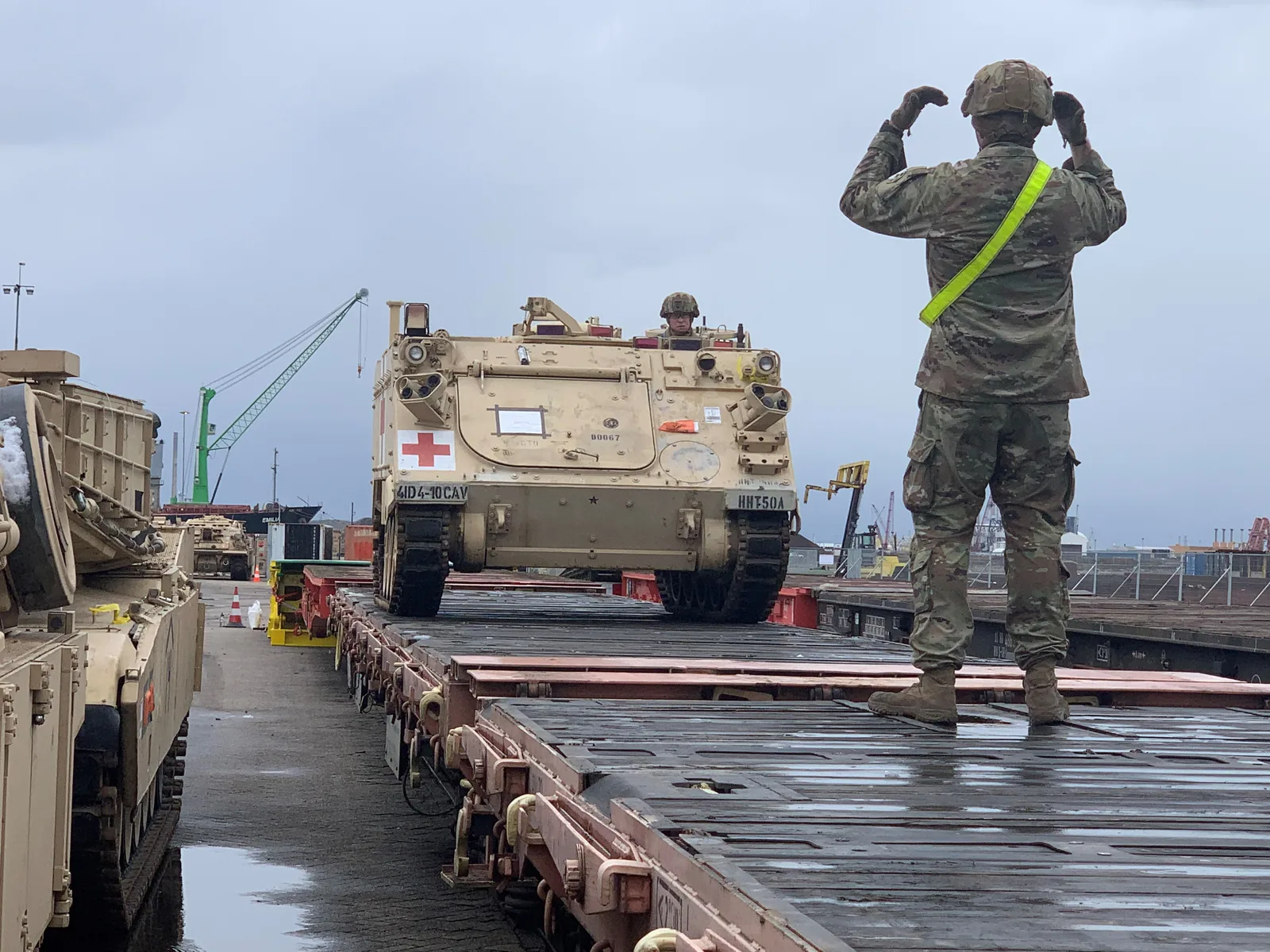
Amsterdam mapping and traffic technology firm TomTom announced early Tuesday that it has joined a Dutch defense research consortium working with the Netherlands Ministry of Defense to test how large military deployments can move across public roads, ports, and freight corridors without paralyzing everyday civilian supply chains.
The initiative, known as CIMILOGIC for Civil Military Logistics Coordination, operates under the Dutch Institute for Advanced Logistics known as TKI Dinalog and is led by the Netherlands Organisation for Applied Scientific Research alongside Delft University of Technology, national highway and waterway operator Rijkswaterstaat, the Ministry of Defense, and commercial freight partners. According to the announcement issued through TomTom’s corporate newsroom, the consortium will combine operational military scenarios with live routing, mapping, and traffic intelligence to spot bottlenecks before an actual crisis strains national infrastructure.
On its surface, a logistics modeling partnership sounds technical compared with weapons procurement or troop callups. Yet across European NATO planning, transport capacity has emerged as one of the sharpest practical constraints on deterrence, directly affecting whether supermarket deliveries, hospital supplies, industrial freight, and commuter traffic keep moving if allied forces have to surge eastward on short notice.
Because the Netherlands sits at the mouth of the Rhine, Maas, and Scheldt river systems and operates Europe’s largest maritime cargo complex around Rotterdam alongside deepwater military reception terminals such as Vlissingen and Eemshaven, Dutch roads and rail lines serve as a primary transatlantic funnel into Germany and NATO’s eastern flank. Any congestion or bridge closure along those eastbound arteries ripples almost immediately through both allied readiness and Western European commerce.
Why armed forces depend on commercial freight networks
Following decades of post Cold War force reductions, European militaries no longer maintain enough dedicated heavy equipment transporters, rail flatcars, fuel tankers, or isolated military highways to relocate armored brigades solely with uniformed assets. Large exercises and rapid reinforcement plans instead rely heavily on contracted commercial hauliers and shared civilian infrastructure managed by public agencies such as Rijkswaterstaat.
That dual reliance creates a scheduling and capacity dilemma whenever military readiness rises. When heavy armored columns, ammunition convoys, or engineering equipment claim port berths, highway lanes, and rail slots, commercial freight operators lose access to both physical corridor space and scarce civilian truck drivers or rolling stock.
Previously published records in the Netherlands Ministry of Defense official journal Defensiekrant show how seriously Hague planners view that vulnerability. Earlier this year, the Dutch Ministries of Defense and Economic Affairs jointly committed nearly €2.1 million across four TKI Dinalog research projects designed to harden national logistics against security and supply shocks.
Alongside TNO’s CIMILOGIC study on shared transport infrastructure, that public funding package backed two companion crisis resilience programs: Vortex, which examines a network of emergency logistics coordination points linking government agencies, military planners, private companies, and citizens during major emergencies, and Vitalpharma, which studies how to safeguard critical medicine supplies for both armed forces and civilian hospitals under crisis conditions. Together, those projects reflect a broader shift in Dutch defense policy toward societal resilience rather than treating military logistics in isolation.
Turning live traffic data into crisis simulations
What Tuesday’s addition of TomTom brings to the consortium is granular commercial location data covering road geometry, weight and height restrictions, historical congestion patterns, and live traffic flow across dense urban and freight corridors. Benoit Joly, Senior Vice President for Sales at TomTom, said in Tuesday’s statement that military mobility depends not only on physical concrete and steel, but also on the location intelligence required to route shared traffic efficiently without breaking the civilian supply chains that rely on the same roads.
Rather than issuing binding wartime requisition rules or altering current highway traffic regulations, CIMILOGIC is structured to produce two concrete analytical tools for government and industry planners. First, researchers at TNO and Delft University of Technology are developing measurable resilience indicators that quantify how severely a given military relocation scenario degrades civilian freight delivery times, port throughput, or route redundancy.
Second, the consortium is building and validating a simulation and assessment prototype that allows defense logistics officers, Rijkswaterstaat infrastructure managers, and private freight carriers to test alternative routing, staggered departure windows, capacity sharing rules, and secure data exchange protocols before putting plans into operational practice. Identifying where a single damaged viaduct, low clearance overpass, or port bottleneck would stall both military columns and food distribution gives authorities options to prearrange detours or infrastructure reinforcements in peacetime.
Sensitive data sharing between defense ministries and commercial navigation providers also raises governance questions around operational security, confidentiality of troop movements, and clear legal boundaries between public security agencies and private platforms, an issue drawing scrutiny in different forms internationally as seen in recent national reviews of state security technology controls. Within CIMILOGIC, testing takes place against structured planning scenarios rather than exposing classified operational deployments on public traffic feeds.
Part of a wider European dual use transport push
Tuesday’s announcement in Amsterdam coincides with broader European efforts to close the gap between regulatory frameworks and real world dual use transport deployment. In Brussels on Tuesday, the European Commission’s EU Drone Summit 2026 entered its high level strategic policy day at the Egmont Palace alongside Belgium’s transport ministry and European air traffic management partners, examining how unmanned logistics, industrial competitiveness, and security requirements can operate safely inside shared European airspace.
Across highways, railways, seaports, and low altitude airspace alike, European governments face a common fiscal reality: building separate military only transport networks is financially prohibitive, while leaving civilian networks uncoordinated until an emergency strikes invites gridlock. Public and private simulation projects do not by themselves widen a congested highway, buy additional rail flatcars, or resolve cross border customs delays for military convoys moving across European Union frontiers.
Those cross border bottlenecks remain especially sensitive along the corridor connecting Dutch ports to German rail yards and onward toward Poland and the Baltic states. Even where NATO allies share political commitments to rapid reinforcement, differing national rules on oversized load permits, weekend freight driving bans, hazardous cargo routing, and bridge weight classifications still force military movement planners and private hauliers to coordinate corridor access days in advance.
Even so, mapping exact choke points across Europe’s busiest North Sea logistics gateway gives Dutch defense and transport officials hard empirical data on where physical investments and commercial standby contracts are needed most. For businesses and residents across the Netherlands and neighboring Germany, the practical test of CIMILOGIC will be whether its prototype models translate into smoother freight continuity the next time allied reinforcement exercises put heavy armor onto public corridors.