
Trident Submarine HMS Vengeance Returns to Faslane After Record 217-Day Patrol
Royal Navy nuclear-armed submarine HMS Vengeance has returned to Faslane after 217 days under water, the longest patrol in the history of Britain's nuclear deterrent, with its hull covered in marine growth and missing some sound-absorbing tiles.
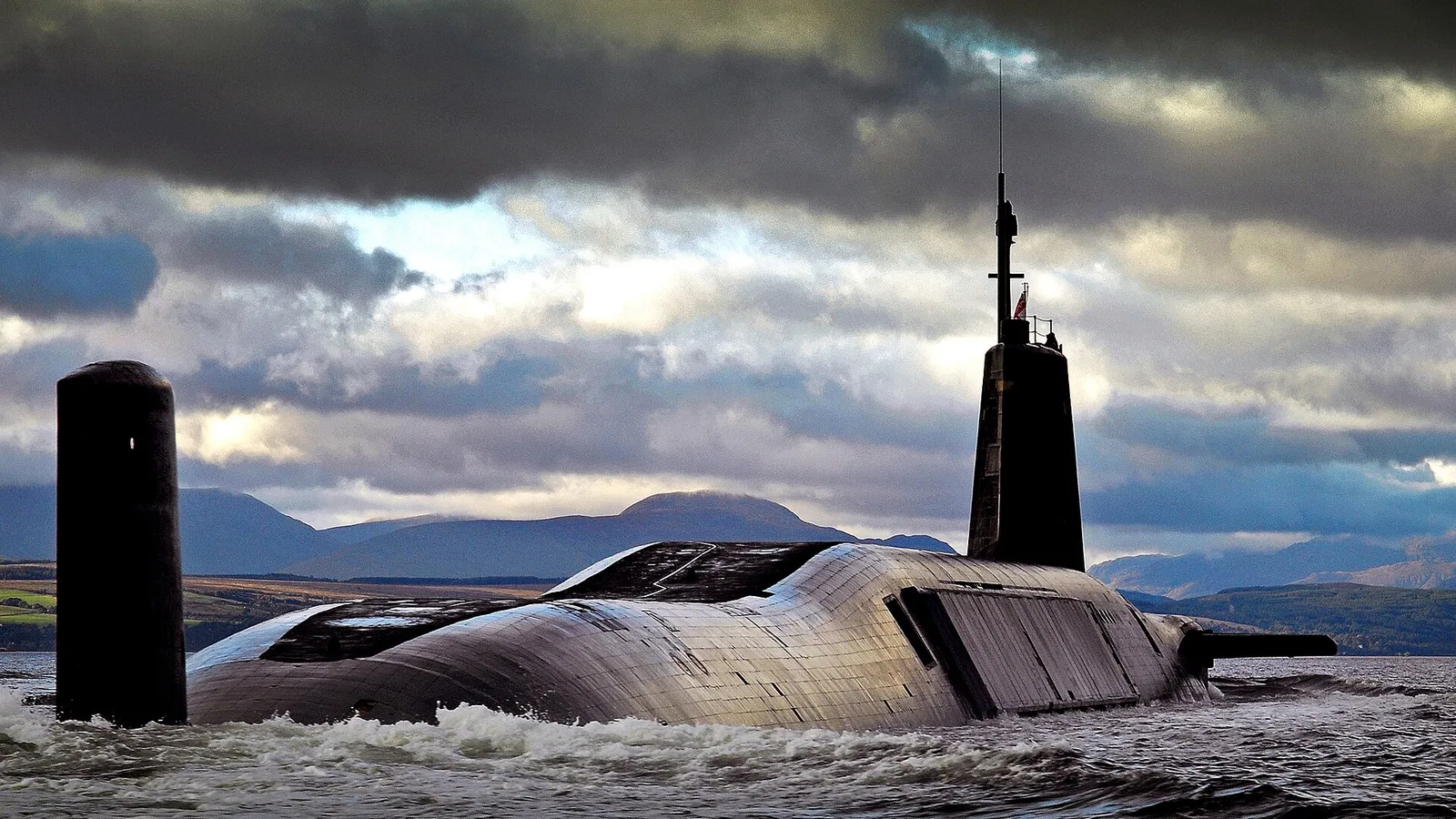
One of Britain’s four nuclear-armed submarines has returned to port after 217 days under water, the longest patrol in the history of the UK’s nuclear deterrent.
HMS Vengeance sailed up the Gare Loch to HM Naval Base Clyde at Faslane on Sunday. It had left on April 12. The submarine’s hull was covered in marine growth, and some of the rubber tiles that help hide it from enemy sonar were missing, a visible sign of seven months at sea.
The patrol beats the record of 205 days set by HMS Vanguard, which came home in April. Two record-breaking patrols in the same year show how much pressure is now on the ageing fleet.
A week late
Vengeance was due back around a week earlier. Its return was delayed because the submarine meant to take over the patrol had a technical fault, the BBC reported. Under the UK’s continuous at-sea deterrent, one Trident boat must be hidden at sea at all times, so a crew cannot come home until the next one has sailed.
The UK has kept at least one nuclear-armed submarine on patrol every day since 1969.
About 140 sailors were on board. During the patrol, families can send each crew member a weekly “Familygram” of up to 120 words. The crew cannot reply.
Streeting greets the crew
Defence Secretary Wes Streeting met the crew on their return. He said the length of time crews were spending at sea “doesn’t sit lightly” with him.
“The whole country can be extraordinarily proud of our submariners and of our nuclear deterrent,” he said. He also said the Dreadnought programme, which will replace the Vanguard class, is “on track”.
Why patrols keep getting longer
The four Vanguard-class submarines entered service in the 1990s with a planned life of about 25 years. They are now expected to serve for up to 40.
Each submarine is around 150 metres long and can carry up to 16 Trident missiles. At least one must be at sea, and others need time in port for crew rest, training and maintenance.
The problem is that not all four are available. HMS Victorious has been in deep maintenance at Devonport since 2023 in a refit costing about £560m. That leaves Vengeance, Vigilant and Vanguard to share the work. Vanguard’s own refit, which ended in 2022, took seven years.
Patrols used to last around three months. Now they routinely run past six.
The head of the Royal Navy, First Sea Lord General Sir Gwyn Jenkins, said at a recent conference in Oslo that the UK must do better at maintaining its fleet.
Signs of wear
Missing anechoic tiles, the sound-absorbing coating on the hull, have been seen on returning British submarines before. The tiles help the boats stay quiet and hard to detect, which is the whole point of a deterrent patrol.
The Dreadnought class, being built at Barrow-in-Furness, is expected to start entering service in the early 2030s. Until then, the three working Vanguard-class boats will keep carrying the load.
Sources: BBC News; Royal Navy; UK Ministry of Defence.