
ULA's Vulcan Rocket Fails 10 Minutes After Launch, 40 Amazon Leo Satellites Lost in Return to Flight
United Launch Alliance's Vulcan rocket suffered an anomaly about 10 minutes after lifting off from Cape Canaveral and failed to put 40 Amazon Leo broadband satellites into orbit, a major blow to ULA and to Amazon's race against SpaceX's Starlink.
Updated at 19:33 GMT: This story was first published after liftoff. It has been rewritten after ULA confirmed the rocket failed to reach orbit.
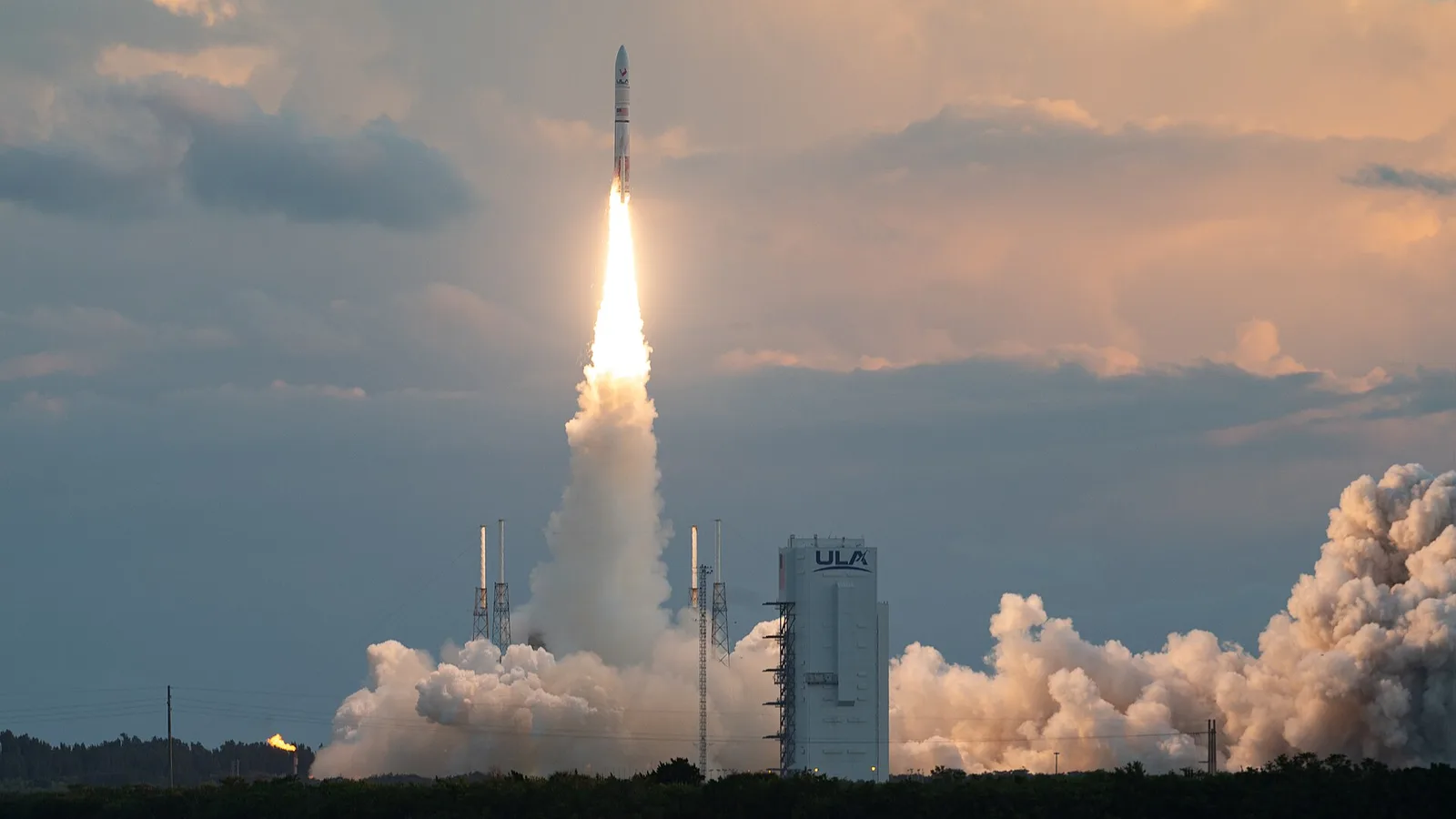
United Launch Alliance’s Vulcan rocket failed on Sunday about 10 minutes after lifting off from Florida, and all 40 Amazon Leo internet satellites on board were lost.
The 215-foot rocket rose from Space Launch Complex 41 at Cape Canaveral Space Force Station at 12:40 p.m. ET, at the very end of its launch window. It was Vulcan’s first flight in nine months and was meant to show the rocket was ready to fly reliably again.
“Based on data received by our Launch Director, we confirm that the Vulcan vehicle launched from Space Launch Complex 41 suffered an anomaly 10 minutes into the flight and failed to deliver the Amazon mission to orbit,” ULA said about 50 minutes after launch.
Spaceflight Now described the loss as ULA’s first total mission failure.
What went wrong
The early part of the flight looked normal. The six solid rocket boosters, whose nozzles had been redesigned after failures on two earlier Vulcan flights, burned and separated about one minute and 45 seconds after liftoff at an altitude of around 22 miles.
ULA’s last public update during the flight said the Centaur V upper stage had ignited and the payload fairing had been jettisoned about six minutes into the flight. At that point the rocket was around 95 miles up, east of Charleston, South Carolina, and moving faster than 11,000 mph.
The Centaur’s first burn was planned to last nearly 12 minutes. The anomaly came around the 10-minute mark, which suggests the problem occurred during that burn. ULA has not confirmed the cause.
“Every flight generates data, and every flight teaches us something. Since the anomaly just occurred, we don’t have any specific data yet to understand what occurred today,” the company said.
“We did not meet that standard”
ULA, a joint venture of Boeing and Lockheed Martin, built its reputation on reliability with its Atlas V and Delta rockets.
“ULA exists to provide assured access to space for our nation and for the customers who depend on us,” the company said. “That purpose is why we take on some of the hardest missions in spaceflight, and why we hold ourselves to the standard of mission success. Today, we did not meet that standard.”
It said it would work with Amazon and other organizations “to find the cause, determine the appropriate corrective action, and return to flight as quickly as possible.” The USA Today Network’s Florida newspapers reported that NASA’s administrator offered to help with the investigation.
A troubled return to flight
Vulcan had flown four times before Sunday. On two of those flights, in October 2024 and February 2026, a nozzle on one of the solid rocket boosters burned through and fell off about 30 seconds after liftoff. Both times the rocket still reached the correct orbit, but the US Space Force paused national security launches on Vulcan.
ULA spent nine months on fixes. The boosters appeared to work as designed on Sunday, but a new and more serious problem ended the mission.
The flight was also full of firsts. It was the first Vulcan to fly with six boosters, the first to use a shorter version of the Centaur V upper stage built for low Earth orbit, and the first to use new Amazon-funded facilities at the Cape. It came after scrubs on Friday, caused by a power problem at a nitrogen supply plant, and on Saturday, caused by a communication fault between ground equipment and the rocket.
The failure is likely to keep Vulcan off national security missions for longer and to raise fresh questions for the Space Force, which depends on ULA and SpaceX to launch its most important satellites.
A blow to Amazon’s Starlink rival
The mission, Leo Vulcan 1, was the first of 38 Vulcan launches Amazon has bought to build Amazon Leo, formerly called Project Kuiper. Those flights were meant to carry more than 1,500 satellites, close to half of the first-generation network.
Amazon had about 400 Leo satellites in orbit before Sunday, from 15 missions on ULA’s Atlas V, SpaceX’s Falcon 9 and Arianespace’s Ariane 6. It had not launched any since early July. SpaceX has more than 11,000 Starlink satellites in orbit.
Amazon missed a Federal Communications Commission milestone to have 1,616 satellites up by July 30, 2026, and was granted a limited waiver. It must still launch all 3,232 first-generation satellites by July 2029. It has said it plans to begin service before the end of 2026 in the US, UK, France, Germany and Canada.
Amazon had planned a second Vulcan flight within weeks of a successful first mission. That now looks unlikely until the cause is found. Its next scheduled Leo launch is on an Ariane 6 from French Guiana, carrying 36 satellites and targeted for no earlier than November 23.
Sources: Space.com; SpaceNews; Florida Today; Spaceflight Now; United Launch Alliance; About Amazon.