
US floats NATO membership for Ukraine Donbas withdrawal deal, Zelenskyy says
US negotiators Jared Kushner and Steve Witkoff have asked Ukraine whether Kyiv would concede the part of Donbas still under its control to Moscow in exchange for NATO membership, President Volodymyr Zelenskyy said Friday.
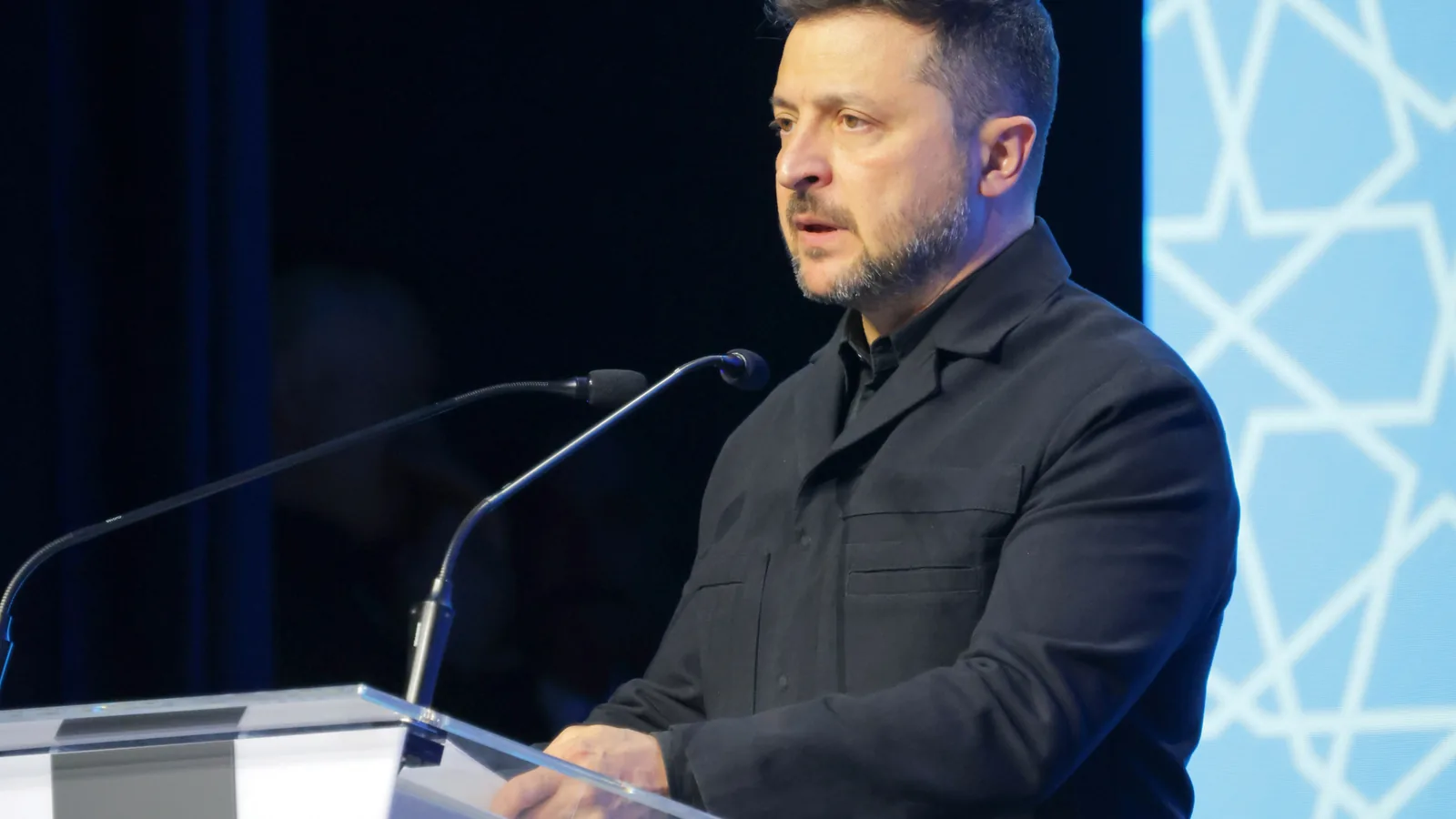
The United States has floated offering Ukraine NATO membership in exchange for withdrawing from the part of the Donbas region still under its control, President Volodymyr Zelenskyy said Friday, as Washington explores terms for ending Russia’s full-scale invasion.
The proposal
US negotiators Jared Kushner and Steve Witkoff asked Ukraine whether Kyiv would concede the part of Donbas still under its control to Moscow in exchange for NATO membership, Zelenskyy told reporters. It is the first time Washington has raised such a proposal, the Financial Times reported.
“If the American side confirms precisely this to us, together with other NATO partners, then I will ask our Ukrainian society what it thinks: do we accept it or not?” Zelenskyy said. He added that he had no right to make such a decision unilaterally and that Kyiv would not recognise the occupied territories within Ukraine’s internationally recognised borders, including the Donbas, as Russian.
Washington plays down the idea
The United States has not confirmed Zelenskyy’s account. Asked about it, a US official told the BBC that “many ideas continue to be discussed but any final deal will have to be agreed to by both parties” — stopping well short of endorsing a NATO-for-Donbas swap.
Hours after Zelenskyy went public, Jared Kushner moved to cool the speculation. The envoy appealed for “confidentiality” in what he described as a sensitive process, complained that “maximalist” proposals and “strong political rhetoric” had leaked from the talks, and said the aim of “private discussions” was to test new ideas that might lead to a breakthrough in what he called a “horrible war.”
His remarks were widely read as a rebuke to Kyiv for making the idea public. The BBC’s Kyiv correspondent suggested Zelenskyy may have done so deliberately: Ukraine sees NATO as its only reliable protection, and airing the question puts back on the table an option many considered closed. Zelenskyy himself said the issue was now “back on the agenda” in an “extremely difficult conversation” about European security.
Several NATO members besides the US remain wary of Ukrainian membership, and Russia has repeatedly said it will not accept another alliance member on its border. Moscow insists any ceasefire must follow a final settlement under which Ukraine hands over the parts of the Donbas Russian troops have not captured.
What is at stake
Ukraine still controls about 20% of the Donbas region. Russian forces have sustained tens of thousands of casualties this year in their attempts to seize the “fortress belt” of cities remaining under Kyiv’s control.
The proposal emerged during the first trilateral talks between Russia, Ukraine and the US since discussions paused in February after the war with Iran erupted. European officials joined discussions only with the Americans and Ukrainians; Russia has refused to accept them at the negotiating table.
EU leaders agreed on Friday that a coalition of officials from France, Germany, Italy, Poland and the UK—plus the EU and NATO—would represent Europe at technical-level talks.
Broader security package
Zelenskyy said Kyiv was discussing a broader security package with its partners, including:
- Guarantees from NATO and the EU
- Long-term military support for a strong Ukrainian army
- An internationally backed reconstruction plan
Western countries have also discussed an arrangement short of full NATO membership but with multilateral agreements mimicking the alliance’s Article 5 mutual defence clause.
Denmark has pledged a €645mn support package that includes 20mm ammunition for F-16s—needed to shoot down jet-powered drones—as well as €200mn for drone production.
Starshield satellite dispute
Zelenskyy also criticised speed limits imposed on Starshield satellite systems used by the Ukrainian military for middle-range strikes against Russian targets in occupied territory. He said the restrictions, in place for several days, have limited speeds to 161kph (100mph) and were hampering efforts to intercept Russian jet-powered drones.
Kyiv believes the restrictions were imposed to put pressure on Kyiv during the latest peace talks with Russia and strengthen Moscow’s position. SpaceX denied the claim in an email, calling it “false. There has been no change.”
Updated November 15, 2026: adds the US official’s response and Jared Kushner’s call for confidentiality. This is a developing story.