
FAA orders nationwide ground stop at all U.S. airports after communications outage hits air traffic control centers
The Federal Aviation Administration halted all departing flights across the United States on Friday afternoon, citing 'extraordinary circumstances' after a communications failure struck all Air Route Traffic Control Centers nationwide.
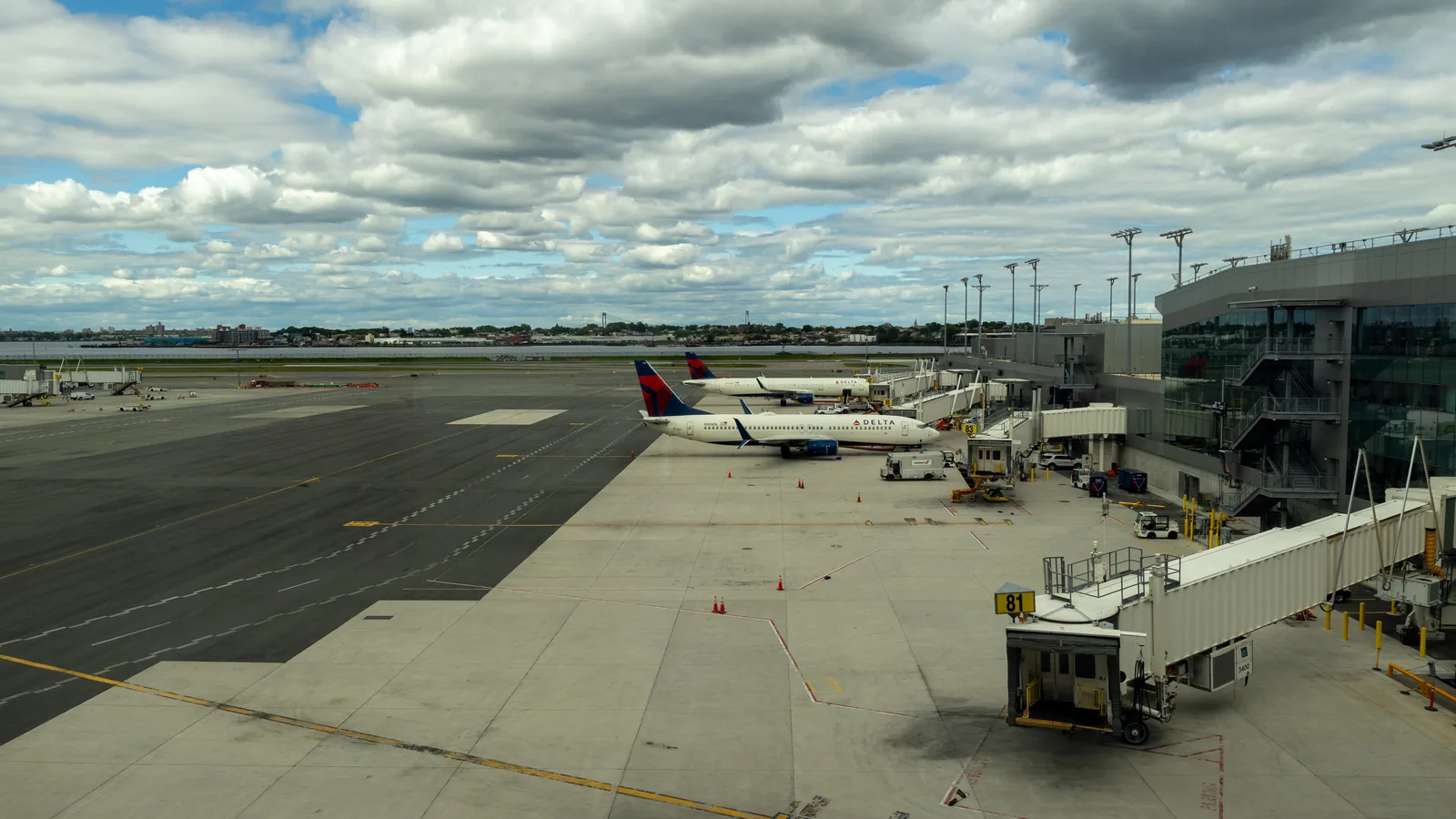
Commercial air travel across the United States ground to a sudden halt during the peak Friday evening rush after federal aviation regulators ordered every departing plane in the country to stay on the tarmac.
Around 4:00 p.m. EST on Friday, the Federal Aviation Administration issued an emergency advisory halting takeoffs at all U.S. airports, citing safety concerns after a sweeping communications breakdown struck the nation’s high-altitude air traffic network. U.S. Transportation Secretary Sean Duffy confirmed minutes later that the order stemmed from an equipment failure affecting every high-altitude control hub in the National Airspace System.
“The FAA issued a nationwide ground stop for all U.S. airports following a communication issue impacting all Air Route Traffic Control Centers,” Duffy said in a statement posted on X around 4:20 p.m. EST. “FAA technicians are investigating the issue. We will provide immediate updates as we have them.”
What the emergency FAA Command Center order says
In an urgent bulletin transmitted directly to commercial airlines, cargo carriers, and regional control towers, the Federal Aviation Command Center invoked rare emergency authority to freeze departures coast to coast.
“Due to extraordinary circumstances and for reasons of safety. Attention all aircraft operators, by order of the Federal Aviation Command Center all airports are ground stopped,” the federal advisory stated. “All departing traffic should remain ground stopped until further notice. Inbound international flights will be managed on a case-by-case basis.”
Federal officials and airport authorities emphasized three immediate operational rules for travelers caught in the Friday afternoon freeze:
- Aircraft already airborne on domestic routes are continuing safely to their scheduled destinations and are cleared to land normally.
- Every flight still parked at a gate or waiting on a taxiway at U.S. airports—from Hartsfield-Jackson Atlanta, Chicago O’Hare, and Dallas Fort Worth to New York’s JFK, Philadelphia, and Los Angeles—is barred from taking off until the order is lifted.
- Long-haul international flights already approaching U.S. airspace are being sequenced individually by controllers on a case-by-case basis.
How the communications failure spread across U.S. airspace
Early signs of trouble surfaced roughly 30 minutes before the nationwide halt. Aviation dispatch monitors first flagged intermittent radio frequency and equipment outages around 3:30 p.m. EST inside the Kansas City Air Route Traffic Control Center, followed shortly afterward by an equipment-outage advisory affecting departures routed out of Chicago O’Hare International Airport and Augusta Regional Airport towers around 3:50 p.m. EST.
Within minutes, the communications issue cascaded across the FAA’s network of 21 continental Air Route Traffic Control Centers—the regional facilities responsible for guiding high-altitude aircraft between airport terminal zones across thousands of miles of U.S. airspace. Neither the FAA nor the Department of Transportation immediately disclosed what triggered the simultaneous communications failure across those centers.
Only the second nationwide U.S. ground stop since 9/11
Full nationwide ground stops halting departures across every single U.S. airport are extraordinarily rare in modern aviation history. Outside of the multi-day closure of American airspace on September 11, 2001, the only comparable nationwide freeze occurred on January 11, 2023, when a corrupted database file crashed the FAA’s Notice to Air Missions pilot-alerting system for roughly 90 minutes and delayed or canceled more than 11,000 flights.
Air traffic control unions and congressional oversight panels have repeatedly warned Washington over the past two years that the FAA’s aging telecommunications backbone—much of which still relies on legacy copper lines transitioning to fiber-optic networks across more than 4,600 federal sites—remains vulnerable to cascading outages. Last year, telecom line failures sparked repeated regional ground stops serving Newark Liberty and Philadelphia International Airport.
Even if FAA engineers restore full communications between control centers later Friday evening, airline dispatchers warn that freezing peak Friday afternoon departures across every major hub simultaneously will trigger rolling crew timeouts, displaced aircraft, and schedule delays stretching into Saturday. Friday’s aviation emergency also caps a turbulent 24 hours for critical American digital and communications infrastructure, following major disruptions across Microsoft 365 and Exchange Online, Cloudflare’s developer network, and Anthropic’s Claude platform.
This is a developing breaking news story and will be updated as the FAA releases further operational advisories.