Supreme Court votes 8 to 1 to let Trump border wall construction resume across Texas Big Bend region
The US Supreme Court lifted a lower court injunction in an 8 to 1 emergency order, allowing the Department of Homeland Security to restart barrier, patrol road, and sensor installation across Big Bend National Park and West Texas while appeals continue.
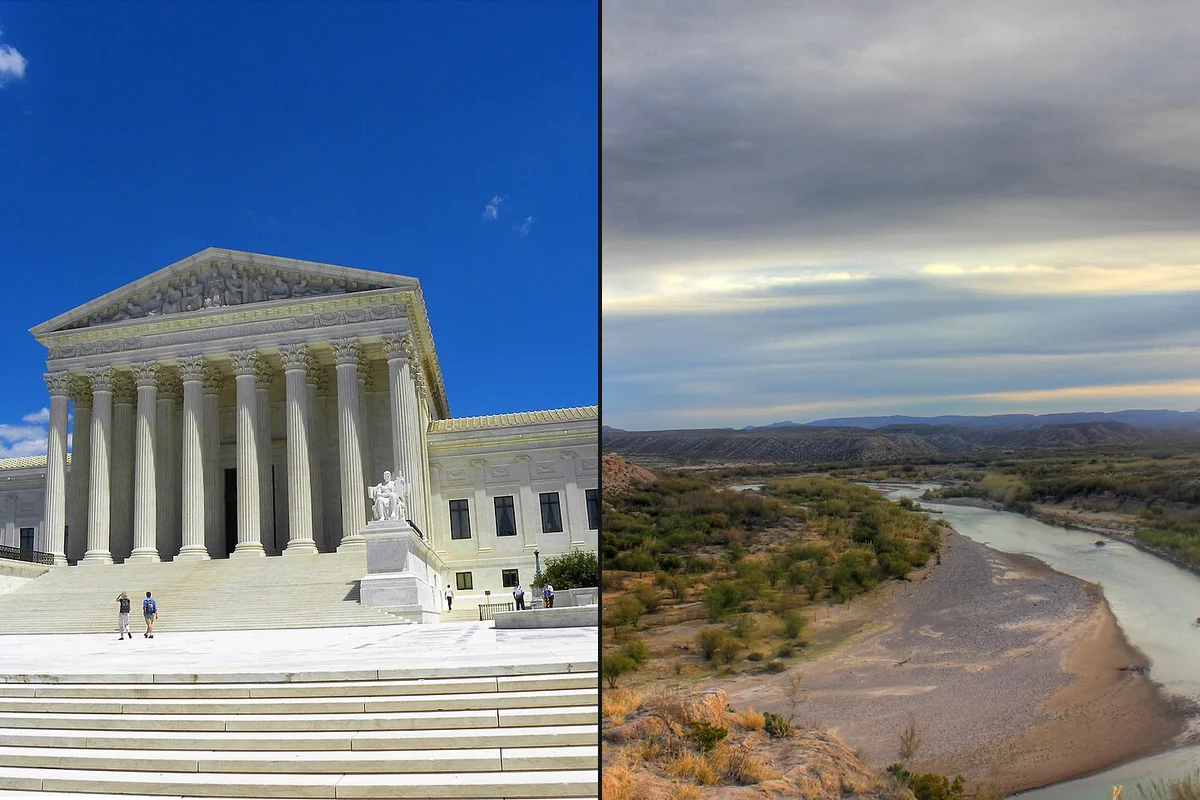
The US Supreme Court cleared the way for the Trump administration to resume building border barriers, patrol roads, lighting, and surveillance infrastructure across West Texas’s remote Big Bend region, voting 8 to 1 in an emergency order to pause a federal judge’s injunction while underlying legal challenges proceed on appeal.
In an unsigned five-page order on its emergency docket, the court granted a stay sought by Solicitor General D. John Sauer after US District Judge Kathleen Cardone in El Paso halted construction on October 2 and the New Orleans-based 5th US Circuit Court of Appeals declined to lift her block. Justice Ketanji Brown Jackson was the sole justice to note a public dissent, meaning Chief Justice John Roberts and fellow liberal Justices Sonia Sotomayor and Elena Kagan joined the court’s conservative majority in allowing work to restart during litigation.
The ruling marks a major operational win for the Department of Homeland Security’s border-infrastructure push at a time when the administration is simultaneously expanding immigration and employment-visa enforcement nationwide, even as the Big Bend project has provoked rare bipartisan pushback inside Texas.
Environmental waivers and a 500-mile West Texas border sector
The dispute centers on DHS plans spanning roughly 300 miles of barriers, access roads, cameras, and motion-detection equipment across the Border Patrol’s sprawling 500-mile Big Bend sector — one of the most rugged and least-trafficked stretches of the US-Mexico boundary, carved by steep limestone river canyons along the Rio Grande.
Inside Big Bend National Park itself, federal plans call for approximately 17 miles of noncontiguous vehicle barriers paired with high-mast lighting and detection towers rather than continuous 30-foot steel bollards across the canyon walls, alongside heavier fencing segments in neighboring Presidio and Brewster counties.
To accelerate construction, former Homeland Security Secretary Kristi Noem and current Secretary Markwayne Mullin invoked sweeping statutory authority enacted by Congress under the 1996 Illegal Immigration Reform and Immigrant Responsibility Act, waiving nearly three dozen federal environmental, historic-preservation, and public-lands statutes — including the National Environmental Policy Act and the Endangered Species Act.
Why the district court blocked construction — and why the justices stepped in
A coalition of conservationists and local residents — led by the Center for Biological Diversity, the Friends of the Ruidosa Church, and a Terlingua river-expedition guide — sued to block the project. Judge Cardone ruled last month that the 1996 waiver statute authorizes DHS to bypass environmental laws only inside areas experiencing “high illegal entry,” concluding that the administration failed to show Big Bend met that threshold because Border Patrol apprehensions there represent roughly 1 percent of all southwest border encounters and stood near historic lows.
In his emergency filing to the Supreme Court, Sauer countered that federal border statutes restrict judicial review of Homeland Security waiver determinations and argued that halting contractors mid-deployment undermined executive border-security authority mandated by Congress.
While the Supreme Court’s unsigned order did not issue a final ruling on whether DHS exceeded its statutory authority, its decision to stay Cardone’s injunction allows heavy grading and barrier installation to move forward immediately while the 5th Circuit hears expedited merits briefing — a timeline that environmental plaintiffs warn could permanently alter fragile desert habitats before appellate judges issue a final decision.
Rare bipartisan friction in Texas over Big Bend National Park
Unlike barrier segments in higher-traffic corridors such as the Rio Grande Valley or El Paso, wall construction through Big Bend has drawn vocal skepticism from prominent Texas Republicans alongside conservation groups and tourism operators.
In a San Antonio Express-News op-ed earlier this year, Republican US Senator John Cornyn of Texas urged administration officials to rethink physical wall segments inside Big Bend National Park, arguing that sheer 1,500-foot canyon cliffs already form a formidable natural barrier and recommending virtual surveillance towers, drones, and river patrols that preserve the park’s economy and vistas.
Conservation advocates condemned the emergency stay while vowing to press forward in the 5th Circuit. Laiken Jordahl, southwest conservation advocate at the Center for Biological Diversity, called the order “devastating” for desert wildlife corridors linking Big Bend with protected reserves in northern Mexico, while lead plaintiffs’ attorney Eric Glitzenstein emphasized that the Supreme Court did not overturn Judge Cardone’s underlying legal conclusion that the administration lacked statutory authority to waive environmental protections in a low-crossing sector.