Boeing cuts 2,500 commercial jet jobs as 737 ramp slips to 2027 while SoftBank posts 7 billion dollar AI loss
Boeing announced a 5 percent workforce reduction across its Commercial Airplanes division starting in December after pushing its 737 production target into 2027, as Japan's SoftBank Group reported a 1.1 trillion yen quarterly net loss tied to aggressive US artificial intelligence data center spending.
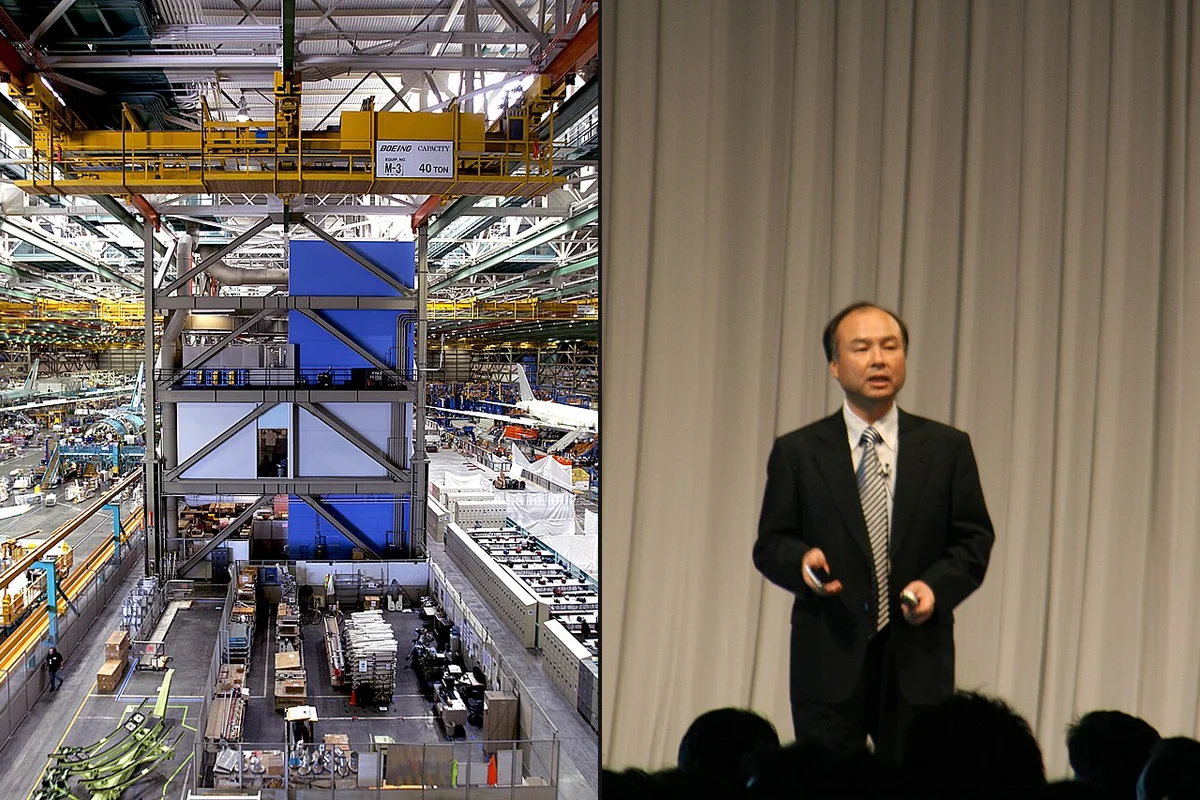
Two of the world’s most capital-intensive industrial bets — commercial aircraft manufacturing and hyperscale artificial intelligence infrastructure — collided with balance-sheet reality on Wednesday as Boeing moved to eliminate roughly 2,500 jobs across its flagship jetliner division and Japan’s SoftBank Group reported a $7 billion quarterly net loss driven by massive US data-center buildout costs.
In an internal memo to staff, Boeing Commercial Airplanes chief executive Stephanie Pope told employees that the division will reduce its 50,500-person workforce by approximately 5 percent through a combination of attrition and involuntary layoffs beginning in December, citing delayed production-rate increases on the cash-cow 737 narrowbody program.
Hours earlier in Tokyo, Masayoshi Son’s SoftBank Group disclosed a July-to-September net loss of 1.1 trillion yen — roughly $7 billion — reversing a 2.5 trillion yen profit in the same quarter a year ago, as heavy financing expenses and upfront construction spending on American AI compute campuses weighed on earnings despite a record $56.5 billion fundraising haul during the quarter.
Boeing trims 2,500 Commercial Airplanes roles as 737 ramp moves to 2027
Pope’s workforce notice affects operations centered heavily in Washington state’s Puget Sound manufacturing corridor — including Renton and Everett — as well as South Carolina’s 787 Dreamliner complex. While Boeing sits on an industry-record backlog of roughly 6,300 commercial aircraft valued at $612 billion, persistent regulatory caps, supply-chain bottlenecks, and quality-assurance overhauls forced group chief executive Kelly Ortberg last month to push Boeing’s target of building 47 737 jets per month from late 2026 into early 2027.
“Adjusting our production schedules and reducing aircraft output puts us in an overstaffed position,” Pope wrote in the employee message, adding that leadership concluded headcount had grown faster than near-term factory delivery rates could sustain.
Financial pressure inside the commercial unit remained acute in Boeing’s latest quarterly accounts: Boeing Commercial Airplanes recorded a $697 million third-quarter operating loss on $10.7 billion in revenue, even as airline customers clamor for delayed single-aisle and widebody deliveries and Boeing awaits final Federal Aviation Administration certification milestones on the 737 MAX 7, 737 MAX 10, and widebody 777X programs.
SoftBank absorbs $7 billion loss on massive US AI data-center push
On the other side of the Pacific, SoftBank’s quarterly results illustrated the staggering upfront capital burn required to build physical power, land, and server capacity for frontier AI developers — arriving in the same week Anthropic launched its Nasdaq IPO roadshow targeting a valuation of up to $700 billion.
SoftBank raised a record $56.5 billion across debt, asset-backed facilities, and project financing during the third quarter to bankroll multi-gigawatt American data-center campuses and semiconductor investments, pushing its net debt and interest carry higher even before many of those facilities come online and generate contracted cloud lease revenue.
Despite the 1.1 trillion yen quarterly loss, SoftBank chief financial officer Yoshimitsu Goto defended the aggressive capital deployment on Wednesday’s earnings briefing, telling investors and analysts that the group sees “much promise” in locking up scarce North American power interconnections and high-density GPU clusters ahead of long-term enterprise AI adoption.
Shared lesson across aviation and AI infrastructure: execution timelines rule cash flow
Market strategists noted a striking parallel between Boeing’s Puget Sound factory reset and SoftBank’s US data-center ledger: neither company faces a shortage of customer demand on paper, yet both are absorbing billions in near-term red ink because physical engineering, electrical grid hookups, regulatory sign-offs, and supply chains move slower than financial projections.
For Boeing, December’s layoff notices test whether Ortberg and Pope can trim overhead without losing experienced machinists and engineers needed when FAA production caps lift in 2027. For SoftBank, investors will watch upcoming quarters closely to see how quickly its $56.5 billion war chest converts unfinished US data-center shells into recurring cash flow.