US Senate advances bipartisan energy permitting bill 62 to 21 making AI data centers fund grid upgrades
The Senate voted 62 to 21 Tuesday evening to advance the Bipartisan American Affordability and Jobs Act, speeding federal power line and pipeline approvals while directing regulators to shift an estimated $55 billion in grid upgrade costs onto large data centers.
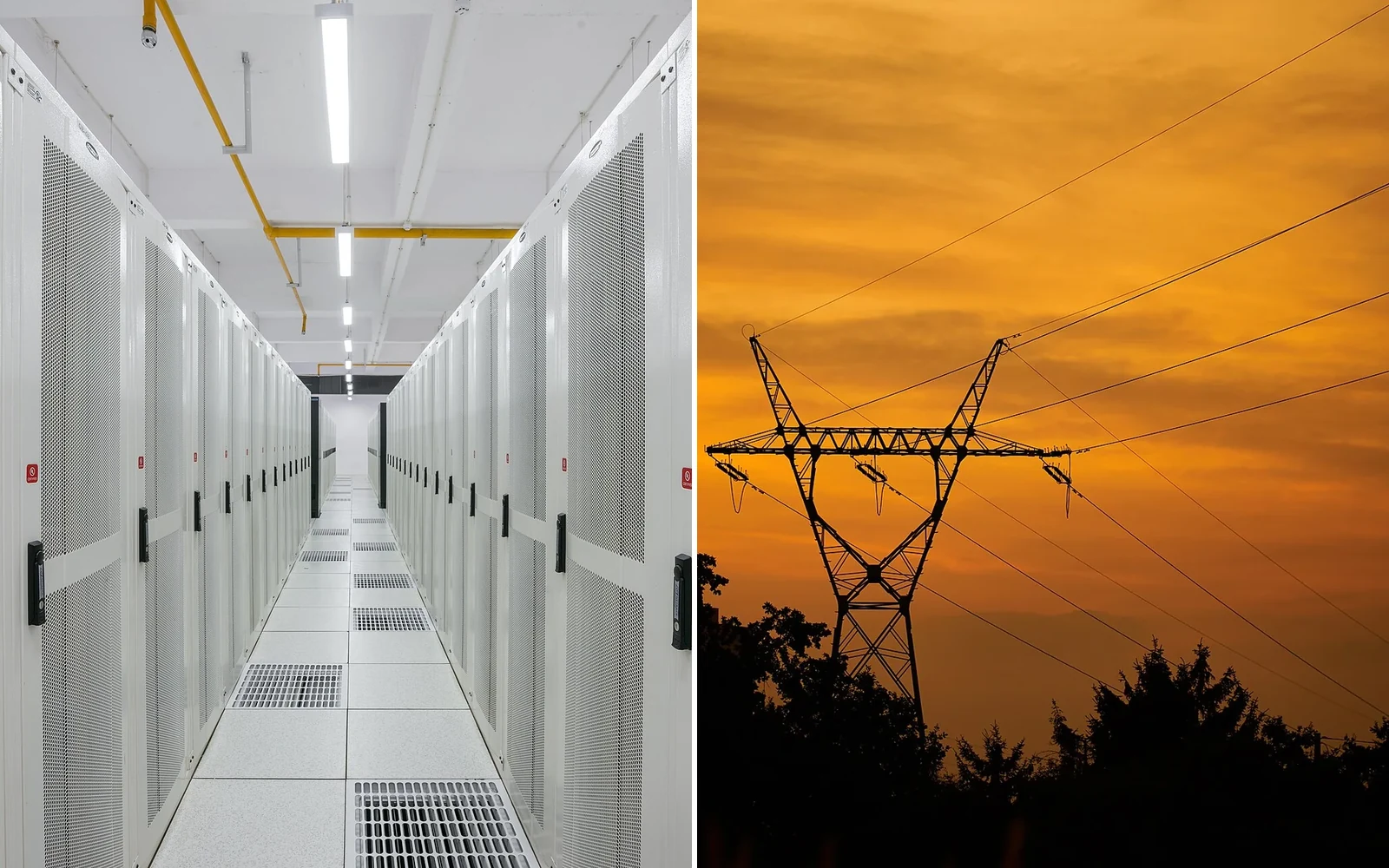
WASHINGTON: The United States Senate voted 62 to 21 on Tuesday evening to advance sweeping bipartisan energy permitting legislation that accelerates federal approvals for power infrastructure while forcing artificial intelligence data centers to shoulder tens of billions of dollars in electric grid upgrade expenses.
Tuesday night’s roll call marked the second straight procedural victory for the Bipartisan American Affordability and Jobs Act, known on Capitol Hill as BAAJA, following a 73 to 25 vote on Monday evening to close debate on the motion to proceed. Clearing the second threshold formally opened the Senate floor to amendment consideration, putting lawmakers on track for a potential final passage vote in the upper chamber before the end of the lame duck session, according to Al Jazeera.
Negotiated over several months by a four senator coalition spanning both major energy panels, the bill pairs long sought Republican priorities on pipeline, mining, and fossil fuel permitting speedups with Democratic demands for faster high voltage interstate transmission lines and strict ratepayer protections against surging utility bills. Its chief architects are Senate Environment and Public Works Chair Shelley Moore Capito of West Virginia and Ranking Member Sheldon Whitehouse of Rhode Island, alongside Senate Energy and Natural Resources Chair Mike Lee of Utah and Ranking Member Martin Heinrich of New Mexico.
Shifting $55 billion in transmission costs onto hyperscalers
At the center of the legislative bargain is a direct federal intervention into one of the most contentious economic flashpoints of the artificial intelligence boom: who pays when hyperscale computing campuses require massive new substations, high voltage power corridors, and generation capacity.
Under the bill’s ratepayer protection title, Congress directs the Federal Energy Regulatory Commission to establish binding national cost allocation rules requiring large load data center operators to pay both embedded system charges and the full incremental cost of new transmission facilities built to serve their campuses. Sponsors estimate those provisions will require technology companies and commercial data center developers to contribute roughly $55 billion toward grid modernization over the next decade, generating an estimated $19 billion in cumulative electricity bill savings for residential customers through 2040.
To shield households and small businesses from stranded asset risk if an artificial intelligence venture scales back or abandons a planned campus, the legislation also requires utilities to secure binding upfront financial guarantees and minimum contract commitments from large computing customers before recovering interconnection capital through regulated rate bases, Energy News reported.
The Senate push arrives as cloud infrastructure providers race to lock in gigawatts of dedicated power capacity across North America. Earlier this week, CoreWeave reported $132 billion in contracted AI cloud backlog while expanding multi gigawatt campus leases, following earlier power generation commitments from frontier model developer Anthropic and surging power semiconductor demand projected by Infineon Technologies. Across PJM Interconnection, Dominion Energy’s Virginia corridor, Georgia, Ohio, and Texas, state utility regulators have confronted growing voter anger as residential monthly power bills climbed alongside unprecedented load requests from computing clusters.
The Data Center Coalition, the primary Washington trade association representing major cloud providers and colocation operators, notably declined to endorse the Senate package ahead of Tuesday evening’s vote. Industry lobbyists have argued privately that while cloud operators already fund local substation hookups and sign long term power purchase agreements, charging computing facilities for both legacy embedded network costs and 100 percent of regional backbone upgrades risks double billing commercial users relative to industrial manufacturing plants.
Fast tracking NEPA reviews and interstate power corridors
Beyond its data center cost mandates, the Bipartisan American Affordability and Jobs Act overhauls core elements of the National Environmental Policy Act, commonly known as NEPA, which governs environmental impact assessments for major federal infrastructure permits.
Key permitting provisions inside the Senate text include:
- Strict review clocks and litigation deadlines: Federal agencies must complete environmental assessments and environmental impact statements under compressed statutory timelines, while opponents challenging approved energy projects in federal court face shortened filing windows and narrower standards for judicial injunctions that halt active construction.
- Interstate electric transmission authority: The package streamlines federal siting and cost sharing pathways for long distance high voltage transmission lines capable of moving wind, solar, nuclear, geothermal, and natural gas power across regional grid boundaries during extreme weather emergencies.
- Pipeline, LNG, and mineral project certainty: The measure limits retroactive revocation of federal water and land permits for natural gas pipelines, liquefied natural gas export terminals, and critical mineral extraction sites on federal lands.
- Grid enhancing technologies: Utilities receive regulatory incentives to deploy advanced conductors and dynamic line rating sensors that squeeze additional transfer capacity out of existing utility rights of way before building greenfield towers.
Independent energy researchers at the Rhodium Group estimated ahead of floor debate that accelerating regional transmission buildouts so zero carbon power can reach new industrial and computing loads could trim greenhouse gas emissions tied to data center electricity demand by between 31 percent and 90 percent over the coming decade compared with a grid reliant primarily on new gas fired peaker plants.
White House backing collides with environmental and House resistance
Unusually for major energy legislation in a polarized Congress, President Donald Trump endorsed the bipartisan Senate framework ahead of the floor votes, praising provisions that cut permitting delays for domestic oil, natural gas, coal, and industrial construction. Yet the president injected fresh friction into the Senate coalition on Monday by stating publicly that his administration would continue blocking federal approvals for wind power projects, a stance Democratic negotiators warned could undermine the cross party trust required to pass final legislation.
Whitehouse and Heinrich defended the compromise on the Senate floor, arguing that modernizing America’s balkanized transmission network is mathematically essential both to prevent rolling blackouts and to connect gigawatts of clean generation currently stuck in multi year interconnection queues. Capito and Lee countered that statutory NEPA limits and judicial review reforms represent the most consequential federal regulatory relief for domestic energy producers in decades.
Even so, the bill drew fierce condemnation from national environmental and civil liberties organizations, fracturing parts of the Democratic caucus during Monday and Tuesday’s votes. Oregon Senator Ron Wyden voted against advancing the measure, warning that curtailing judicial review strips local communities of legal recourse when pipelines or industrial facilities threaten water supplies.
A coalition of advocacy groups including the Sierra Club, Earthjustice Action, and the American Civil Liberties Union urged senators to reject the bill. Earthjustice Action president Abbie Dillen described the NEPA restrictions as a sweeping giveaway to fossil fuel developers disguised inside an affordability package, while climate author and activist Bill McKibben argued that locking in multi decade gas pipeline infrastructure outweighs the bill’s transmission gains.
Even if Capito, Whitehouse, Lee, and Heinrich shepherd the measure past final Senate passage later this month, steep hurdles await across the Capitol rotunda during the post election lame duck window. Following last week’s midterm elections, in which Senate Republicans reelected John Thune to lead their conference while Democrats captured a House majority set to take office in January, incoming House Speaker Hakeem Jeffries signaled sharp skepticism toward any lame duck deal that weakens foundational environmental laws without broader Democratic input.
At the same time, outgoing House Energy and Commerce Committee Chair Brett Guthrie of Kentucky indicated Tuesday that House Republicans want substantial revisions to the bill’s electric grid and Federal Energy Regulatory Commission titles, warning against expanding federal transmission planning mandates over state utility commissions.
With fewer than six legislative weeks remaining before the 119th Congress adjourns in December, Senate floor managers must now navigate dozens of competing amendments from both progressive climate hawks seeking stricter clean energy guarantees and conservative lawmakers demanding deeper rollbacks of federal power sector rules. For Wall Street utility analysts and Silicon Valley infrastructure chiefs alike, however, Tuesday night’s 62 to 21 vote sent an unmistakable bipartisan signal: Washington’s era of letting household ratepayers subsidize the power appetite of artificial intelligence campuses is drawing rapidly to a close.