IBM ends US visa and green card sponsorship for most roles across its 150,000 employee Consulting arm
IBM confirmed it is discontinuing US work visa and green card sponsorship for the majority of positions inside IBM Consulting, leaving affected foreign staff to relocate outside the United States or depart the company by year end.
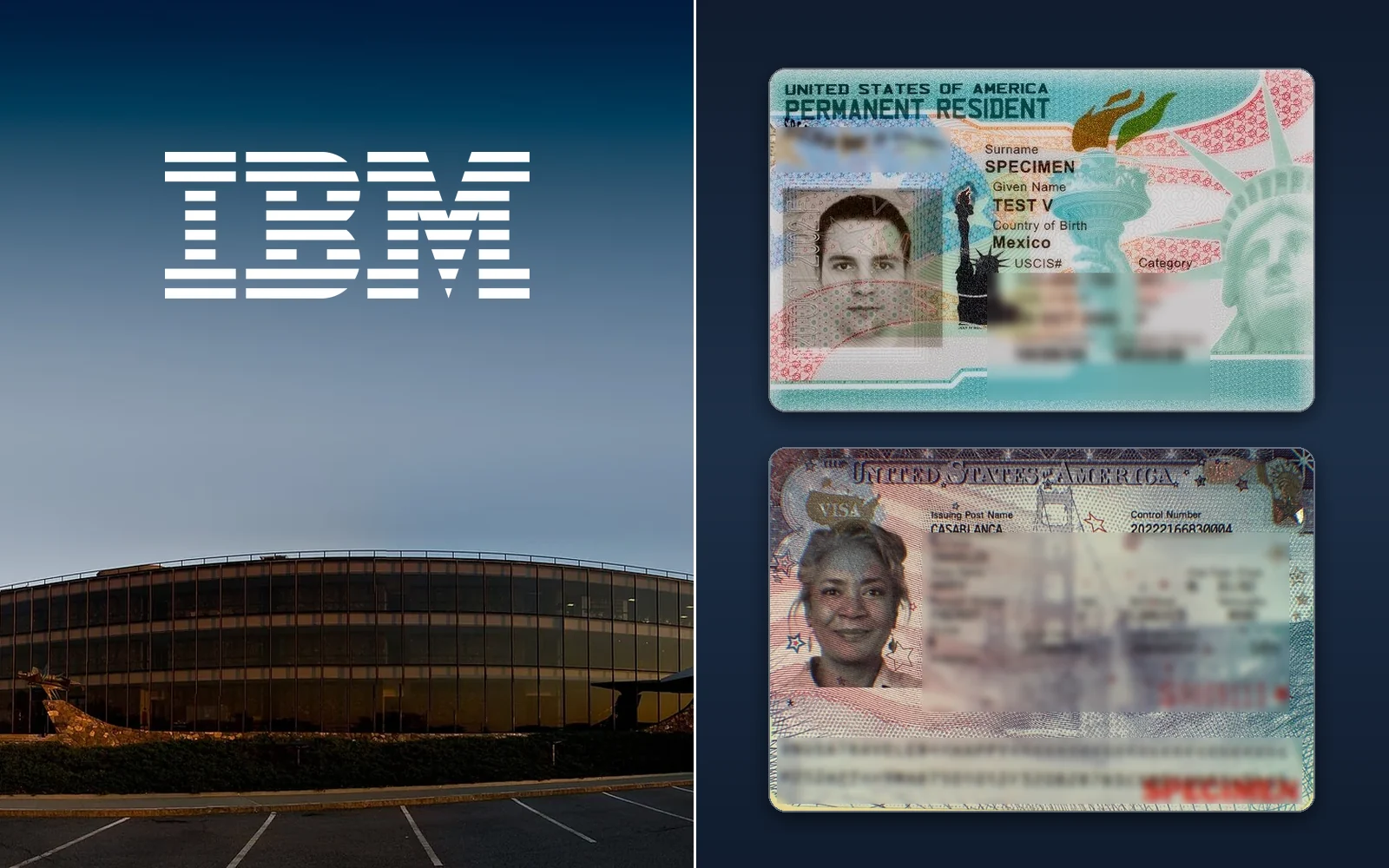
International Business Machines is ending United States work visa and employment based green card sponsorship for the majority of positions inside IBM Consulting, closing one of corporate America’s oldest immigration pathways across a division that employs more than 150,000 workers worldwide. In a statement confirmed on Tuesday and reported by Business Insider, an IBM spokesperson said the Armonk, New York technology giant opted to discontinue sponsorship for most consulting roles as domestic skill availability and enterprise client requirements have evolved.
According to internal guidance shared with managers and cited across wire reports, US based IBM Consulting employees affected by the policy shift face a stark year end choice: relocate to continue working for IBM from an office outside the United States or depart the company before the close of 2026. While IBM has not disclosed the exact number of foreign nationals inside its 264,300 person global workforce who will lose sponsorship eligibility, immigration attorneys described the move as a watershed retreat for the client services sector.
The cutoff spans both specialty occupation work visas and the Permanent Labor Certification process, commonly known as PERM, which serves as the mandatory first stage for most employer sponsored green cards as detailed by India Today. By drawing the line around the majority of positions inside its consulting arm rather than issuing a blanket companywide ban, IBM preserved narrow flexibility to sponsor specialized research engineers in core artificial intelligence and quantum hardware units while insulating its largest billable services workforce from rising regulatory friction.
Years of declining petition filings culminate in formal cutoff
Although Tuesday’s announcement stunned thousands of foreign nationals working across enterprise technology consulting, federal immigration records show IBM had already been steadily winding down visa petitions over the past three fiscal years. Data compiled from United States Citizenship and Immigration Services show IBM secured roughly 1,611 specialty occupation petition approvals in fiscal year 2026, down from more than 2,000 approvals in fiscal year 2025 and nearly 3,000 in fiscal year 2024 according to NRI Pulse.
That nearly fifty percent two year reduction left IBM trailing hyperscale software peers by a wide margin. By the third quarter of fiscal year 2026, Amazon had filed more than 13,700 specialty visa applications, roughly eleven times IBM’s annual volume, while Microsoft, Apple, and Meta each sought approximately four times as many foreign worker authorizations as IBM.
Two converging forces are reshaping staffing economics inside global IT consulting practices. First, generative artificial intelligence coding assistants and automated enterprise workflows are compressing demand for junior and midlevel implementation consultants on routine software integration contracts. Just hours after IBM confirmed its sponsorship pullback on Tuesday, Anthropic unveiled Claude Sheets, Claude Whiteboards, Claude Data, and embedded enterprise connectors while citing consulting client Accenture’s rapid automation of legal and analytical workflows ahead of Anthropic’s upcoming Nasdaq public offering.
Rising federal fees and PERM enforcement squeeze IT services
Second, the Trump administration has sharply raised both the financial cost and compliance exposure of sponsoring foreign technology workers, particularly for consulting firms that place staff at third party corporate client sites. As noted by IndexBox, federal regulators last month suspended Microsoft, Adobe, and major IT services providers including Cognizant, Infosys, and Tata Consultancy Services from participating in the Department of Labor’s PERM green card certification pipeline.
At the same time, statutory surcharge increases enacted in 2025 alongside pending White House prevailing wage revisions and Department of Homeland Security rulemakings have turned routine visa renewals and green card filings into lengthy, high cost legal undertakings. Under Labor Department regulations, employers must absorb every dollar of PERM recruitment and legal certification expenses and prove through supervised domestic advertising that no qualified American applicants are available for a role, a hurdle that grows far harder to clear when software hiring cools.
Consulting divisions face heightened audit scrutiny compared with product companies because billable consultants frequently rotate across client engagements in different metropolitan wage zones, requiring amended petitions whenever worksite conditions change materially. Ending sponsorship across most IBM Consulting roles eliminates that recurring compliance burden while shifting global delivery work either to domestic US citizens and permanent residents or to offshore delivery centers in India, Latin America, and Eastern Europe.
Tight countdown clocks for affected visa holders
For foreign professionals currently working inside IBM Consulting on temporary authorizations, the year end deadline triggers unforgiving federal immigration clocks. Workers holding specialty occupation status whose US employment terminates generally have up to sixty days, or until their authorized stay expires if sooner, to have a new sponsoring employer file a transfer petition, switch to another lawful visa category, or leave the United States.
Uncertainty looms especially large for Indian and Chinese nationals caught in multiyear employment based green card backlogs. Consultants who already hold an approved Form I 140 immigrant worker petition can typically retain their priority date queue position if they move to another US company, yet any new employer must restart the costly PERM labor certification and petition sequence from scratch unless an adjustment of status application has already remained pending for more than 180 days.
IBM did not immediately clarify whether consultants partway through pending green card filings qualify for transitional exceptions or which niche technical roles inside IBM Consulting remain eligible for sponsorship. Across Silicon Valley and Wall Street technology desks on Wednesday morning, labor analysts watched closely to see whether rival advisories such as Deloitte, Accenture, and Capgemini follow IBM’s retreat or step in to recruit displaced specialists before the December calendar runs out.
What displaced technology consultants can pursue next
Employment attorneys advising affected IBM staff noted on Wednesday that alternative immigration pathways remain narrow and heavily dependent on each worker’s seniority and academic credentials. Consultants whose adjustment of status applications have already remained pending with federal adjudicators for at least 180 days can invoke statutory job portability rules under the American Competitiveness in the Twenty First Century Act, allowing them to move into a comparable consulting or enterprise engineering role at another firm without losing their place in the permanent residency line.
Professionals earlier in the sponsorship pipeline face steeper hurdles unless they secure a cap exempt transfer offer from a competing employer still willing to shoulder federal filing surcharges before their sixty day grace window closes. A smaller subset of senior architects, artificial intelligence researchers, and cybersecurity specialists holding advanced degrees may pursue self sponsored National Interest Waiver petitions that bypass employer labor certification altogether, though processing queues for those categories have also lengthened sharply over the past year.
For university career offices and international graduate students across American computer science and business programs, IBM’s decision removes one of the largest historical entry points into domestic technology consulting, accelerating a structural split between product focused artificial intelligence labs still competing globally for scarce research talent and traditional IT services giants recalibrating their US staffing models for a stricter immigration era.