Nvidia shares rebound 5 percent as board hires Wachtell Lipton for probe and Trump defends Jensen Huang
Nvidia stock climbed more than 5 percent Wednesday after a 430 billion dollar two day rout as the chipmaker retained law firm Wachtell Lipton to investigate security risks, President Donald Trump said CEO Jensen Huang had no idea of any spy link, and a GOP senator called for Huang to step down.
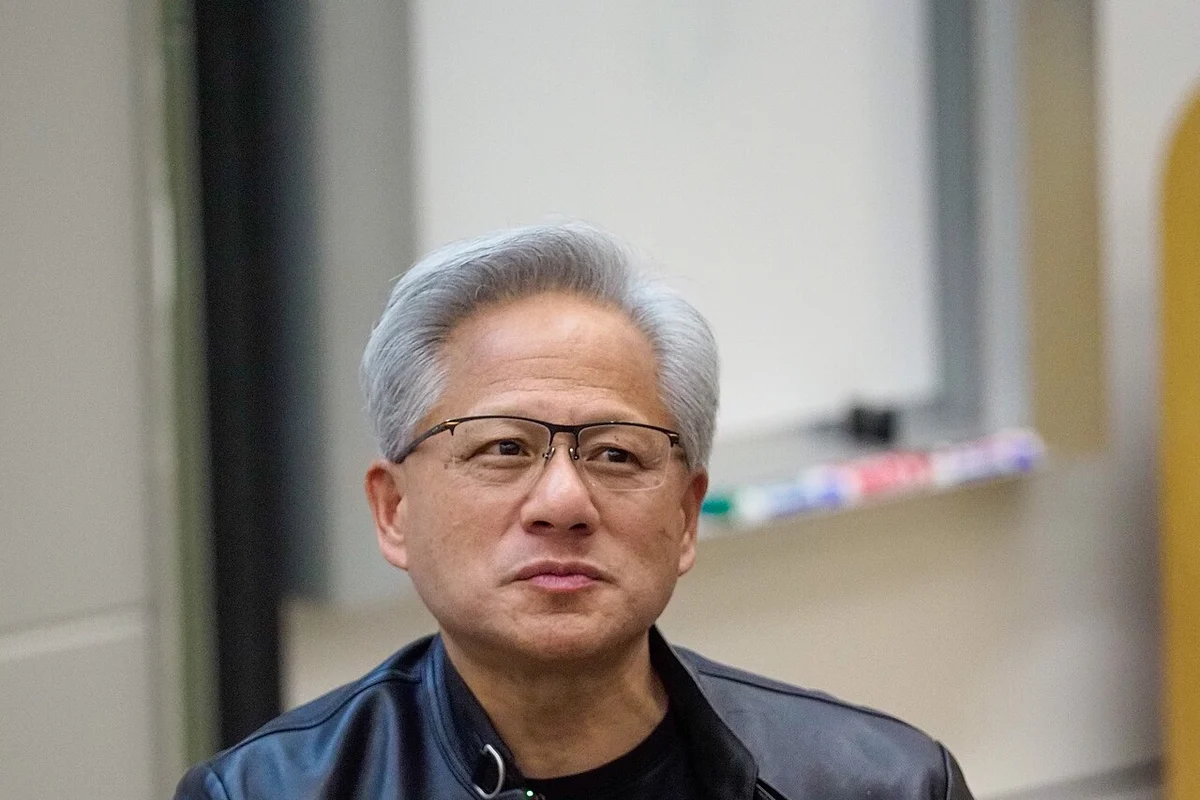
Shares of Nvidia rebounded more than 5 percent in Wednesday trading, clawing back part of a bruising two-day selloff that had wiped roughly $430 billion from the artificial intelligence chipmaker’s market value, after the company’s board retained Wall Street law firm Wachtell, Lipton, Rosen & Katz to conduct an independent national-security and governance review.
The stabilization on Wall Street arrived alongside sharply conflicting political signals in Washington and Taipei: President Donald Trump publicly defended Nvidia chief executive Jensen Huang — saying the billionaire co-founder had “no idea” a business executive with whom he acknowledged a past personal relationship was suspected by US intelligence of gathering information for Beijing — even as Republican Senator Kevin Cramer of the Senate Banking Committee became the highest-profile lawmaker to call on Huang to resign.
Meanwhile, Taiwanese authorities added a cross-border dimension to the inquiry on Wednesday when Interior Minister Liu Shyh-fang confirmed to reporters in Taipei that the woman at the center of the allegations, identified in reporting as Alice Huang, had previously entered Taiwan using a Hong Kong passport and is currently overseas.
Board retains Wachtell Lipton after $430 billion market-cap wipeout
Nvidia’s announcement that it hired Wachtell, Lipton, Rosen & Katz — one of corporate America’s most prominent governance and crisis-litigation firms — helped calm institutional investors who had dumped the stock across Monday and Tuesday following disclosures of an FBI counterintelligence inquiry and a shareholder class-action lawsuit.
During Tuesday’s slide, Nvidia shed roughly 5.5 to 6 percent to close near a $4.02 trillion valuation, briefly ceding its rank as the world’s second-most valuable public company behind Apple to Microsoft for the first time since June 2025 before Microsoft shares also retreated late in the session. By Wednesday morning, bargain-hunting alongside strong quarterly results from AI cloud partner CoreWeave — whose third-quarter revenue jumped 168 percent to $3.66 billion — lifted Nvidia shares 5.25 percent and pushed Nasdaq futures back into positive territory.
According to Nvidia’s disclosures, Wachtell Lipton’s mandate focuses on determining whether any proprietary semiconductor designs, export-controlled supply-chain data, or national-security sensitive materials were exposed, and evaluating executive security protocols around Huang. No criminal charges have been filed against Huang, and Nvidia has stated that no compromise of corporate trade secrets has been established publicly, while Chinese officials have dismissed espionage claims as a “smear.”
Trump backs Huang as bipartisan senators demand security briefings
Despite the market bounce, scrutiny on Capitol Hill intensified across both parties on Wednesday. Cramer, a North Dakota Republican who sits on both the Senate Banking and Armed Services committees, told reporters that Huang should step aside given Nvidia’s central position — estimated at more than 80 percent market share — in supplying advanced graphics processing units for US defense contractors, hyperscale cloud providers, and frontier AI laboratories.
On the Democratic side, Senators Tim Kaine, Chris Coons, and Angela Alsobrooks pressed administration officials for a classified national-security briefing and raised the prospect of calling Huang to testify before Congress on how Nvidia safeguards export-restricted hardware and executive communications against foreign intelligence targeting.
Regulatory pressure has been compounded by separate Commerce Department scrutiny into third-party chip diversion channels in Asia, following reports that Nvidia’s general counsel contacted federal export authorities regarding intermediary shipments and cloud-server access involving restricted accelerators.
Trump’s public intervention — asserting that Huang was unaware of any intelligence ties involving the executive — signaled that the White House is reluctant to see leadership turmoil destabilize America’s flagship AI hardware supplier at a moment when Washington and Beijing are simultaneously negotiating AI incident-communication channels ahead of next week’s APEC summit.
Taiwan confirms border records as governance test looms
In Taipei, where Nvidia maintains deep foundry and server-assembly partnerships led by TSMC and Foxconn, Interior Minister Liu Shyh-fang addressed parliamentary questions Wednesday morning regarding the travel history of the woman linked to the US counterintelligence probe. Liu confirmed immigration records showed she entered Taiwan on a Hong Kong travel document and had since departed the island, without detailing the dates or contacts of her visit.
For Wall Street analysts, Wednesday’s 5 percent relief rally underscores that demand for Nvidia’s data-center silicon remains intact — reinforced by Anthropic’s massive Nasdaq IPO roadshow and surging capital commitments across hyperscalers — but governance specialists warn that Wachtell Lipton’s findings and potential congressional hearings will determine whether the board can contain the episode with tighter security guardrails around its founder.