Iraq bars plane carrying Iran national football team from landing in Basra over US sanctions
Iraq's Civil Aviation Authority refused landing permission in Basra for a passenger plane carrying Iran's national football squad over United States secondary sanctions fears, forcing the aircraft back to Abadan and sending players across the border by bus.
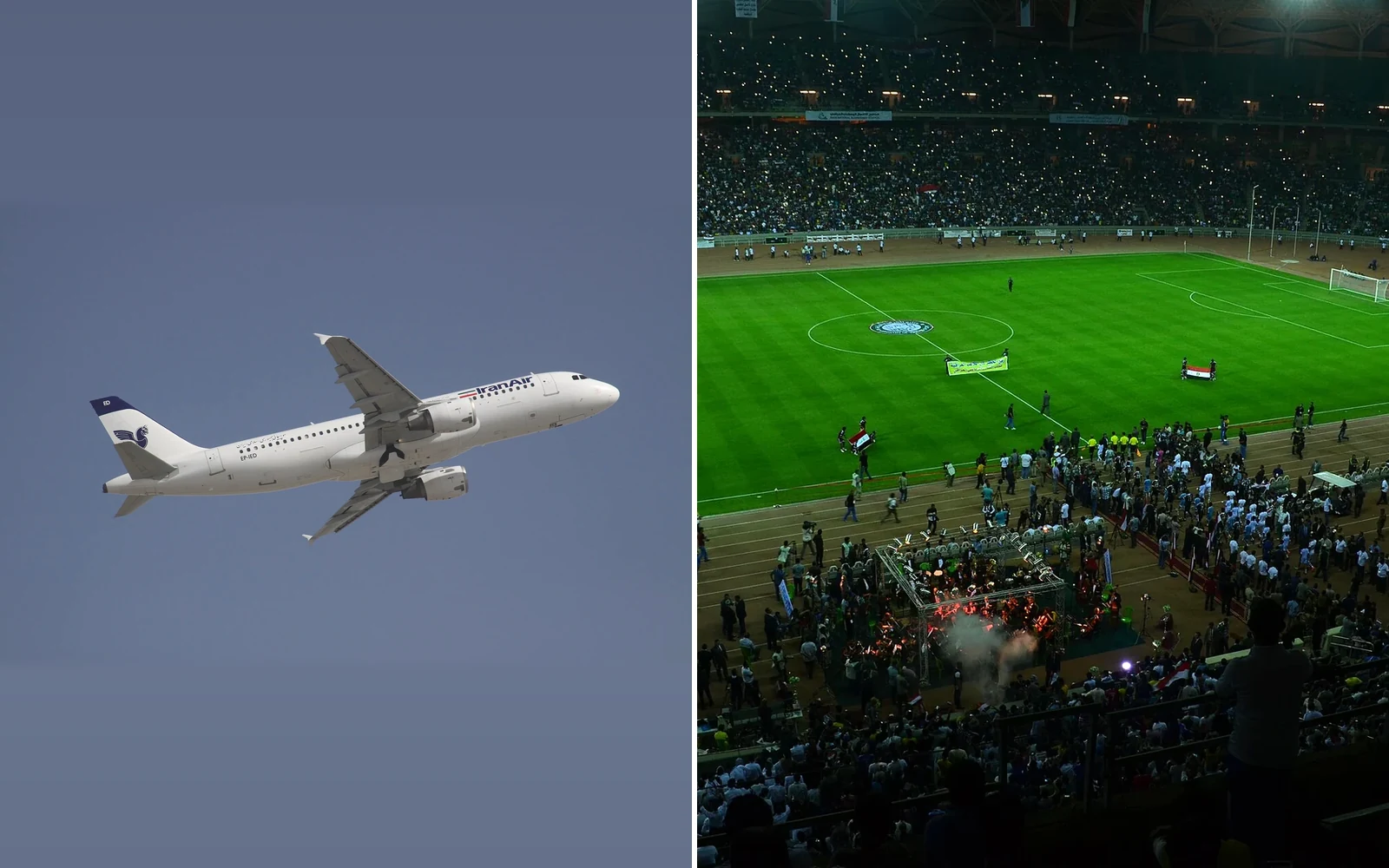
BASRA: Iraq’s Civil Aviation Authority barred a passenger aircraft carrying Iran’s men’s national football team from landing at Basra International Airport on Tuesday, forcing the charter flight to turn back to southwestern Iran and compelling players and coaching staff to cross the border by bus ahead of an international four nation tournament.
Iraqi aviation and football officials confirmed that air traffic controllers denied final arrival clearance for the Iranian carrier over fears that servicing the aircraft on the ground in Basra would trigger punitive United States secondary sanctions against Iraqi airports and state banking channels, Al Monitor reported. Rather than risking financial blacklisting from Washington, transport regulators instructed the flight crew that the jet could not touch down on Iraqi tarmac.
With landing permission refused, the aircraft diverted to Ayatollah Jami International Airport in Abadan, an Iranian port city in Khuzestan province roughly 50 kilometers east of Basra across the Shatt al Arab waterway. From Abadan, Iran’s national squad, widely known as Team Melli, disembarked with mountains of training equipment and medical gear, boarded team buses, passed through the Shalamcheh land border crossing, and completed the journey into central Basra by road, according to Kayhan Life.
Secondary sanctions turn a short hop into a cross border bus trek
What should have been a routine regional flight into southern Iraq’s flagship sporting hub instead became the sharpest example yet of Washington’s tightened aviation enforcement spilling directly into international football logistics.
Iran arrived in southern Iraq to compete in a four nation friendly tournament hosted in Basra during the November international match window alongside host nation Iraq, Lebanon, and Palestine. Tournament organizers scheduled Iran to open its campaign on November 14 against Palestine at the Basra Sports City complex before facing a second fixture later in the window, LN24 International reported.
Iraqi Football Association representatives scrambled at the Shalamcheh frontier post on Tuesday afternoon to expedite VIP customs clearance and provide police escorts so the Iranian delegation could reach its team hotel in Basra before nightfall. Although no players suffered injuries during the unexpected detour, Iranian team administrators privately expressed frustration that elite internationals arriving from European and domestic club fixtures had their recovery and training schedule disrupted by diplomatic and banking restrictions unrelated to sport.
Under global aviation rules enforced by the United States Treasury Department’s Office of Foreign Assets Control, foreign airport operators, ground handling contractors, aviation fuel suppliers, and aviation insurers can face secondary sanctions if they provide landing, refueling, maintenance, or navigation support to designated Iranian commercial airlines. Virtually every major Iranian carrier, including flag carrier Iran Air, Mahan Air, Meraj Airlines, and Qeshm Air, sits under sweeping American sanctions tied to allegations that civil airframes have transported military personnel, drone components, or dual use cargo for Iran’s Islamic Revolutionary Guard Corps.
Baghdad’s September aviation cutoff reaches southern Iraq
Tuesday’s refusal in Basra stems directly from a dramatic escalation in American financial pressure launched in early September. On September 8, the Treasury Department expanded its sanctions designations across 35 Iranian aviation and shipping linked targets, part of a broader sweep covering 22 individuals and 48 corporate entities accused of sustaining Tehran’s state transport networks, according to The Algemeiner.
At the time, Treasury Secretary Scott Bessent warned foreign governments and financial institutions of an approaching economic cutoff set for September 23, cautioning that overseas airports and clearing banks continuing to service sanctioned Iranian aircraft risked losing access to correspondent accounts in the United States dollar system. That high stakes pressure campaign has carried intense personal security repercussions in Washington, where Bessent recently relocated his family residence onto a military base following federal intelligence warnings over Iranian threats.
For Baghdad, Washington’s dollar leverage proved decisive. Iraq holds more than $100 billion in oil export reserves at the Federal Reserve Bank of New York, giving American Treasury regulators immense influence over Iraq’s central bank and state owned enterprises. In late September, Iraqi authorities suspended scheduled flights by sanctioned Iranian carriers into Baghdad International Airport and northern Iraqi hubs to safeguard the country’s aviation sector and commercial banks from secondary penalties.
Iranian football federation travel planners had reportedly hoped a sporting charter carrying a national squad for an official FIFA window tournament into southern Basra might receive a one time humanitarian or diplomatic waiver. Instead, Iraqi Civil Aviation Authority officials concluded that granting even a single exception for a sanctioned hull registration could expose Basra International Airport’s ground handling and fueling contractors to immediate Treasury enforcement.
Geopolitics shadows Asian football ahead of major tournaments
The tarmac standoff underscores the delicate balancing act confronting Iraqi Prime Minister Mohammed Shia al Sudani’s government, as well as Iraqi Football Association president Adnan Dirjal, who has worked over recent years to restore Basra as a premier host venue for regional international tournaments after decades of FIFA security restrictions on Iraqi stadiums.
Even as President Donald Trump suggested earlier this month that military hostilities with Iran had concluded ahead of talks in Qatar, Washington’s economic blockade on Iranian civil aviation remains fully intact. Across global football governance, where former Arsenal manager Arsene Wenger and FIFA president Gianni Infantino have clashed over expanding international match calendars and European clubs closely monitor player travel fatigue during November international duty, as seen in Liverpool captain Virgil van Dijk’s recent withdrawal from Netherlands camp, Iran’s national team faces logistical hurdles unmatched by almost any other top 25 ranked side.
Over recent seasons, American banking and aviation sanctions have repeatedly complicated Iranian football operations:
- Frozen tournament prize money: FIFA and the Asian Football Confederation have had to route millions of dollars in World Cup and Asian Cup participation payments through restricted third party escrow channels because international banks refuse direct transfers to Tehran.
- Equipment and VAR blockades: Sanctions on dual use electronics and Western financial transfers delayed the rollout of licensed video assistant referee technology across Iran’s domestic Persian Gulf Pro League and previously complicated kit supplier contracts.
- Charter and refueling detours: When traveling to World Cup qualifiers in Central Asia, East Asia, or the Arab Gulf, Team Melli must either book costly foreign third country charter aircraft cleared of American sanctions or route domestic flights through narrow overland and air corridors.
Despite Tuesday’s detour through Abadan and the Shalamcheh border post, Iraqi tournament officials confirmed late Tuesday that Iran’s full squad had checked into its Basra quarters and remained scheduled to train on Wednesday ahead of Saturday’s opening kickoff against Palestine. Unless Tehran charters a non sanctioned foreign carrier for its departure next week, however, Iran’s players face the same overland bus ride back across the border once the final whistle blows at Basra Sports City.