
US jobless claims rise to 200,000 as four-week layoff average holds at 1969 low and 10-year yield tops 5 percent
Initial US unemployment claims rose 9,000 to 200,000 in the week ended November 7 while continuing claims fell 20,000 to 1,697,000 and the four-week layoff average stayed at its lowest since October 1969, keeping 10-year Treasury yields above 5 percent ahead of the Fed's December 9 meeting.
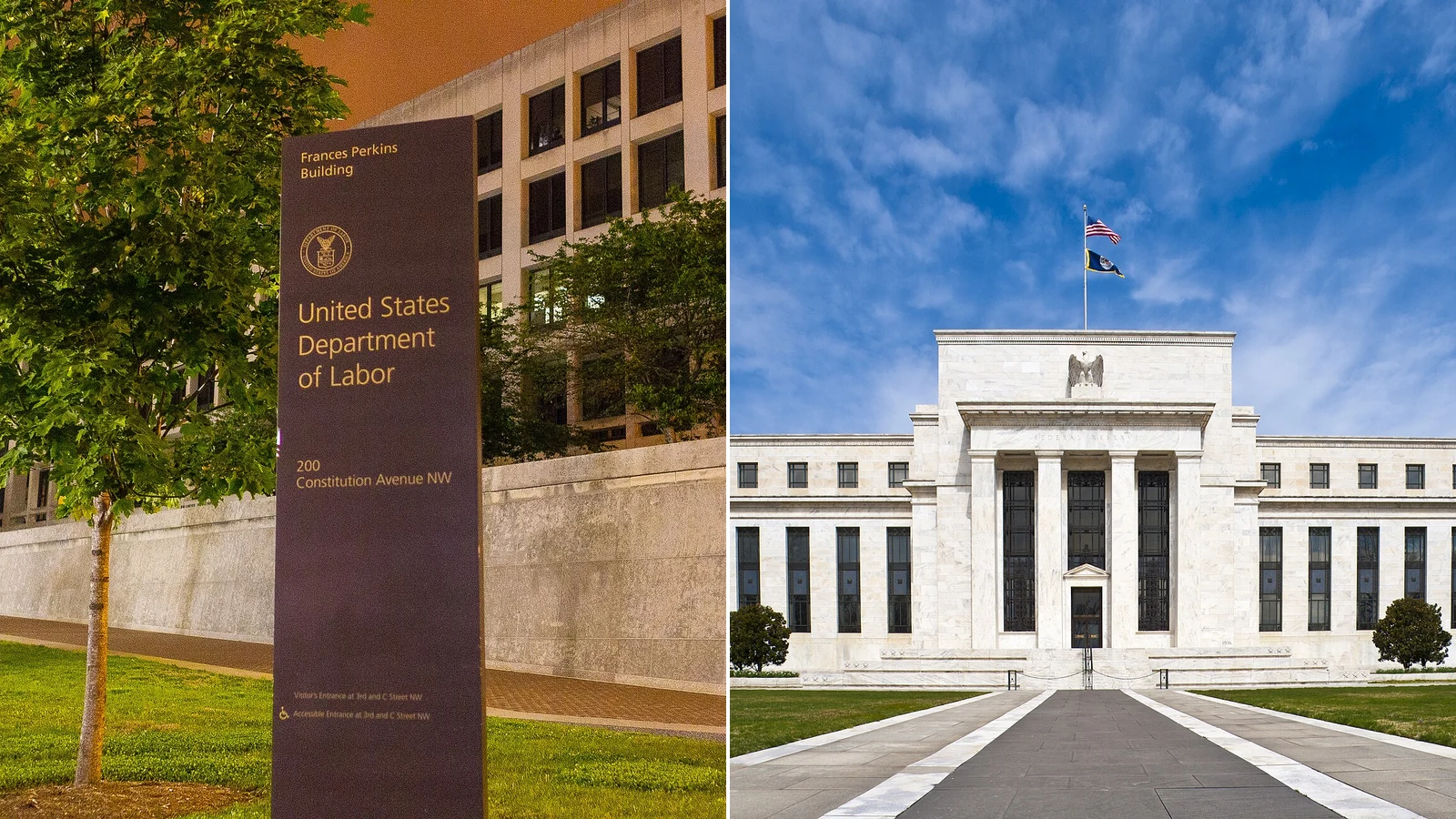
U.S. initial jobless claims rose by 9,000 to a seasonally adjusted 200,000 in the week ended November 7, the Department of Labor reported Thursday morning, while the four-week moving average held unchanged at 195,250 — matching its lowest level since October 1969.
Economists surveyed ahead of the 8:30 a.m. ET release had forecast 194,000 to 195,000 first-time applications, following an upward revision of 2,000 to the prior week’s total (191,000, up from an initially reported 189,000). Even with Thursday’s uptick — the largest single-week rise since August 8 — initial filings have now printed at or below the 200,000 threshold for nine consecutive weeks and have not topped 230,000 in any week of 2026.
- Initial jobless claims (week ended Nov. 7):
200,000(+9,000week-over-week vs.195,000consensus; prior week revised to191,000). - Four-week initial claims average:
195,250(unchanged; matches lowest reading since October 1969 and sits31,750below a year ago). - Continuing claims (week ended Oct. 31):
1,697,000(-20,000from prior week’s revised1,717,000, hovering just above a multi-year low of1,695,000). - Treasury yields after release: Benchmark 10-year U.S. Treasury yield climbed past
5.006%, with the 30-year yield near5.358%ahead of Thursday afternoon’s long-bond auction.
What do the November 12 US jobless claims numbers show?
Beneath the modest weekly bounce in first-time filings, continuing unemployment claims — which track Americans already receiving benefits and lag by one week — dropped by 20,000 to 1,697,000 in the week ended October 31, sitting near the lowest mark since April 2023. The four-week average of continuing claims edged down 1,500 to 1,707,750, remaining lower year-over-year for a 41st straight week (-244,250). For historical comparison, pre-pandemic 20-year averages stood near 345,000 for initial claims and 2.9 million for continuing claims.
On an unadjusted basis before seasonal smoothing, applications climbed 16.2 percent (206,982), outpacing the 11.0 percent seasonal rise models anticipated for early November. State-level Labor Department tables showed the largest weekly increases in New Jersey (+3,564), Missouri (+3,029), and Minnesota (+2,831), partially offset by a 2,996 decline in Michigan.
Overall U.S. job security has stayed unexpectedly firm throughout 2026: employers across private industry, nonprofits, and government have added an average of 86,000 payroll jobs per month this year — including a brisk 165,000 gain last month — marking a sharp rebound from 2025’s sluggish 9,700 monthly hiring pace.
Why did 10-year Treasury yields top 5% before the Fed’s December meeting?
Rather than offering bond traders relief after hotter-than-expected October U.S. consumer inflation data, Thursday’s sub-200,000 layoff trend reinforced Wall Street concerns that a tight labor market will keep wage and price pressures elevated heading into the Federal Reserve’s final policy meeting of the year on December 9.
Following the release, the 10-year U.S. Treasury yield pushed above the psychologically pivotal 5.00 percent mark (5.006%), while 30-year yields traded around 5.358 percent ahead of a closely watched U.S. Treasury 30-year bond auction Thursday afternoon. Earlier this week, Federal Reserve Vice Chair for Supervision Michelle Bowman noted that tariffs, energy costs, and double-digit price jumps across AI data-center hardware have kept core inflation running above target — leaving policymakers weighing whether another interest-rate increase is warranted if hiring and consumer demand refuse to cool.