
Zelenskyy meets Witkoff and Kushner in Dublin, confirming Europe joins next peace talks and largest POW swap amid Starshield curbs
Ukrainian President Volodymyr Zelenskyy met US envoys Steve Witkoff and Jared Kushner at Dublin's Casement Aerodrome on November 12 following their Kremlin summit with Vladimir Putin, announcing preparations for the war's largest prisoner exchange and full European participation in the next peace round while flagging fresh Starshield restrictions.
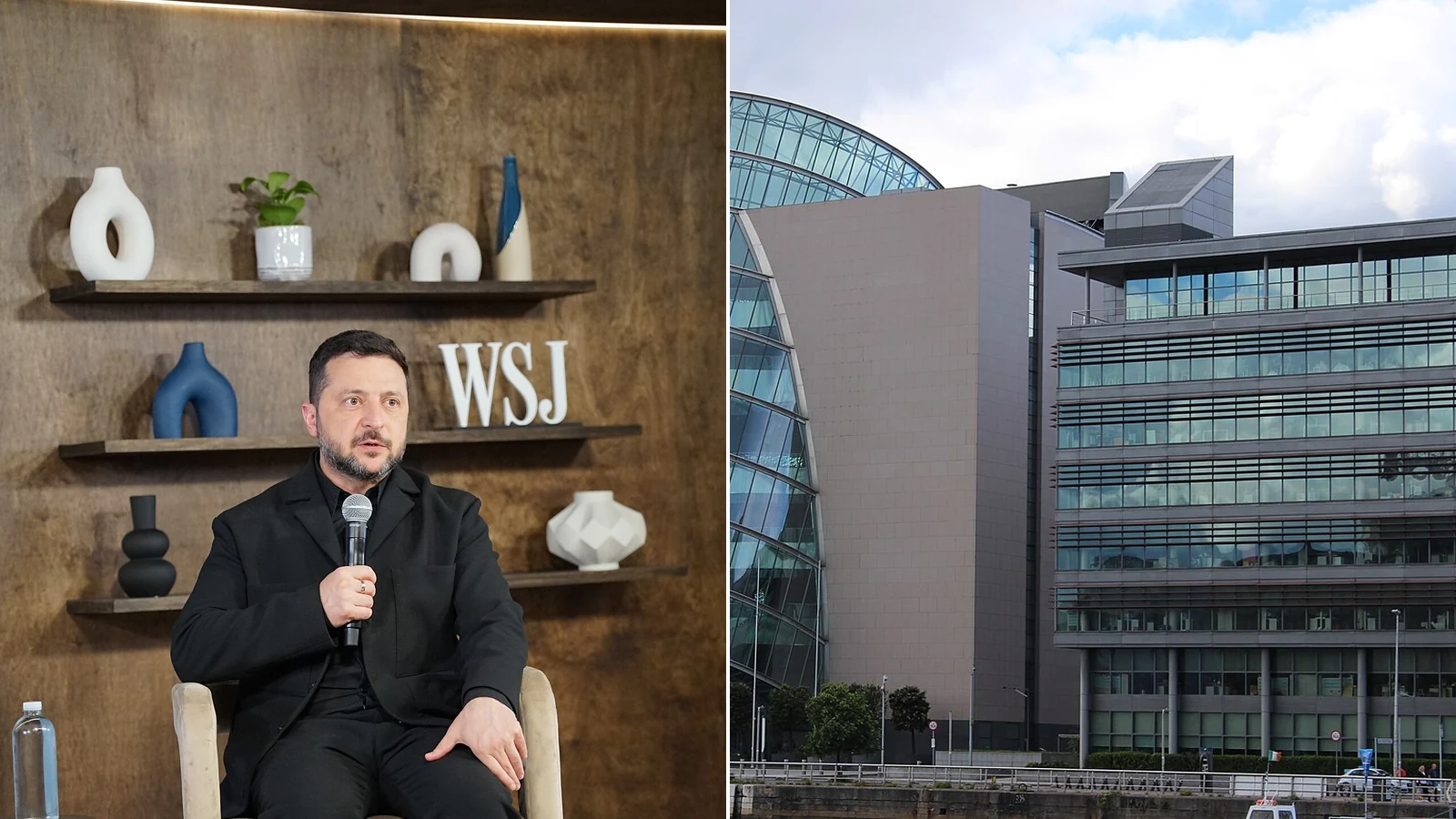
Ukrainian President Volodymyr Zelenskyy met U.S. envoys Steve Witkoff and Jared Kushner at an Irish military airbase near Dublin late Thursday, Nov. 12, 2026, confirming preparations for the war’s largest prisoner exchange and European participation in the next peace round.
Key outcomes from Thursday night’s Dublin summit
- Casement Aerodrome debrief: Witkoff and Kushner landed in Ireland directly from Moscow shortly before 9 p.m. local time, meeting Zelenskyy and Ukrainian chief negotiator and foreign intelligence head Rustem Umerov for nearly an hour at Casement Aerodrome in Baldonnel, west of Dublin.
- Largest POW swap of the war: Speaking alongside the U.S. delegation afterward, Zelenskyy confirmed Russia accepted preparations for what will be the largest prisoner-of-war exchange since the full-scale invasion began—calling it "a real result."
- Europe added to the negotiating table: Zelenskyy, Witkoff, and Kushner all stated publicly that European representatives will participate directly in the next round of Russia-Ukraine peace negotiations.
- Next diplomatic dates: Zelenskyy announced a “Coalition of the Willing” summit in Berlin next week, immediately following Friday’s informal EU leaders’ summit at Dublin’s Convention Centre.
- Starshield setback: Earlier Thursday in Dublin, Zelenskyy disclosed that Ukrainian forces are again experiencing restrictions on the U.S.-linked Starshield satellite network used to detect and intercept incoming Russian strikes.
What did Zelenskyy, Witkoff, and Kushner agree on at Casement Aerodrome?
The late-night Irish airbase meeting capped an extraordinary 72-hour diplomatic shuttle that took Trump administration envoys from two days of trilateral Russia-Ukraine talks in Abu Dhabi to a 2.5-hour Kremlin session with Russian President Vladimir Putin earlier Thursday.
Addressing reporters at Casement Aerodrome after the briefing, Zelenskyy singled out two concrete breakthroughs: finalizing the framework to bring home Ukrainian captives in a record prisoner swap, and securing Washington’s backing to bring European powers formally into the next negotiating session.
“The biggest result is the return of prisoners—this will be the largest exchange,” Zelenskyy said. “Second, a major success for the American side concerns the Europeans: next time, Europeans will be at the negotiating table.”
Both U.S. envoys publicly reinforced that commitment beside him. “They’re our partners, and it’s important for them to be involved,” Witkoff told reporters, while Kushner added bluntly: “We cannot conclude this deal without the Europeans being at the table.”
Why is Friday’s EU summit in Dublin facing pressure to pick a single envoy?
While Washington and Kyiv now agree Europe belongs in the room, European Union heads of state gathering in Dublin on Friday, Nov. 13—following Thursday’s 45-nation European Political Community (EPC) summit—face tense internal debates over who will speak for the continent.
Zelenskyy urged European leaders to settle on concrete negotiators before November ends so talks do not stall, while Italian Prime Minister Giorgia Meloni recently warned European Council President António Costa over fragmented European messaging on the war. Kremlin aide Yury Ushakov had pointedly remarked in Moscow earlier Thursday that Brussels had thus far failed to agree on a single representative.
What happened to Ukraine’s Starshield defense satellite access?
Tempering Thursday night’s diplomatic optimism, Zelenskyy revealed during his earlier EPC plenary appearance at the Dublin Convention Centre that Ukraine is once again encountering operational limits on Starshield—the militarized satellite communications system Ukrainian air-defense units rely on to track and intercept Russian missiles and long-range drones.
Zelenskyy said Ukrainian defense officials are urgently seeking technical answers from Washington on the cause and scope of the latest restriction, noting Kyiv currently knows “very little” about why service degraded at a pivotal moment in both winter air-defense preparations and ceasefire diplomacy.