
Putin, Witkoff and Kushner end 2.5-hour Kremlin talks on European security deal before US envoys fly to Dublin for Zelenskyy
Russian President Vladimir Putin wrapped up roughly two and a half hours of Kremlin talks with US envoys Steve Witkoff and Jared Kushner on November 12, discussing a US-proposed European security framework and prisoner exchange headcounts before the American delegation departed for Dublin to meet Volodymyr Zelenskyy.
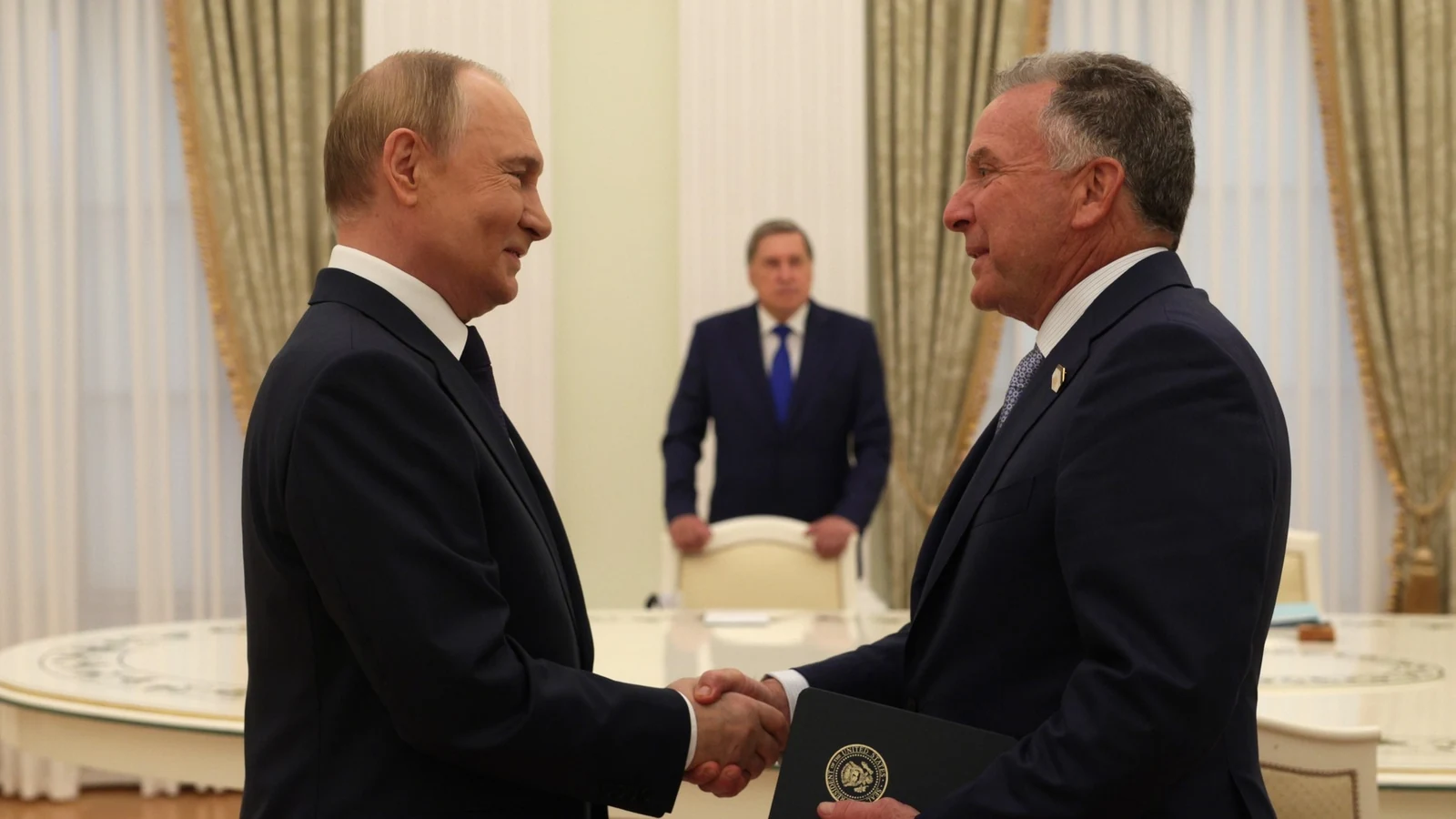
Russian President Vladimir Putin concluded roughly two and a half hours of closed-door Kremlin talks with U.S. presidential envoys Steve Witkoff and Jared Kushner on Thursday, Nov. 12, 2026, before the American delegation departed Moscow for Dublin to brief Ukrainian President Volodymyr Zelenskyy.
Key takeaways from Thursday’s Kremlin talks and the Dublin shuttle
- Duration and participants: The Kremlin session lasted approximately 2.5 hours, with Putin joined by foreign policy aide Yury Ushakov, sovereign wealth envoy Kirill Dmitriev, and presidential aide Vladimir Medinsky across the table from Witkoff and Kushner.
- New European security proposal: According to Axios, Witkoff and Kushner asked Moscow to draft an updated European security proposal outlining both Russian security concerns and concrete “symmetrical steps” to de-escalate tensions and reassure European nations against future aggression.
- Push for European seat at talks: U.S. envoys pressed Putin to admit European representatives into the next round of Russia-Ukraine negotiations—an expansion EU leaders are set to debate at an informal summit in Dublin.
- Prisoner exchange and humanitarian pitch: Both delegations followed up on the landmark prisoner-swap framework reached during two days of trilateral talks in Abu Dhabi, where final release headcounts awaited sign-off from Putin and Zelenskyy, while Putin floated a humanitarian mission in Kostiantynivka in the Donetsk region.
- Next stop — Dublin: Witkoff and Kushner’s motorcade exited the Kremlin shortly before 5:45 p.m. Moscow time (9:45 a.m. ET) without immediate public readouts, heading straight toward evening consultations with Zelenskyy in Ireland.
What did Witkoff and Kushner propose to Putin on a new European security agreement?
Thursday’s Kremlin summit built directly on intense Tuesday and Wednesday trilateral sessions in Abu Dhabi mediated by Witkoff, Kushner, and U.S. European Command chief Gen. Alexus Grynkewich. During those UAE meetings, Russian negotiators repeatedly invoked Moscow’s December 2021 security demands to Washington and NATO—claiming the full-scale invasion of Ukraine followed the Biden administration’s refusal to accept limits on NATO enlargement.
According to U.S. and diplomatic sources cited by Axios, Kushner and Witkoff countered that Europe’s strategic landscape has fundamentally changed since 2021. Instead of revisiting five-year-old ultimatums, the American envoys asked the Kremlin to submit a fresh document pairing Moscow’s security concerns with verifiable de-escalation commitments designed to convince European capitals that Russia poses no future military threat.
“We told the Russians, they have their desires and fears, but they have to provide different de-escalation and different proposals as well, if they want Europe to be able to receive those proposals in a good way,” Kushner told reporters following the Abu Dhabi round. U.S. officials emphasized to allied diplomats that Washington will not endorse any European security architecture without Ukrainian and European backing and will reject any Russian veto over European defense decisions.
Will European leaders join the next round of Russia-Ukraine peace talks?
Bringing European governments directly into the negotiating room was a central pillar of Witkoff and Kushner’s Kremlin pitch following earlier G7 coordination in Paris ahead of the Abu Dhabi talks. While Moscow has resisted expanding the format beyond Washington and Kyiv, Finnish President Alexander Stubb indicated this week that a four-party technical meeting bringing together Ukraine, Russia, the United States, and European representatives is being prepared for the coming weeks.
In opening remarks before Kremlin pool cameras on Thursday, Putin thanked U.S. President Donald Trump for organizing direct contacts between Moscow and Kyiv in the United Arab Emirates, while stopping short of publicly endorsing European participation before reporters were ushered out.
European capitals remain divided over both who would represent the continent at the table and whether engaging Moscow on broader continental security rules risks sidestepping an immediate battlefield truce. Ukrainian officials noted privately after the Abu Dhabi talks that Russian delegates agreed to what negotiator David Arakhamia called potentially the largest prisoner exchange of the war, yet declined on day two to negotiate a frontline ceasefire, Black Sea shipping guarantees, or an energy-infrastructure truce.
What happens tonight when Witkoff and Kushner meet Zelenskyy in Dublin?
Witkoff and Kushner’s flight from Moscow’s Vnukovo Airport to Dublin sets up a pivotal Thursday night briefing with Zelenskyy ahead of Friday’s informal gathering of European Union leaders in the Irish capital.
Speaking ahead of the Moscow leg, Zelenskyy praised the constructive tone of the Abu Dhabi prisoner-swap talks while voicing measured skepticism over whether the Kremlin would offer tangible ceasefire concessions. “The Americans flew to Putin with something concrete,” Zelenskyy noted, adding that Kyiv is waiting to see whether Moscow responds in kind on proposed energy and maritime truces as well as finalizing the exact roster for the prisoner release.
Zelenskyy has also insisted that Kyiv must approve any special envoy selected by European leaders to sit alongside U.S. mediators in future rounds—making tonight’s Dublin readout a decisive test of whether Washington’s shuttle diplomacy can bridge the gap between prisoner-exchange diplomacy and an enforceable ceasefire framework.